If you’re shopping for hydraulic cylinders in the United States, you want parts that are reliable, compatible, and suited to your application. This guide highlights five solid options from respected brands, focusing on standard sizes, common port configurations, and welded cross-tube designs that are well-suited for heavy-duty use. These picks are best for workshops, maintenance teams, fabricators, and small to mid-size industrial operations seeking robust, easily sourced cylinders.
| Product | Bore / Stroke | Max Pressure | Best For |
|---|---|---|---|
| WEN TR-3012 Tie Rod | 3 in. bore / 12 in. stroke | 2500 PSI | General purpose, mid-range lifting and pressing |
| AMRAP HYDRAULICS 2×20 | 2 in. bore / 20 in. stroke | 3500 PSI | Heavy-duty lifting, extended reach, cross-tube assemblies |
| WEN WT-2006 Cross Tube | 2 in. bore / 6 in. stroke | 3000 PSI | Short-stroke, compact jobs, tight spaces |
| WEN WT-2026 Cross Tube | 2 in. bore / 24 in. stroke | 3000 PSI | Long-stroke applications, extended reach |
| VEVOR 2″ Bore 36″ Stroke | 2 in. bore / 36 in. stroke | 3000 PSI | High-length projects with robust cross-tube design |
WEN 2500 PSI Tie Rod Hydraulic Cylinder

Product details indicate a double-acting steel-welded design capable of 2500 PSI, with a 3-inch bore, a 12-inch stroke, and a 1.25-inch rod diameter. A 1/2-inch NPT port enables straightforward connection to standard hydraulic hoses. This model is best for medium-duty lifting and pressing tasks where space allows a 12-inch stroke. It’s suitable for shops that require a reliable, commonly available cylinder with a robust welded construction. A potential limitation is the 2500 PSI rating, which may be lower than some high-pressure alternatives for specialized tasks.
AMRAP HYDRAULICS Stroke Control Kit
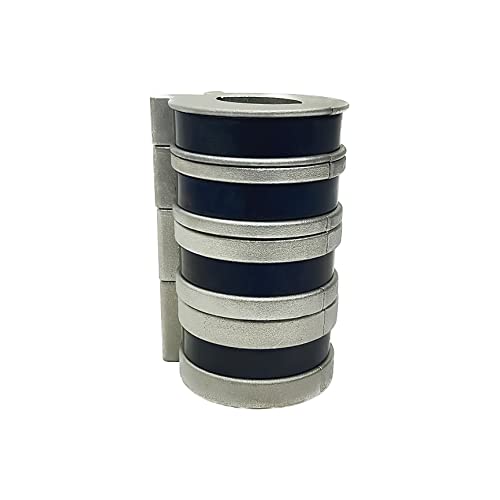
This kit fits cylinders with shafts from approximately 1.5 inches and up, offering thickness options of 0.75″, 1.0″, 1.25″, and 1.5″. It includes four clamps to match various stroke-length adaptations, enabling quick changes to accommodate different working conditions. Best for shops that need to convert or adapt existing cylinders without buying new units. A limitation to note is the need to confirm compatibility with your specific rod diameter and cylinder model before purchasing.
WEN Cross Tube Hydraulic Cylinder WT-2006

With a 2-inch bore and a 6-inch stroke, this cross-tube cylinder is designed for compact, short-stroke tasks. It supports up to 3000 PSI and uses an SAE-6 port (9/16 inch-18UNF) that connects easily to standard hydraulic hoses. Best for tight spaces and applications requiring a shorter ram, such as small presses or alignment tasks. A potential limitation is the shorter stroke when compared to longer-cylinder options.
AMRAP HYDRAULICS 2×20 Cylinder

This welded cross-tube cylinder features a 2-inch bore and a 20-inch stroke, rated at 3500 PSI with a 1.25-inch rod diameter. It’s built for extended reach and higher-load applications, offering a robust all-welded construction for durability in outdoor or harsh environments. Choose this if you need a longer stroke and higher operating pressure. A caveat is that the extended length may require more mounting clearance in some setups.
VEVOR 2″ Bore 36″ Stroke Hydraulic Cylinder

VEVOR offers a 2-inch bore with an impressive 36-inch stroke, designed for high-length lifting or pushing tasks. The unit uses a welded dual-acting design and SAE-6 port sizing. It’s best for projects requiring a long reach, such as fabrication or alignment work where a longer ram reduces the need for multiple cylinders. A potential limitation is the longer footprint, which may not suit all workspaces.
Buying Guide: Key Considerations for Hydraulic Cylinders
- Load requirements: Match bore size and pressure rating to expected loads. Higher PSI ratings support heavier tasks but may require sturdier mounting.
- Stroke length: Longer strokes enable broader motion ranges; shorter strokes are more compact and suitable for tight spaces.
- Port type and compatibility: SAE ports are common; confirm port size (such as SAE#4 or SAE#6) to ensure hose compatibility and easy installation.
- Cross-tube vs. tie-rod design: Cross-tube cylinders are typically more compact and mountable in constrained spaces; tie-rod designs offer straightforward maintenance and flexibility for mounting.
- Material and finish: Welded steel constructions provide durability in harsh environments. Check for corrosion resistance if used outdoors.
Frequently Asked Questions
- What is a hydraulic cylinder’s recommended PSI? It depends on the model; common ranges are 2500–3500 PSI for general to heavy-duty use. Choose a rating that matches your application’s duty cycle and safety needs.
- What does bore size indicate? The bore size determines the piston area and thus the force produced at a given pressure. Larger bores provide more force but require more space and structural support.
- What is a cross-tube cylinder good for? Cross-tube cylinders are often more compact and easier to mount in tight spaces while providing robust performance for pressing and lifting tasks.
- Do I need a stroke-limiting kit? If you have varying tasks with different stroke requirements, a stroke control kit can help adapt existing cylinders without replacing hardware.
- How do I connect to hydraulic hoses? Most units use standard SAE ports (e.g., SAE#4 or SAE#6). Verify port size and thread type before ordering hoses or adapters.
- Are all hydraulic cylinders interchangeable? Not always. Check bore, stroke, rod diameter, port type, mounting pattern, and PSI rating to ensure compatibility with your system.
Add a Comment