Looking for a hydraulic cylinder with an 18-inch stroke? This guide highlights five solid options that balance robustness, compatibility, and value. Each pick suits different applications—from heavy lifting in workshops to industrial automation. Best for hobbyists, professionals, and those replacing worn cylinders in existing equipment, these models cover weld-on and tie-rod designs, cross-tube configurations, and a range of bore sizes.
| Product | Approximate Bore | Stroke | Best For |
|---|---|---|---|
| Wen Cross Tube Hydraulic Cylinder WT-2518 | 2.5″ | 18″ | Best for cross-tube builds needing solid welds |
| AMRAP HYDRAULICS 2×18, 2″ Bore | 2″ | 18″ | Best for rugged, double-acting tie-rod setups |
| AMRAP HYDRAULICS 2×18, 2″ Bore (Tie Rod) | 2″ | 18″ | Best for versatile industrial use with 3/8″ NPT ports |
| AMRAP HYDRAULICS 3×18, 3″ Bore | 3″ | 18″ | Best for high-load applications and heavy machinery |
| AMRAP HYDRAULICS 1.5×18 Welded Cross Tube | 1.5″ | 18″ | Best for compact cross-tube installs |
Wen Cross Tube Hydraulic Cylinder WT-2518

The Wen WT-2518 features a double-acting steel-welded design capable of up to 3000 PSI. It uses a 2.5-inch bore with an 18-inch stroke and a 1.5-inch rod diameter, with SAE-8 port connections. Best for projects requiring a welded cross-tube cylinder with solid stiffness and consistent return pressure. Choose this if your setup benefits from a robust welded body and SAE-8 port compatibility. Caution: The larger bore may require more mounting space and precise alignment to avoid binding in tight installations.
AMRAP HYDRAULICS 2×18, 2″ Bore

This double-acting tang hydraulic cylinder uses a 2″ bore with an 18″ stroke, rated for 3500 PSI, and features a durable all-welded, heavy-duty steel construction. Best for high-load industrial tooling and machine presses that require a robust tang setup with easy porting via SAE#6 ports. It offers a high column load capacity (around 8150 lbs) and reserves some protection against corrosion. Opt for this if you need strong, straightforward performance in a rugged environment. Limitation: 2″ bore means a larger mounting footprint than smaller-bore options.
AMRAP HYDRAULICS 2×18, 2 Bore (Tie Rod)
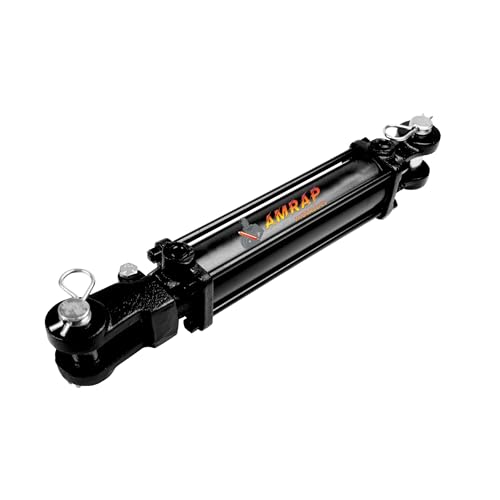
This tie-rod hydraulic cylinder offers a 2″ bore and 18″ stroke with a 1″ rod, retracting to 28.25″ and extending to 46.25″. It employs 3/8″ NPT ports and provides a rated pressure of 2500 PSI with a 7850 lbs load capacity. Best for modular machinery where tie-rod assemblies are preferred for easier maintenance and replacement. Choose this if you need a widely-used tie-rod format; avoid if your system requires higher pressure than 2500 PSI.
AMRAP HYDRAULICS 3×18, 3″ Bore
With a 3″ bore and 18″ stroke, this double-acting tie-rod cylinder is rated at 2500 PSI and features a 1.25″ rod and 46.25″ extended length. Best for heavy-duty applications requiring higher ram force and greater material displacement. It’s well-suited for hydraulic presses and large machine tools. Limitation: larger diameter requires more space and a robust mounting surface.
AMRAP HYDRAULICS 1.5×18 Welded Cross Tube

This 1.5″ bore welded cross-tube cylinder is rated for 3500 PSI with a 18″ stroke. It uses an all-welded design, heavy-duty steel construction, and a solid rod for durability. Best for tight spaces where a smaller bore yet strong cross-tube configuration is advantageous. Choose this if space is limited; caution in applications demanding higher bore displacement may require a larger unit.
Buying Guide
- Port configuration matters: SAE ports are common on weld-tube cylinders (like 3/4-16 UNF), while NPT ports (3/8″ or 1/2″) are typical on tie-rod options. Match your hose and fittings accordingly.
- Choose by bore and stroke: Larger bores provide more force but require more mounting space. An 18″ stroke is versatile for lifting, pressing, or retracting tasks; ensure your hardware accommodates 18″ travel plus clearance.
- Welded vs. tie-rod vs. cross-tube: Welded cylinders are compact and rigid, ideal for fixed mounts. Tie-rod designs ease replacement and maintenance. Cross-tube cylinders offer strong mounting in welding-heavy setups.
- Pressure rating and load capacity: Higher PSI ratings enable heavier loads. Check the device’s required force and ensure it aligns with the cylinder’s capacity and piston area.
- Material and corrosion resistance: Heavy-duty steel with protective seals helps withstand outdoor or harsh environments. Consider seals designed to resist abrasion and contaminants in your work milieu.
Frequently Asked Questions
- What is the typical use for an 18″ stroke hydraulic cylinder?
– They are commonly used for lifting, pressing, and linear actuation in industrial and workshop settings, where full extension reaches a target height or distance. - What does “double-acting” mean?
– It means the cylinder can extend and retract using hydraulic pressure on both sides of the piston for controlled movement in both directions. - How do I choose between welded, tie-rod, and cross-tube designs?
– Welded cylinders are compact and rigid for fixed installations. Tie-rod designs are easier to service and replace, while cross-tube cylinders are ideal for mounting in welded assemblies or where high rigidity is needed. - Are higher bore sizes always better?
– Not necessarily; larger bores increase force but require more mounting space and can reduce speed. Choose based on required force and available space. - Do all 18″ stroke cylinders use standard ports?
– Port sizes vary (SAE, NPT). Verify compatibility with your hoses and adapters before purchase.
Add a Comment