Answering the demand for powerful, hot-water cleaning, this guide highlights top hot water pressure washer systems suited for heavy-duty cleaning. Best for contractors, fleet maintenance, farm operations, and industrial facilities that regularly battle oil, grease, and stubborn grime. The featured picks prioritize hot-water efficiency, reliable heating, and robust pumps. Below, you’ll find concise product highlights, ideal use cases, and practical trade-offs to help you decide which unit fits your job site best.
| Product | Best For | Key Feature |
|---|---|---|
| Powerhorse Propane Pressure Washer | On-site mobile jobs with fast heat | Heats water up to 150°F; 3200 psi |
| NorthStar Electric Wet Steam and Hot Water Pressure Washer | Commercial cleaning with automatic start/stop | 150°F water rise; 2750 PSI; wet steam option |
| DigMaster Hot Water Pressure Washer | Heavy-duty industrial cleaning | 212°F hot water; 4000+ PSI; dual-fuel power |
| SIMPSON Cleaning 4000 PSI Gas Washer | Industrial-grade power with long hose | 4000 PSI; CRX 420 engine; triplex pump |
| KoreJetMetal 4000 PSI Hot Water Washer | Frequent high-load operations | AR pump; diesel-heated water; 185°F heating in 2 mins |
Powerhorse Propane Hot Water Pressure Washer

The Powerhorse model uses propane power to deliver strong cleaning performance with hot water up to 150°F, designed to tackle oil and grime faster than cold-water units. It’s positioned for users who value efficient cleaning in a mobile, easier-to-use package. Best for contractors and property maintenance crews who need a portable hot-water option without relying on electricity. A notable limitation is that propane supply and tuning may require routine maintenance for peak efficiency.
NorthStar Electric Wet Steam and Hot Water Pressure Washer

The NorthStar unit combines hot-water capability with a 2.5 GPM flow and 2750 PSI, plus a Total Start and Stop automation that improves efficiency. It’s well-suited for commercial, agricultural, and property maintenance tasks where consistent heating and automatic operation reduce downtime. Best for facilities that want a corded-electric model with integrated wheels for mobility. Limitation: electric-only power means dependence on outlet access and generator readiness on remote sites.
DigMaster Hot Water Pressure Washer

The DigMaster unit features up to 212°F water and an impressive 4,060 PSI with 4.0 GPM, designed for industrial and farm use. It also offers a dual-fuel setup—gasoline power with a separate burner heat source—allowing operation without electricity. Best for professionals who need high heat and high pressure in remote or large job sites. Caution: complexity of dual-fuel operation may require more maintenance and fuel management.
KoreJetMetal 4000 PSI Hot Water Washer
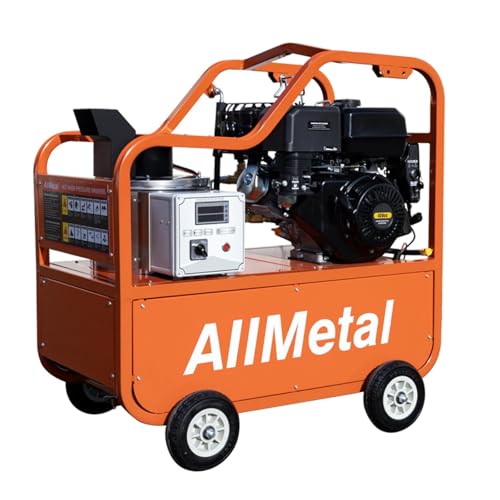
This unit uses a diesel-heated water system to reach hot water quickly (up to 185°F in about two minutes) and deliver 4000 PSI with a 4.0 GPM flow. It’s well-suited for heavy-duty cleaning on trucks, machinery, and concrete surfaces. Best for sites needing fast warm-up and robust performance. A drawback is that diesel heating can involve higher fuel costs and storage considerations on some sites.
Buying Guide: Hot Water Pressure Washer System Essentials
Key factors to consider when choosing a hot water pressure washer system include heating method, maximum pressure and flow, fuel type, and pump quality. The following questions help navigate common buyer decisions.
- What heat source best matches my site: propane, gasoline, diesel, or electricity? Propane and gasoline engines offer portability, while electric units are practical where outlets are available. Diesel heating is fast but requires fuel management.
- What is the required cleaning power: PSI and GPM? Higher PSI and GPM provide faster removal of heavy grease but may demand larger equipment and fuel reserves.
- Is automatic operation important? Units with start/stop automation save time on repeated cleaning cycles.
- Do I need hot water instantly? Models with rapid heating reduce downtime between tasks, especially on job sites with back-to-back cleanings.
- Are there space or mobility constraints? Look for units with wheels, compact frames, and protective housings for harsh environments.
Consider the following practical comparisons to narrow your options:
- Best for mobile on-site use: Powerhorse, Propane-heated and relatively light, good for quick mobilization and grease removal.
- Better for electric shop floors and fleets: NorthStar with automatic Start/Stop and 2750 PSI, suited for consistent indoor or controlled-site cleaning.
- Choose this if you need maximum heat and pressure: DigMaster or SIMPSON offer 4000+ PSI and 4.0 GPM with robust triplex pumps for industrial jobs.
- Avoid this if fuel supply or diesel handling is a concern: Diesel-heated units require fuel logistics and safe storage planning on-site.
Frequently Asked Questions
- What is hot water pressure washing best for? Hot water helps melt oil and grime faster, improving cleaning efficiency on grease-heavy surfaces.
- Do I need a heat source separate from the engine? Some units integrate heating; others require a separate burner or diesel heating system.
- Is 4000 PSI overkill for most jobs? For heavy industrial cleaning, 4000 PSI delivers faster grease removal; smaller jobs may do well with 2000–3000 PSI.
- Are electric models safer for indoor use? Yes, electric-powered machines reduce exhaust and are easier to deploy where outlets are available.
- What maintenance is typical for hot water machines? Regular pump care, heat exchanger checks, and fuel/air system tuning help maintain performance.
- Can I use these machines for delicate surfaces? Use appropriate nozzle tips and lower PSI settings to prevent damage; hot water is powerful but must be controlled.
Add a Comment