The best choice depends on your load requirements, stroke needs, and the type of mounting you prefer. This guide highlights five reliable hydraulic cylinders designed for common DIY and light-industrial tasks. Each option is chosen for practical use, clear specifications, and compatibility with standard hydraulic hoses. The top picks are best for shop projects, equipment maintenance, and basic hydraulic lifting or pushing tasks. The buyer types: hobbyists upgrading a home shop, small-scale mechanics, and those replacing worn-out cylinders in portable equipment.
| Product | Bore | Stroke | Port Type | Max Pressure | Best For |
|---|---|---|---|---|---|
| WEN Cross Tube Hydraulic Cylinder WT-2006 | 2 in | 6 in | SAE-6 (9/16-18UNF) | 3000 PSI | Compact, light-duty applications |
| WEN Tie Rod Hydraulic Cylinder TR-2010 | 2 in | 10 in | 3/8 in NPT | 2500 PSI | Longer stroke in tight spaces |
| WEN Cross Tube Hydraulic Cylinder WT-2026 | 2 in | 24 in | SAE-6 (9/16-18UNF) | 3000 PSI | High-extension tasks |
| Wen Cross Tube WT-2520 | 2.5 in | 20 in | SAE-8 (3/4-16UNF) | 3000 PSI | Higher force with longer stroke |
| VEVOR 2″ Bore 36″ Stroke Hydraulic Cylinder | 2 in | 36 in | SAE-6 | 3000 PSI | Very long stroke for travel and lifting |
WEN Cross Tube Hydraulic Cylinder WT-2006

Features include a double-acting steel-welded design, enabling up to 3000 PSI. It has a 2-inch bore, a 6-inch stroke, and a 1.25-inch rod diameter. The SAE-6 port (9/16 inch-18UNF) connects to standard hydraulic hoses. This model is ideal for compact lifting or pushing tasks where space is limited and a shorter stroke is sufficient.
Best for: hobbyists and small-shop users needing a compact cylinder for quick lifts or presses in tight spaces. It’s a solid choice for basic clamping, small repair tasks, and equipment maintenance in a limited footprint.
Limitation: shorter stroke means more frequent retraction/approach in longer tasks. Ensure the height clearance fits the 6-inch stroke during operation.
WEN Tie Rod Hydraulic Cylinder TR-2010
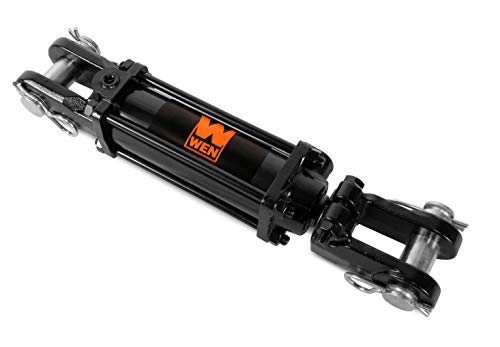
This model uses a double-acting steel-welded design rated up to 2500 PSI, with a 2-inch bore and a 10-inch stroke. A 1.125-inch rod diameter and a 3/8-inch NPT port allow straightforward tie-rod mounting and connection to standard hydraulic hoses. It’s a versatile option when a longer stroke is needed without increasing the overall cylinder diameter.
Best for: projects requiring more reach than a short-stroke unit but within a compact form factor. Great for light-duty presses, clamps, or lifting tasks where operator reach and control matter.
Caution: ensure compatible mounting hardware and hose threading are aligned with the 3/8-inch NPT port standard to avoid leaks or misfit fittings.
WEN Cross Tube WT-2026

Featuring a 2-inch bore and a long 24-inch stroke, this double-acting cylinder can push or pull to reach extended positions. It uses a 1.25-inch rod diameter and SAE-6 port (9/16 inch-18UNF) for easy hose connections, and supports up to 3000 PSI. The extended stroke makes it suitable for projects that require deep reach or lifting components from the ground up.
Best for: tasks needing substantial extension, such as trailer or equipment maintenance where long travel is beneficial. It’s a good pick for customers who need a higher range of movement without switching to a larger bore.
Limitation: the longer stroke can introduce stability considerations in high-force scenarios; use appropriate mounting and support on heavy lifts.
Wen Cross Tube WT-2520

This cylinder adds a 2.5-inch bore and a 20-inch stroke, with a 1.5-inch rod diameter and SAE-8 port (3/4 inch-16UNF). It’s rated up to 3000 PSI, and the all-welded construction supports more demanding applications while maintaining a compact footprint. The broader bore provides more force per stroke, which benefits pressing or clamping tasks.
Best for: users needing higher force output per stroke without increasing the overall length excessively. Suitable for medium-duty lifting or pressing tasks in a shop setting.
Limitation: slightly heavier and larger than 2-inch bore counterparts; ensure mounting space and hose routing accommodate the bigger tube diameter.
VEVOR Hydraulic Cylinder 2IN Bore 36IN Stroke

This unit provides a long 36-inch stroke and a 2-inch bore, designed for heavy-duty travel and lifting. It’s welded, with a max pressure of 3000 PSI, and uses SAE-6 ports for hose connections. The extended length increases reach for applications requiring substantial linear travel, such as large machinery maintenance or fabrication work.
Best for: projects requiring the maximum travel distance in this set, especially where the load path is long or components must be moved over a large distance. Better for controlled, gradual extension under load.
Limitation: extended length can complicate installation in tight bays or frames; verify available space before purchase.
Buying Guide: Key Considerations For Hydraulic Cylinders
What bore size should you choose?
- Smaller bores (2 in) are lighter and better for compact spaces, offering good force for lighter tasks.
- Wider bores (2.5 in) provide more force per stroke but require more mounting space and higher structural support.
How does stroke length affect performance?
- Shorter strokes are quick and suitable for repeated cycles and compact machines.
- Longer strokes enable more travel distance, ideal for lifting or pushing far components but require stable guides and longer mounting paths.
Port types and fittings matter for compatibility.
- SAE-6 and SAE-8 ports are common on many cylinders and connect to standard hoses; confirm threading and seal compatibility with your hose set.
- NPT ports may require adapters; check your existing hydraulic system to avoid leaks.
Mounting style can influence durability.
- Cross-tube designs are compact and suited for space-constrained applications.
- Tie-rod cylinders offer longer strokes with adjustable mounting hardware and robust support.
Safety and reliability considerations.
- Ensure the cylinder is rated for the intended load; exceeding max pressure can cause failure.
- Use proper hydraulic fluid, maintain seals, and inspect for leaks to preserve system integrity.
Frequently Asked Questions
- What is the difference between cross-tube and tie-rod hydraulic cylinders?
- How do I choose the right stroke length?
- Are SAE ports compatible with standard hoses?
- Can I use a longer cylinder than needed?
- What maintenance helps extend cylinder life?
Cross-tube cylinders are typically compact with a welded housing, while tie-rod designs use external tie rods to reinforce the cylinder and can accommodate longer strokes or heavier mounting arrangements.
Match stroke length to the distance you need the rod to travel in your application; longer strokes are more suited to lifting or pushing distant components, shorter strokes for quick cycles.
Yes, SAE-6 and SAE-8 ports are common and designed to connect to standard hydraulic hoses; verify thread size and seal type for a proper fit.
Using a longer stroke is possible but may require additional space and mounting considerations; ensure the system can accommodate full extension safely.
Regular seal inspection, ensuring clean hydraulic fluid, avoiding air ingress, and checking fittings for leaks are key maintenance steps.
Add a Comment