When irrigation reliability matters, choosing a high-pressure electric irrigation pump is essential. This guide highlights five practical options that balance power, durability, and ease of use for American yards, gardens, and small farms. Each product suits different needs—from compact lawn sprinklers to whole-house boosting—so you can pick the right pump for your water flow and head requirements. The following table summarizes key specifications to compare quickly.
| Product | Best For | Approx. Flow | Head (ft) |
|---|---|---|---|
| SHANGDA Water Transfer Pump | Large gardens with deep water transfer | 1800 GPH | 164 |
| AQUASTRONG 1320 GPH | General lawn irrigation with sturdy build | 1320 GPH | 164 |
| ECO-WORTHY 5.5GPM | Quiet, indoor/outdoor irrigation | 5.5 GPM | 131 |
| AQUASTRONG 1210 GPH (1.2 HP) | Domestic water supply with automatic control | 1210 GPH | 164 |
| Truper 1 HP Booster | Whole-house pressure and multiple outlets | High volume | — |
SHANGDA Water Transfer Pump 1.6HP Review

The SHANGDA shallow well pump delivers strong suction with a 1.6 HP capacitor motor and impeller. It provides up to 1800 GPH and a maximum lift of 164 ft, making it well-suited for home garden irrigation and sprinkler systems that require robust water pressure. A rear cooling vent and automatic thermal overload protection help maintain safe operation during long runs. The pump head is stainless steel with an aluminum motor housing, improving durability and corrosion resistance. An on/off switch supports safe, easy use in outdoor settings. Best for larger gardens or irrigation setups where high head and reliable water transfer are needed; avoid this if you need a lightweight, ultra-compact unit. Caution: not a self-priming unit, so priming steps are required before first use.
AQUASTRONG 115V Shallow Well Pump with 1320 GPH

Built with a stainless steel casing and aluminum motor housing, this AQUASTRONG model emphasizes durability and corrosion resistance while delivering up to 1320 GPH and a head up to 164 ft. It includes a robust carry handle for portability and features an automatic thermal overload protector for motor safety. Best for lawn and garden irrigation where a balance of flow and head is needed. It is not a self-priming pump, so priming steps are required before use. Consider this option if you want a sturdy, corrosion-resistant unit with a compact form factor for easy transport.
ECO-WORTHY 110V Diaphragm Pump For Irrigation

The ECO-WORTHY diaphragm pump operates at 110V with a 70 PSI pressure switch, delivering about 5.5 GPM and a lift up to 131 ft. It includes a self-priming feature up to 9.8 ft and safety protections such as a thermal cutoff to reduce risk during operation. Best for those who need a relatively quiet, controlled water supply for garden hoses or sprinkler systems. A potential limitation is automatic reset behavior after a shutoff; ensure the system can tolerate brief interruptions. Choose this for a steady, adjustable pressure supply with automatic demand-based operation.
AQUASTRONG 115V Jet Pump With 1.6 HP And Tank
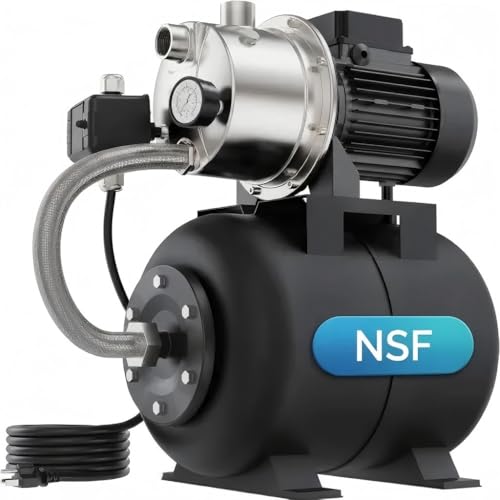
This model features a 1.6 HP motor, stainless steel housing, and a pressure switch allowing automatic operation. It provides robust suction up to 26 ft with around 1340 GPH maximum flow and supports a compact 5-gallon pressure tank. Best for domestic water supply and irrigation where a reliable, automatic boost is needed. The included pressure tank assists with pressure stabilization, but the system requires correct tank sizing for optimal performance. Best for households seeking an integrated pressure-boosting solution with automatic control.
Truper 1 HP High-Performance Booster Pump

The Truper booster pump uses a 1 HP motor to increase water volume and stabilize pressure across multiple household outlets. Its automatic flow switch activates when a faucet or shower is opened, saving energy by shutting off when water flow stops. Best for whole-house applications where multiple fixtures require steady pressure. A limitation is that exact head and flow specifications aren’t specified in the listing; ensure your system needs align with a general boost capability rather than very high-pressure demands.
Buying Guide: How To Choose The Right High-Pressure Irrigation Pump
- Head vs. Flow: If you have tall elevation changes or long runs, prioritize higher head capacity. If most sprinklers are near ground level, higher GPH (flow) may be more valuable than extreme head.
- Self-Priming Need: Some models are not self-priming and require priming before use. If you want quick setup, choose a self-priming unit or one with clear priming instructions.
- Durability: Look for stainless steel or corrosion-resistant housings and reliable overload protection to extend service life in outdoor environments.
- Automatic Operation: A built-in pressure switch or flow sensor helps maintain consistent pressure and reduces energy consumption by running only when needed.
- Portability: If you move the pump between locations, consider models with integrated handles or lightweight design for easier transport.
- Sound and Heat: Thermal protection and quieter operation improve usability in residential settings; verify noise levels if needed for late-evening use.
FAQ
- What is the difference between GPH and PSI in these pumps? GPH measures water flow, while PSI (or head in feet) relates to pressure and the ability to push water to a height. Choose a pump with higher GPH for more flow and higher PSI for taller lifts or longer runs.
- Are these pumps suitable for 3/4 inch irrigation lines? Most listed units provide 1/2 inch or 1/2″ NPT connections; verify outlet sizing and adapters needed for your hose or irrigation tubing.
- Can these pumps run continuously? Many models include thermal overload protection, but continuous operation depends on motor duty cycle and cooling. Follow manufacturer guidelines to avoid overheating.
- Do these pumps require a pressure tank? Some configurations pair a pump with a pressure tank to stabilize pressure; others can operate with direct line connections. Assess your system’s need for steady pressure.
- What maintenance is recommended? Regularly inspect fittings for leaks, clean filters or strainers if present, and protect outdoor components from weather exposure when not in use.
- Which pump is best for a small garden? For small gardens, a pump with balanced flow (around 1000–1300 GPH) and moderate head is often ideal to avoid excessive pressure that can mist and waste water.
Add a Comment