Find the right high pressure coolant hose by focusing on operating pressure, material, and temperature range. This guide highlights five top-value options for American buyers, showing who each hose is best for and why. Whether you’re tuning a performance build, replacing worn parts, or outfitting a shop, these selections balance reliability and price. The table below summarizes the key details for quick comparison.
| Product | Size | Material | Working Pressure | Temp Range | Best For |
|---|---|---|---|---|---|
| EVIL ENERGY 3/4″ Heater Hose | 3/4″ ID / 1.10″ OD, 10 ft | EPDM | 100 psi | -40°F to 257°F | Heavy-duty radiator connections |
| EVIL ENERGY 5/8″ Heater Hose | 5/8″ ID / 0.94″ OD, 10 ft | EPDM | 100 psi | -40°F to 257°F | Standard cooling system runs |
| Outus 3/4″ Silicone Heater Hose | 3/4″ ID / 1.25″ OD, 10 ft | Silicone (reinforced) | 85 psi | -40°F to 230°F | Flexible, high-temperature cooling routing |
| Outus 1/2″ ID Heater Hose | 1/2″ ID / 21 mm OD, 50 ft | EPDM | 85 psi | -30°C to 120°C | Long runs in radiator/heating systems |
| 3/8 Inch Fuel Line Hose | 3/8″ ID / 17 mm OD, 10 ft | NBR | 300 psi | -40°F to 257°F | Automotive fuel systems and engines |
EVIL ENERGY 3/4″ Heater Hose – 100 PSI

The EVIL ENERGY 3/4″ heater hose is designed for radiator and coolant circuits. Its EPDM construction supports a working pressure of 100 psi and a burst pressure well above that, with a wide temperature range suitable for extreme hot or cold engine environments. Best for high-flow radiator connections or as a replacement in trucks and SUVs that require sturdy, long-length coolant hoses. Choose this if you need a rugged, straight hose that resists heat and aging in standard cooling systems.
Best for: vehicles with larger-diameter coolant lines and demanding temperature conditions. Limitation: not ideal for oil or fuel lines due to design emphasis on coolant compatibility.
EVIL ENERGY 5/8″ Heater Hose – 100 PSI

This 5/8″ heater hose mirrors the 3/4″ variant in EPDM material and 100 psi working pressure. It’s best for mid-size cooling applications where hoses must bend gracefully while resisting heat and ozone exposure. Its 10-foot length is convenient for common engine bays and easier routing in vehicles with shorter runs. Should be avoided for high-pressure oil lines or non-cooling applications.
Best for: standard cooling loop upgrades or replacements in family sedans and light trucks. Limitation: slightly lower inner diameter may limit compatibility with some OEM fittings.
Outus 3/4″ Silicone Heater Hose
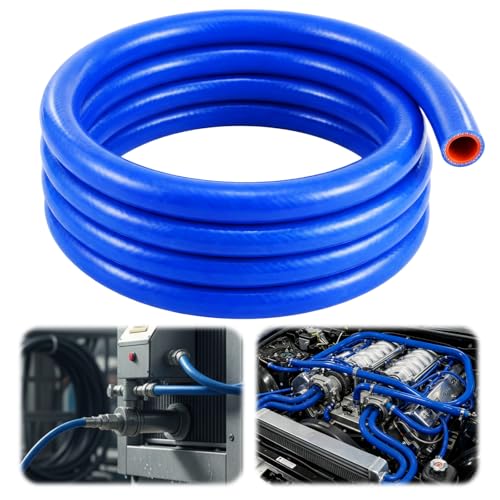
Outus provides a 3/4″ silicone heater hose with a reinforced polyester braid. Silicone offers superior heat resistance and aging performance relative to EPDM, reducing long-term cracking and splitting. It handles up to 85 psi working pressure and 170 psi burst pressure, making it suitable for demanding cooling routes with higher temperature exposure. Not recommended for fuel or oil lines; verify compatibility before use.
Best for: high-temperature coolant routing and flexible installations where silicone’s durability is advantageous. Limitation: higher cost and more cautious handling needed due to silicone softness under extreme conditions.
Outus 1/2″ ID Heater Hose – 50 Ft
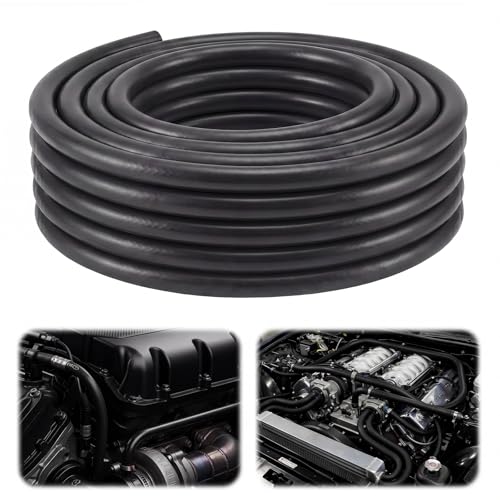
This 1/2″ heater hose from Outus provides long length at 50 feet, enabling extended radiator or heating system runs. Made of EPDM, it withstands typical automotive cooling conditions with an 85 psi working pressure and 213 psi burst pressure. It is printed with size details for installation clarity and resists water, steam, coolant, ozone, and UV exposure. Best for: hobbyists and shops needing bulk hose for multiple replacements. Limitation: not ideal for very high-pressure automotive oil or fuel lines.
3/8 Inch (10mm) ID Fuel Line Hose – 300 PSI

This high-pressure fuel hose uses NBR material optimized for automotive fuel systems and engines. With a 300 psi working pressure and 1160 psi burst pressure, it’s suited for performance or racing fuel line applications. Best for: engines or setups requiring robust fuel delivery lines in controlled environments. Limitation: designed for fuel, not intended for coolant or oil service without verifying compatibility and system requirements.
Buying Guide: Key Considerations For High Pressure Hoses
- Application compatibility: Verify whether the hose is intended for coolant, fuel, oil, or air. Use coolant hoses for cooling systems and fuel hoses for fuel delivery only.
- Working and burst pressure: Choose a hose whose working pressure comfortably exceeds your system’s operating pressure; consider burst pressure for safety margins.
- Material choice: EPDM offers good temperature resistance and durability for coolant; silicone provides superior high-temperature performance but can be costlier; NBR suits fuel lines but check chemical compatibility with fuels and additives.
- Temperature range: Ensure the hose can withstand engine bay temperatures, including hot coolant and ambient heat.
- Size and routing: Measure ID and OD to ensure fitment with clamps and fittings. Consider length to allow routing without excessive bending.
- Flexibility and bend radius: Softer hoses or silicone can bend more easily, reducing stress on connections; check minimum bend radius to prevent kinking.
FAQs
- Q: Can a coolant hose be used for fuel lines? A: No, hoses are typically designed for specific fluids. Use coolant hoses only for cooling systems unless the manufacturer specifies multi-fluid compatibility.
- Q: What is a safe working pressure for most automotive coolant hoses? A: Common ranges are 85–100 psi for many EPDM hoses; always match to your vehicle’s system specs.
- Q: Is silicone better than EPDM for hoses? A: Silicone offers higher temperature tolerance and longevity but at a higher cost and with different handling considerations; EPDM is a solid, durable option for standard cooling tasks.
- Q: How do I choose the correct hose size? A: Measure the inner diameter (ID) of the hose that fits your fittings and compare with the hose’s ID. Ensure the outer diameter fits internal routing and clamps.
- Q: Are longer hoses better? A: Longer hoses provide flexibility for routing but can introduce more resistance and potential leaks if not properly supported. Use the minimal length that achieves a clean route.
- Q: Should I avoid using reinforced hoses in certain applications? A: Reinforced hoses are beneficial for higher pressures and longer runs but may be stiffer and harder to fit in tight spaces.
Add a Comment