If you’re seeking high-definition plasma cutting performance, you want machines that deliver clean, precise cuts on various metals with reliable arc stability. This guide highlights five versatile plasma cutters suited for different skill levels and job scopes—from DIY enthusiasts tackling rusty surfaces to professionals needing robust, power-ready units. The top picks emphasize non-high-frequency and non-touch pilot arc features for safer starts, portability, and clear digital readouts. Buyer types: DIY hobbyists benefit from lightweight, easy-to-use models; shop pros seek higher amperage and flexible voltage; and beginners appreciate guided setup and stability. Below is a quick comparison of the selected products.
| Product | Brand | Voltage | Best For |
|---|---|---|---|
| YESWELDER Plasma Cutter, 65A | YESWELDER | 110/220V | Heavy-duty cutting and gouging |
| ARCCAPTAIN 55A Plasma Cutter | ARCCAPTAIN | 110/220V | Entry to mid-level precision |
| ARCCAPTAIN iControl CUT60 Pro | ARCCAPTAIN | 120/240V | App-controlled, expanded metal |
| YESWELDER CUT-55NHF | YESWELDER | 110/220V | Non-high-frequency, clean cuts |
YESWELDER Plasma Cutter 65 Amp 4-in-1
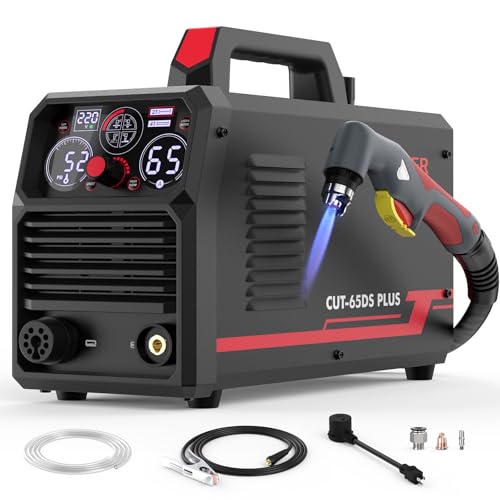
Best for professional workshops that require multiple cutting modes in one unit. The YESWELDER CUT-65DS PLUS provides 65A cutting capacity and four functions: Plate Cutting, Grid Cutting, Gouging, and Marking. It uses a non-high-frequency “blow-back” start, enabling smoother starts and reduced interference with nearby equipment. The device supports 110V and 220V inputs, enabling deeper cuts at higher voltage: up to 5/8″ at 110V and 1″ at 220V. The integrated MCU digital control ensures consistent performance with precise, clean results. This model is well-suited for shops that need versatility without switching machines.
Best for: Professional fabricators and maintenance shops seeking a 4-in-1 tool with solid cutting depth and stable arc performance.
Limitations: The non-high-frequency start may be less forgiving for some ultra-thin-metal initial cuts compared to high-frequency units. Juggling four functions can require a learning curve for absolute beginners.
ARCCAPTAIN 55A Plasma Cutter

Best for DIY enthusiasts and semi-professional shops needing a portable, high-efficiency cutter with non-touch pilot arc. The 55A unit utilizes non-touch pilot arc technology to reduce electrode wear and improve consumable life, while supporting 60% duty cycle at 55A. It offers dual voltage operation (110/220V) and a light frame (about 19.8 pounds), making it easy to transport between job sites. The included air pressure management features help users optimize air flow for cleaner cuts. This model delivers solid mid-range performance, particularly when working on painted or rusted surfaces where clean starts matter.
Best for: Beginners and mobile technicians who value portability without sacrificing cutting depth on common metals.
ARCCAPTAIN iControl CUT60 Pro
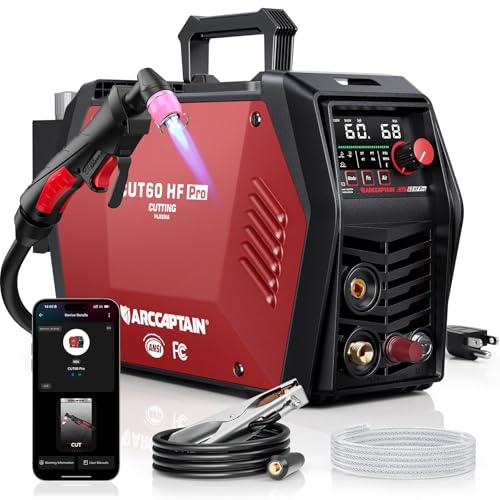
Best for technologically inclined users who want remote operation and expanded metal cutting. The CUT60 Pro features an app-controlled interface that supports remote setting adjustments, live data monitoring, and preset saving via a smartphone. It handles 120V and 240V inputs, with enhanced cutting range: approximately 10–16 mm at 120V and 16–26 mm at 240V, enabling heavy-duty cutting with minimal slag. It excels in rust-removal and mesh pattern cutting through its expanded metal mode and pilot arc rust-cleaning function. The device stabilizes the arc across stainless steel, carbon steel, aluminum, and copper, offering consistent edges when properly pressurized.
Best for: Tech-savvy users and fabricators who benefit from remote control and expanded metal capabilities.
YESWELDER CUT-55NHF Plasma Cutter
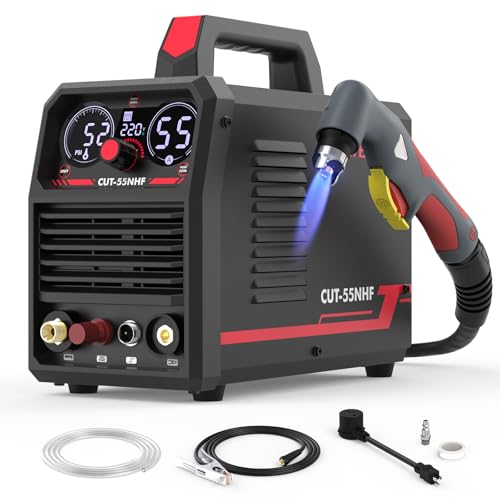
Best for price-conscious buyers who need reliable performance for common metals. The 55A unit offers non-high-frequency, non-touch pilot arc for safer starts and reduced electrode wear. It provides a clean cut spec of approximately 1/3″ at 110V and 1/2″ at 220V, with a maximum cut around 1/2″ at 110V and 4/5″ at 220V. The IPT40 torch supports efficient cutting on painted or rusty surfaces without touching the metal. This model is a practical choice for small workshops or hobbyists that require dependable everyday cutting with straightforward controls.
Buying Guide
What amperage do you need?
Higher amperage enables thicker material cuts. Choose at least 55A for typical metalwork up to 1/2″ thick; upgrade to 65A if you work frequently with thicker plates.
Voltage compatibility
Look for dual-voltage units (110V/220V or 120V/240V) to maximize versatility across different job sites and power sources.
Start method
Non-high-frequency (blow-back) starts reduce interference and risk around sensitive equipment. Non-touch pilot arc extends consumable life and is gentler on rough surfaces.
Portability vs. stability
Thinner, lighter models are easy to transport for on-site work, while more robust units suit fixed shop setups with stable power supply.
Additional features to consider
- 4-in-1 functions (cutting, gouging, marking, detailing) can reduce tool clutter but may have a learning curve.
- App control or digital displays aid precise setup and preservation of presets for repetitive tasks.
- Air pressure management and built-in regulators improve cut quality and usability.
Safety and maintenance
Always follow PPE guidelines. Regularly inspect hoses, connections, and consumables to prevent performance dips or emergencies.
What to avoid
Avoid models with limited voltage options if you frequently work on job sites with variable power. Also, avoid units with non-standard torches unless replacement parts are readily available.
FAQ
- Q: Do I need high-frequency start for clean cuts on thin metal?
A: Non-high-frequency start can still provide clean results, with less electrical interference, but some users prefer HF for extremely thin metals. - Q: Can these cutters cut rusty or painted surfaces effectively?
A: Yes, many models use non-touch pilot arc to cut through painted or rusty surfaces more efficiently. - Q: Is dual voltage necessary for beginners?
A: Dual voltage adds flexibility for different power sources and is beneficial for growing workshops. - Q: What maintenance is required for plasma torches?
A: Regularly inspect consumables, clean air filters, and ensure proper air pressure within recommended ranges. - Q: Are app-controlled plasma cutters worth it?
App control can improve workflow and presets for repeat tasks, especially for tech-savvy users.
Add a Comment