When selecting hi-pot testers, reliability, voltage range, and ease of use matter most. This guide highlights five top options suited to different buyers, from hobbyists testing simple components to professionals performing rigorous electrical safety testing. Each product is evaluated for who it’s best for, its standout feature, and any notable limitation. Below, compare key capabilities at a glance in a summary table.
| Product | Best For | Key Benefit |
|---|---|---|
| GLTL 110V Hi-Pot Tester Withstanding Digital Voltage Tester | Small workshops and DIY electronics makers | Integrated digital readout of time, voltage, and current |
| EQCOTWEA Hi-Pot Tester 5KV 100VA | Broad electronic and electrical product testing | Wide applicability and efficient high-voltage testing |
| MULBRANTEX 0-3800V DC Hi-Pot | Professional repair and R&D labs | High-voltage range with precise, adjustable testing |
| BREVELTION 5KV 100VA Hi-Pot Tester | Industrial electrical insulation testing | Wide voltage and leakage current ranges |
| WYDDDARY RK2671AM 110V 10KV Hi-Pot | Educational labs and field service | High-voltage capability with clear LED readout |
GLTL 110V Hi-Pot Tester Withstanding Digital Voltage Tester

The GLTL 110V Hi-Pot Tester provides a compact solution for basic withstand voltage testing. This model delivers AC withstand testing up to 5 kV and uses a regulator-driven output for stable voltage. It features a high-brightness LED digital display that shows test time, voltage, and current, including real-time breakdown values. Best for small workshops and hobbyists who need a straightforward, no-frills tester. Avoid this if you require IEC compliance reports or calibration services built-in.
- Best for: DIY electronics, small repair shops
- Why selected: Simple operation, clear digital readout, reliable regulator-based output
- Caution: Limited mentioned standards; consider calibration needs for formal compliance testing
GLTL Withstand Hi-Pot AC/DC 0-5KV Tester

This high-voltage insulation tester from GLTL covers AC and DC withstand testing up to 5 kV, with 100 VA input power. It’s designed for general-purpose HV test work across electronic components, electrical manufacturing, and educational institutions. An independent calibration report can be provided for an additional fee, which makes it a practical option for those who need traceable results. Best for: labs and manufacturing environments that require periodic HV testing with the option of calibration reports. Limitation: does not specify integrated data logging beyond the display.
- Best for: General-purpose HV tests in labs and small manufacturing
- Why selected: Flexible AC/DC 5 kV capability, potential for calibration reports
- Caution: May require external documentation for formal audits
EQCOTWEA Hi-Pot Tester 5KV 100VA

The EQCOTWEA model emphasizes broad applicability and efficiency. It is designed to meet diverse high-voltage testing needs for various electronic products, rubber and wood items, and motors. The device is described as reliable and durable, built to withstand stresses during high-pressure tests. Best for: production environments requiring rapid testing across multiple product types. Limitation: specific electrical safety certifications are not listed in the product features.
- Best for: Diverse product testing in industrial or manufacturing settings
- Why selected: Wide applicability and high-efficiency testing
- Caution: Consider verifying any required standards or certifications for your use case
EQCOTWEA Hi-Pot Tester 5KV 100VA (110V)
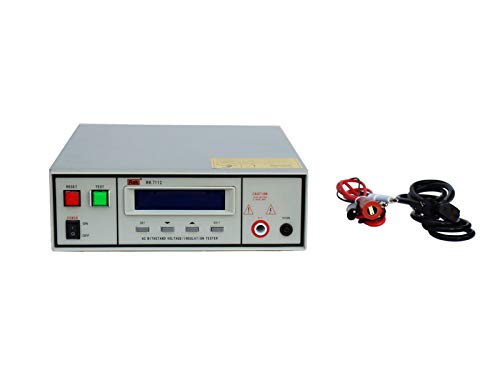
This variant mirrors the 5 kV, 100 VA design for 110V input, ensuring broad applicability and efficient high-voltage testing. It shares the same emphasis on rapid evaluation of voltage resistance for wires, cables, and plugs, with a durable, robust construction. Best for: facilities that require consistent HV testing at 110V operation. Limitation: the listed features do not detail precise DC/AC split or detailed test sequences.
- Best for: 110V systems needing quick, reliable high-voltage tests
- Why selected: Broad testing capability with emphasis on efficiency
- Caution: Confirm compatibility with your components’ voltage and current requirements
0-3800V DC Hi-Pot Withstand Tester (MULBRANTEX)

The MULBRANTEX tester expands the range up to 3800 V DC and targets a broad set of components including IGBTs, MOSFETs, diodes, LEDs, capacitors, and more. It includes adjustable, precise testing and a built-in lithium battery for portable operation. Best for: repair technicians and R&D teams that need portable, high-voltage testing with flexible standards. Limitation: while portable, it relies on lead connections and may require careful handling during high-voltage tests.
- Best for: Portable field testing and component-level HV verification
- Why selected: Wide voltage range, built-in power for outdoor or off-site work
- Caution: Handle with care to maintain safety during HV operations
BREVELTION Withstand Hi-Pot 5KV 100VA Tester
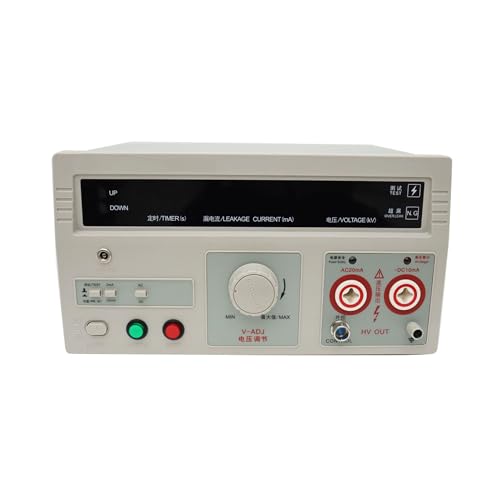
The BREVELTION RK2672AM model provides 0–5 kV AC and DC withstand testing with up to 100 VA and 220V input. It is positioned for general HV testing across electrical accessories, motors, meters, and assorted cables. Best for: industrial environments with a need for both AC and DC HV tests and a robust power profile. Limitation: the feature list is broad; precise calibration or maintenance intervals are not specified.
- Best for: Industrial testing of diverse electrical equipment
- Why selected: Dual AC/DC capability with a broad application range
- Caution: Verify maintenance plans and calibration needs for long-term use
WYDDDARY Withstand Hi-Pot RK2671AM 110V 10KV

The WYDDDARY RK2671AM offers up to 10 kV HV testing on 110V input, with a reliable LED display that shows test time, voltage, current, and real-time breakdown values. It emphasizes safety features like a stable regulator and solid grounding. Best for: educational labs and field service where a clear, visible readout aids quick decision-making. Limitation: the 10 kV capability is powerful; ensure proper PPE and enclosure to maintain safe operation.
- Best for: Education, field service, and quick HV checks
- Why selected: High-voltage capability with straightforward LED readouts
- Caution: Use in properly shielded environments with appropriate safety practices
Buying Guide: Key Considerations For Hi-Pot Testing Equipment
Choosing the right hi-pot tester depends on your testing goals, voltage requirements, and work setting. Consider these factors:
- Voltage range and type: Do you need AC, DC, or both? How high should the withstand voltage be for your tests?
- Test duration and safety: Are short, quick tests sufficient, or do you need longer cycles and built-in safety features?
- Portability vs. bench use: Do you value a handheld device with internal power or a fixed benchtop unit?
- Calibration and documentation: Will you require traceable calibration reports or certification marks?
- Component compatibility: Are you testing switches, capacitors, MOSFETs, diodes, or complete assemblies?
- Power requirements: What input voltage is available (110V, 220V, etc.) and is a built-in battery needed?
FAQ
- What is a hi-pot test? It is a high-potential test that checks insulation’s ability to withstand voltage without breakdown.
- Do hi-pot testers require calibration? Some applications require calibration reports; verify your regulatory or customer requirements.
- Can DC withstand tests replace AC tests? They test different aspects of insulation; both may be needed depending on the product.
- Is a higher voltage always better? Not necessarily. It should match the product’s expected operating voltage and safety standards.
- What safety gear is recommended? Insulated gloves, protective eyewear, and ensuring a safe work area with proper enclosures are advised.
- Are these testers suitable for field use? Portable models exist, but verify battery life, lead safety, and carry case suitability for outdoor work.
Add a Comment