When selecting a heavy duty thrust bearing, look for bearings designed to handle high axial loads, durable materials, and clear installation data. This guide spotlights five high-utility options suitable for automotive, industrial machinery, and manufacturing environments. Each entry includes who it’s best for, why it’s a strong pick, and any notable limitations to consider.
| Product | Bearing Type | Estimated Bore / OD | Key Strength | Best For |
|---|---|---|---|---|
| XMHF 51204 | Axial Thrust Ball Bearing | 20 mm / 40 mm | Carbon steel, robust axial load capacity | Compact projects needing reliable axial support |
| uxcell 2pcs T101/904A1 | Thrust Tapered Roller Bearing | 1.01″ bore / 2″ OD | Smooth rotation, good axial load handling | Automotive and industrial machinery |
| SKF 51206 | Grooved Race Thrust Bearing (3 Piece) | 30 mm bore / 52 mm OD | High static and dynamic load ratings | Heavy axial loads in one direction |
| Nice 607V | Full Complement Thrust Bearing | 0.75″ bore / 1.6563″ OD | Full set of balls for higher capacity | Industrial equipment with high load needs |
| SKF 51108 | Single Direction Thrust Bearing | 40 mm bore / 60 mm OD | Open design for on-site lubrication | Applications requiring lubrication ease |
XMHF 51204 Carbon Steel Thrust Ball Bearing 20x40x14

Model: 51204. Material: Carbon steel. Inner diameter: 20 mm. Outer diameter: 40 mm. Thickness: 14 mm. This axial thrust ball bearing is designed for compact applications where a dependable axial support is needed. Best for small to mid-size machinery where space is at a premium and axial loads are significant but not extreme. A potential limitation is that data focuses on basic dimensions and material; load ratings should be checked against your specific duty Cycle.
uxcell 2pcs T101/904A1 Thrust Tapered Roller Bearings
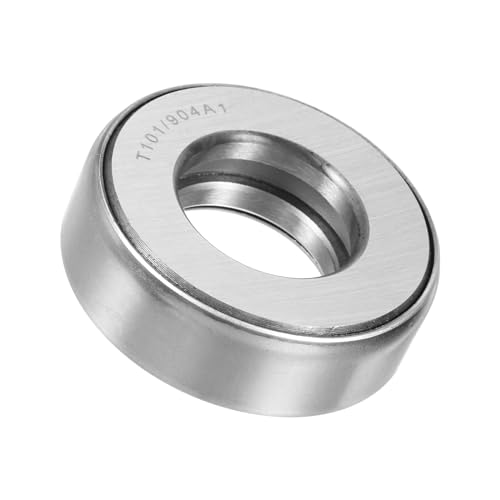
Model: T101/904A1. Bore: 1.01″ (25.654 mm). OD: 2″ (50.8 mm). Width: 0.6299″ (16 mm). Material: Chrome steel. Features smooth operation and good axial load handling with a design that reduces friction for efficient rotation. Best for automotive and industrial applications where vibration reduction and load distribution matter. Limitations include the need for precise alignment during installation and regular maintenance for optimal performance.
uxcell T101/904A1 Thrust Tapered Roller Bearing (Second Listing)

Model: T101/904A1. Bore: 1.01″ (25.654 mm). OD: 2″ (50.8 mm). Width: 0.625″ (15.875 mm). This listing notes rust preventative oiling and soft steel band for installation ease. Best for projects prioritizing simple installation and corrosion resistance. Choose this if you need ready-to-install bearings with straightforward lubrication features.
SKF 51206 Grooved Race Thrust Bearing
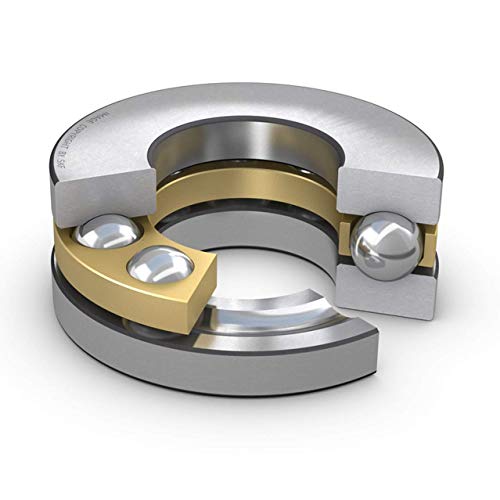
Type: 3-piece, ABEC 1 precision, 90° contact angle. Bore: 30 mm. OD: 52 mm. Width: 16 mm. Open bearing for lubrication in place. This bearing is designed for heavy axial loads in a single direction and uses through-hardened chromium steel for durability. Best for machines facing repetitive, high-load axial demands. Limitation: Open bearing design requires consistent on-stage lubrication, which can increase maintenance needs.
Nice Thrust Bearing 607V Full Complement

Model: 607V. Bore: 0.7500″ (19.05 mm). OD: 1.6563″ (42.09 mm). Width: 0.5450″ (13.84 mm). Full complement of balls for increased capacity. Best for applications needing higher load capacity in a compact footprint. Limitation: Not ideal for extremely high-speed operations due to dense ball configuration; ensure your speed requirements align with the bearing’s design.
SKF 51108 Single Direction Thrust Bearing

Type: 3-piece, grooved race, 90° contact angle. Bore: 40 mm. OD: 60 mm. Width: 13 mm. Open bearing with lubrication access. Best for heavy axial loads in one direction with accessible lubrication channels. Not ideal where sealed bearings are required or where contamination exposure is high without protective housings.
Buying Guide: Key Considerations For Heavy Duty Thrust Bearings
- Load Direction And Capacity: Determine whether you need a single-direction or bidirectional thrust bearing and compare static/dynamic load ratings to your application’s axial demands.
- Material And Surface Treatment: Carbon steel and chrome steel are common; consider corrosion resistance, hardness, and lubrication needs. Full complement bearings offer higher capacity but may require careful assembly.
- Lubrication And Sealing: Open bearings require ongoing lubrication, while sealed or lubed-for-life designs reduce maintenance but may limit re-lubrication options.
- RoHS/Environmental Concerns: Industrial settings may have exposure to moisture, chemicals, or dust—ensure the bearing material and protection meet your environment.
- Installation And Fit: Check bore size, outer diameter, and width for your housing. Tapered designs may demand precise alignment; consider ease of installation features like rust preventative oiling or soft bands.
- Maintenance Schedule: Plan for inspection intervals, lubrication cycles, and potential replacement timelines to minimize downtime.
Frequently Asked Questions
- What is a thrust bearing best used for? – It supports axial loads along the shaft axis, common in gearboxes, rotating assemblies, and heavy machinery.
- What does “full complement” mean? – It indicates a bearing with a complete set of balls, providing higher load capacity at the cost of potentially higher friction.
- Should I choose a tapered roller design? – Tapered rollers spread load and reduce friction for many heavy-duty applications, but require precise alignment.
- Open vs. sealed bearings: which to pick? – Open bearings are easier to lubricate but need maintenance; sealed bearings stay lubricated longer but limit re-lubrication options.
- How do I verify bearing compatibility with my machine?
- Are there quick-installation bearings for tight spaces?
– Match bore, outer diameter, width, and load ratings to your housing and shaft specs; consult OEM guidelines when possible.
– Yes, some listings note rust-preventive oiling and ease-of-installation features; verify with your installation constraints.
Add a Comment