Answering the common buyer question: which heavy-duty telescoping mast should I buy for reliability, height, and ease of installation? This guide highlights five sturdy options suited for professional-grade antenna setups, security camera networks, or temporary towers. Each entry links directly to Amazon for quick reference, notes who it’s best for, and points out any practical caveats. The goal is to help you compare height, construction, and setup features at a glance.
| Product | Approx. Height Range | Best For |
|---|---|---|
| Easy-Up 33′ 2″ Telescoping Mast | 33′ 2″ assembled | Long-range antennas, HAM setups |
| Easy Up 20′ 9″ Telescoping Mast | 20′ 9″ assembled | Compact, portable installations |
| EASY-UP 27′ 7″ Telescoping Mast | 27′ 7″ | Medium-height antennas and cameras |
| ROHN H50 43′ Telescoping Mast | Up to 43′ | High-reach, professional applications |
| NAC Wire And Cables Telescoping Mast | 22′ | Budget-friendly, lightweight projects |
Easy-Up 33′ 2″ Telescoping Mast

The assembled height reaches 33 feet, with a stepped construction that lists four main sections plus a long top. This model uses 18-gauge steel in the sections, offering robust strength for extended-height mounting. Best for buyers needing a taller mast that still remains serviceable for frequent deployments, such as HAM operators or long-range antenna installations. A potential limitation is the heavier overall weight and the need for secure footing or base support for tall setups. Choose this when you must optimize reach without sacrificing stability.
Easy Up 20′ 9″ Telescoping Mast

This model tops out at 20′ 9″ and is described as steel construction with a compact 5-foot collapsed length for shipping and storage. It features 2-1/4″ bottom, 2″ second, 1-3/4″ third, and 1-1/2″ fourth sections, with a top of 1-1/4″ diameter. Best for mobile setups, small-to-medium antenna installations, or temporary projects where quick setup is essential. It’s a strong choice for portability, but be aware of potential wind sensitivity at taller extensions and ensure proper base anchoring in exposed locations.
EASY-UP 27′ 7″ Telescoping Mast

Fully extended height reaches 27′ 7″, with rotating guy rings and a heavy-duty thumbscrew/collar system for height adjustment. The bottom section is 2″ OD, followed by 1-3/4″, 1-1/2″, and a top 1-1/4″ section, all in 18-gauge steel. Best for users needing a solid mid-range mast with easy height adjustment and better stabilization features. A potential drawback is the heavier setup compared to smaller masts, requiring careful transport and installation planning.
ROHN H50 43′ Telescoping Mast
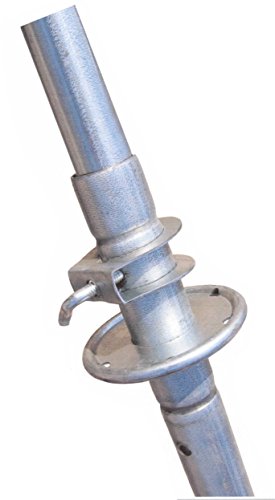
Extends up to 43 feet, a high-height option from a well-known brand. This mast is well-suited for professional radio and communications setups where maximum reach is a priority. The data highlights its sturdy construction and purpose-built design for demanding applications. Best for fixed installations that benefit from a tall, stable mast. Caution: taller masts require strong bases and wind-aware mounting to prevent sway or instability in high-wind conditions.
NAC Wire And Cables Telescoping Mast

Push-up mast offering 22 feet of height with 18 AWG galvanized steel construction. This option emphasizes domestic manufacturing and a straightforward design suitable for lighter-duty installations or budget-conscious projects. Best for quick, temporary installations where light-duty loads are expected. Limitation: not intended for very high wind scenarios or heavy-duty antennas without proper stabilization.
Buying Guide
What should you consider when choosing a heavy-duty telescoping mast?
- Height needs: Determine the maximum height you require and whether you’ll deploy at partial heights often.
- Material and weight: Steel is strong but heavier; aluminum is lighter but may offer different load limits.
- Base and installation: Assess base compatibility, ground conditions, and anchoring requirements for stability at height.
- Section diameters: Larger lower sections typically add strength; plan how sections overlap for strong, stable extensions.
- Wind tolerance: Higher masts require robust anchoring and weather-aware mounting strategies.
- Portability vs. durability: Trade-offs between portable quick-setup models and rugged, permanent installations.
- Rotating features: If you plan multiple antennas, rotating rings or collars can improve signal directionality.
Practical decision flow
- If you need maximum height and occasional portability, consider ROHN H50 43′.
- For a balance of height and portability, Easy-Up 33′ 2″ or 27′ 7″ offer strong options.
- For lightweight or budget-conscious setups, NAC 22 ft provides a lower-cost alternative.
- For compact storage and frequent moves, Easy-Up 20′ 9″ emphasizes transportability.
Installation and safety considerations
- Use appropriate base plates or concrete pads as specified by the manufacturer.
- Inspect sections for corrosion or damage before each deployment.
- Apply anti-seize or lubrication where indicated to ensure smooth operation of sliding sections.
- Follow local regulations for height and structure in your area.
Frequently Asked Questions
- What height is best for amateur radio antennas? A height around 20–40 feet is common, depending on terrain and local interference.
- Are these masts suitable for long-term installations? Yes, many models are designed for stable, weather-resistant use when anchored properly.
- Do I need special tools to assemble? Basic tools are usually sufficient; many models include assembly hardware and instructions.
- Can I use these masts for cameras or other mounting needs? Yes, some models are versatile for cameras, security equipment, and other devices.
- How do I maintain a telescoping mast? Regularly check locking hardware, lubricate moving parts, and inspect for corrosion or wear.
- Is wind resistance a major concern? Yes; higher masts require robust bases and proper guy lines or braces to minimize sway.
Add a Comment