Strong, gravity-fed pallet conveyors are essential for moving heavy loads efficiently in warehouses, loading docks, and industrial spaces. This guide highlights five top options designed for durability, portability, and flexible use. Best for large facilities with frequent pallet movement are heavy-duty gravity conveyors; best for job-site or mobile operations are foldable or portable designs. Each option is evaluated for load capacity, ease of use, and potential limitations to help you pick the right system for your needs.
| Product | Best For | Key Benefit |
|---|---|---|
| Ultimation Roller Conveyor Flow Rail – Heavy Duty | Warehouses with fixed sections | Sturdy galvanized steel frame and smooth skate wheels |
| Ultimation Roller Conveyor – Heavy Duty Gravity Flow | Truck bed or trailer slides | Portable gravity flow with high load capacity |
| Ultimation Skate Wheel Flow Rail – 5′ | Stationary storage and linear transfer | Powder-coated rail with high-capacity wheels |
| Ultimation 5′ Flow Rail with Paired Plastic Wheels | Heavy-duty pallet and carton flow | Robust steel frame with dual-wheel configuration |
| Conveyor Rails with Plastic Skate Wheels 5′ – T1/T2 | Conveyor side guides and integration | Four wheels per foot for steady movement |
Ultimation Roller Conveyor Flow Rail – Heavy Duty Gravity Conveyor

This 5′ galvanized steel rail system is built for heavy-duty tasks in warehouses or basements. The durable skate wheels support smooth movement of boxes and pallets, reducing manual handling for consistent throughput. It’s best for facilities needing a versatile, gravity-fed setup that can span multiple sections when combined with other flows.
Who it’s best for: facilities seeking a robust, unpowered conveyor for stationary or semi-permanent installations where gravity can drive movement. Why selected: high-strength steel frame and compatible wheel design promote reliability in continuous workflows.
Caution: As a gravity-based system, movement depends on proper incline and load distribution. Ensure the ramp is set correctly to maintain safety and performance.
Ultimation Roller Conveyor – Heavy Duty Gravity Flow

Designed for flexible operations, this gravity-driven flow conveyor uses a galvanized steel frame and sturdy skate wheels. It is suitable for long runs in warehouses or loading areas where sections can be joined for extended support. The unpowered design makes it ideal for sites needing simple, reliable movement without motors.
Who it’s best for: operations prioritizing portability within a fixed area or temporary unloading zones. Why selected: strong load-capable rails that can adapt to various layouts with ease.
Caution: The system relies on gravity; ensure proper incline and load alignment to prevent jams or misrouting of pallets.
Ultimation Skate Wheel Flow Rail – 5′ Heavy Duty

This 5′ heavy-duty rail uses a powder-coated finish and steel wheels, delivering solid performance for gravity-based transport. With a 1300 lb per foot capacity, it supports substantial pallet and carton flow. It’s well-suited for larger operations that demand durable rails and stable tracking.
Who it’s best for: larger facilities needing high capacity, long runs, and reliable tracking. Why selected: strong load rating and robust wheel configuration promote steady movement across extended sections.
Caution: Heavier rails require proper mounting and space planning to maintain smooth operation and safety in high-traffic areas.
Ultimation 5′ Flow Rail With Paired Plastic Wheels
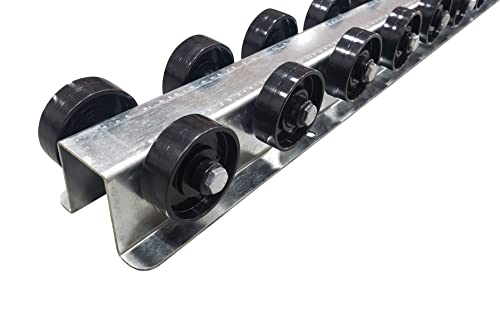
This flow rail features a heavy-duty galvanized steel frame and paired plastic wheels, offering stable transfer of pallets and cartons. The dual-wheel setup provides enhanced balance on uneven floors, making it a practical choice for mixed-load environments.
Who it’s best for: facilities needing reliable, high-capacity flow with improved cornering or edge-tracking. Why selected: paired wheels help reduce wheel misalignment and stress under heavy loads.
Caution: Plastic wheels may wear differently on rough floors; check wheel wear and surface conditions to minimize resistance and noise.
Conveyor Rails with Plastic Skate Wheels – T1 Style

Heavy-duty steel construction with 260 pounds per foot load rating provides strong support for pallets and cartons. The 4 wheels per foot design helps maintain smooth motion, especially in longer runs or conveyor side guide setups. Best for integrated systems where rails interact with other components.
Who it’s best for: operators needing compatibility with side guides and multiple rail sections. Why selected: high load rating and reliable wheel spacing improve stability across long distances.
Caution: Ensure proper alignment of sections to prevent gaps or mistrails that could impede flow.
Heavy Duty Roller Conveyor Table – 15″ X 78″

This foldable roller conveyor table offers a 600 lbs capacity, stainless steel frame, and 15″ by 78″ working surface. It’s portable and suitable for temporary loading zones, trucks, or workstations where a stable, mobile surface is needed.
Who it’s best for: workers needing a portable, durable surface for quick transfers and staging. Why selected: foldable design enables easy transport and space-saving storage.
Caution: Folding mechanisms should be inspected for smooth operation to avoid unexpected collapsing under load.
Threlaco Foldable Conveyor Roller
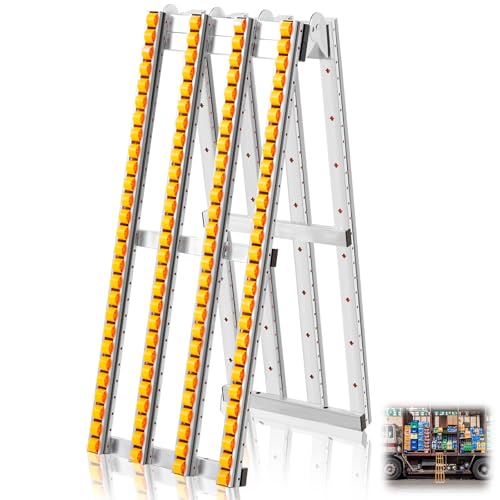
This 15″ W x 78″ L foldable gravity-powered conveyor uses a galvanized steel frame with multiple rows of rollers. It folds for compact storage and is designed for mobile operations, making it a practical option for temporary freight handling in facilities and on-site jobs.
Who it’s best for: mobile operations needing quick setup and teardown with strong steel construction. Why selected: portable design plus gravity transport reduces energy use and labor costs.
Caution: Folding joints and pulleys require regular maintenance to prevent misalignment during use.
Buying Guide: Key Considerations For Heavy Duty Pallet Conveyors
- Load capacity and rail type: Compare pounds-per-foot ratings and wheel configurations to assess suitability for your pallet sizes and weights.
- Layout and space: Consider whether you need fixed rail runs, portable sections, or foldable tables that can be relocated or stored when not in use.
- Power and movement: All products listed are unpowered gravity conveyors. Evaluate slope, friction, and loading patterns to ensure consistent flow.
- Material and durability: Galvanized steel frames resist corrosion and wear; powder-coated rails offer additional protection in harsh environments.
- Ease of installation: Some systems require anchoring or alignment to work optimally. Ensure space for ramps, inclines, and sections to connect smoothly.
- Maintenance: Check for wheel wear, bearing access, and potential pinch points. Regular inspection helps maintain performance and safety.
- Compatibility with existing systems: If you already have side guides or auxiliary conveyors, verify screw-pittings and rail spacing for seamless integration.
FAQ
- What is a gravity conveyor and where is it best used?
A gravity conveyor moves goods using slope rather than power, making it ideal for unloading, temporary staging, and long-term stationary installations in warehouses or loading docks.
- How much weight can these 5-foot rails support?
Weights vary by model; typical ratings range from around 200 to 260 pounds per foot when fully supported. Always verify per-section load ratings for your pallets.
- Are foldable conveyors suitable for frequent relocation?
Yes. Foldable or portable designs are designed for quick setup and teardown, benefiting mobile operations or spaces needing temporary handling.
- Do these systems require electricity to operate?
No. They are unpowered gravity conveyors; movement relies on incline and gravity.
- What maintenance should I plan for these conveyors?
Regularly inspect wheels, bearings, and joints; tighten connections; and ensure proper alignment to prevent jams and ensure smooth flow.
Add a Comment