Answering the question, this guide highlights five heat resistant insulation materials ideal for automotive and general high-temperature applications. These products are selected for durability, heat reflectivity, and ease of installation. They suit car owners seeking better cabin comfort, professionals needing welding or furnace protection, and everyday DIYers insulating windows or equipment. The top picks balance temperature tolerance, moisture resistance, and adhesive or easy-cut installation. Below, each product is explained with who it’s best for and practical caveats.
| Product | Best For | Key Specs |
|---|---|---|
| ALLWIN Car Heat Sound Deadening Insulation Mat | Vehicle owners wanting interior cooling/heating comfort | 40″ x 40″, 394 mil, -40°F to 300°F |
| FLASLD Aluminized Heat Shield Mat | High-temp protection for engines and exhaust areas | 12″ x 24″ (and variants), up to 2000°F, 0.032″ thick |
| CHAOGANG 200mil Car Insulation Mat | Heavy-duty heat and sound dampening in small to mid panels | 16.5″ x 315″ roll, 200 mil, -40°C to +149°C |
| AGHITG Reflective Insulation Foam | Window and draft protection for homes/RVs | 48″ W x 10 ft L, aluminum foil + bubble layer |
| Siless Liner 157 mil Car Foil Foam | Budget-friendly heat blocking and vibration dampening | 36 sq ft, closed-cell PE foam with AluFoil finish |
ALLWIN Car Heat Sound Deadening Insulation Mat (40″ x 40″)

The ALLWIN insulation mat delivers substantial heat and sound blocking while acting as a lightweight moisture-proof barrier. With a 394 mil thickness and a generous 10.8 square feet of coverage, it is designed to reduce radiant heat from the engine bay, exhaust, and summertime sun. Its self-adhesive, closed-cell foam construction minimizes moisture absorption and odor, making it suitable for automotive interiors and under-hood use. Best for DIY enthusiasts installing large panels or engine compartments.
Best for: Car owners needing a wide coverage area and strong radiant heat reduction. It’s a practical choice for lining hoods, roofs, doors, and trunks where heat transfer is a concern.
Why selected: High thickness yields robust thermal barrier and the self-adhesive, waterproof profile supports simple installation even in tight spaces.
Caution: Hi-heat environments near direct flame sources should be evaluated; verify surface compatibility before application in extremely hot zones.
FLASLD Aluminized Heat Shield Mat (12″ x 24″)
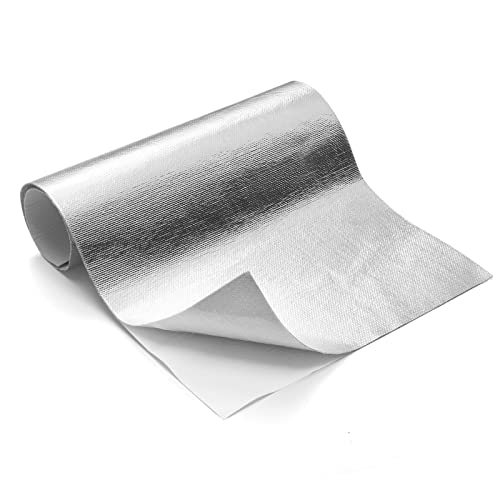
This aluminized heat shield mat uses a reflective surface combined with durable silica fiber to handle extreme heat. It reflects up to 95% of radiant heat and stands up to thousands of degrees when properly applied. The 12″ x 24″ panel (also available in other sizes) is ideal for headers, exhaust piping, or small engine bays where heat management is critical. Best for: projects needing strong radiant heat reflection and long-term protection against UV and heat damage.
Why selected: The combination of high-temperature resistance and reflective efficiency makes it a robust option for high-heat zones where conventional insulation would fail.
Caution: The sheet can be stiff; ensure proper trimming and edge sealing to maintain full coverage and prevent gaps that could permit heat leakage.
CHAOGANG 200mil Car Sound Deadener Mat

The CHAOGANG insulation uses a high-density closed-cell PE foam with a 200 mil thickness to provide robust heat insulation and vibration dampening. Its total coverage area is 36.16 square feet, making it suitable for larger panels like hoods, doors, and trunks. Working range extends to -40°C to +149°C, supporting both cold winters and hot summers. Best for: Budget-conscious installers who need a balance of heat protection and sound deadening over larger vehicle surfaces.
Why selected: The combination of thick foam and aluminum foil facing offers dependable radiant heat blocking and moisture resistance in automotive environments.
Caution: The roll format may require careful cutting; avoid gaps at seams to maintain consistent insulation performance.
AGHITG Reflective Insulation Foam

The AGHITG insulation roll features 48 inches of width and 10 feet of length with a double-sided aluminum foil surface and air bubble layer. It reflects heat efficiently, helping to keep interiors cooler in summer and warmer in winter. It is suitable for RV windows, house insulation, and other areas where heat transfer is a concern. Best for: Window insulation or draft reduction projects in homes or recreational vehicles.
Why selected: The large roll size and reflective design make it versatile for various shapes and window openings, while the bubble layer adds an air gap for added insulation.
Caution: Not a rigid panel; it requires careful shaping and securing for irregular window frames to avoid air gaps that reduce effectiveness.
Siless Liner 157 Mil Aluminum Foil Finish

The Siless liner is a closed-cell PE foam with an aluminum foil finish, delivering high heat blocking with a light footprint. It includes an adhesive layer for easier installation and is lauded for blocking radiant heat up to 98%. It is lightweight, waterproof, and flexible, enabling use on cars, boats, and DIY projects. Best for: People seeking cost-effective, easy-to-install heat and sound blocking with strong moisture resistance.
Why selected: Excellent value per square foot with reliable thermal barrier and vibration dampening properties. The adhesive backing speeds up installation without additional cements or tapes.
Caution: While highly versatile, it may not provide the same level of flame resistance as specialized high-heat blankets in extreme industrial applications.
Buying Guide: Key Considerations For Heat Resistant Insulation
What will you insulate and under what conditions? Consider the environment and temperature range, surface type, installation method, and moisture exposure. For automotive use, prioritize self-adhesive or spray-ready materials with good moisture resistance and low odor. For high-heat applications like welding or furnace areas, select aluminized or ceramic fiber blankets rated for thousands of degrees and check edge sealing capabilities.
What temperature range do you need to cover?
Use a product rated for temperatures near your target. Under-hood automotive areas may require materials around -40°F to 300°F or more, while welding tables may demand 1800°F or higher resistance.
Do you need reflectivity or barrier properties?
Reflective aluminized surfaces help reduce radiant heat, while dense foams and fiberglass-like barriers block heat transfer more effectively in insulating enclosures and walls.
Is moisture resistance important?
Foam and foil laminates with closed-cell structure resist moisture better and reduce odor, which is crucial in vehicle interiors or damp environments.
How easy is installation?
Self-adhesive mats are fastest for DIY installations. Rolls and blankets offer flexibility for irregular shapes but may need cutting and sealing to avoid gaps.
Budget and coverage
Higher thickness often increases performance but also cost and weight. For large areas, consider the overall cost per square foot and how many panels you must cover.
Practical tips for buyers
- Measure space accurately and plan seams along edges to minimize voids.
- Trim to fit curved or irregular shapes; use edge seals or heat-resistant tape where applicable.
- Avoid blocking critical vents or sensors when installing under-hood insulation.
- Check compatibility with paints, adhesives, or direct contact with exhaust components.
FAQ
- What is the most effective material for radiant heat in a car hood?
– Reflective foil-based products with a high-temperature rating and adhesive backing offer strong radiant heat reduction, especially when placed near the engine bay and exhaust components. - Can these materials be installed without professional help?
– Yes, many products are designed for DIY installation with self-adhesive backing or simple cutting. Follow surface prep and edge-sealing instructions for best results. - Will insulation block engine heat completely?
– Insulation reduces radiant heat and dampens noise but cannot completely eliminate heat transfer. It improves cabin comfort and equipment protection when correctly applied. - Are there safety concerns with high-temperature blankets?
– High-temperature blankets are designed for safety but must be kept away from direct flames and used within rated temperatures. Follow product guidelines for safe usage. - Which material is best for a camper window shield?
– A reflective insulation roll with bubble layer (like AGHITG) provides heat reflectivity and flexible coverage for windows, reducing heat gain in summer.
Add a Comment