When choosing an HDPE water main pipe or related potable water lines, the goal is to ensure safe drinking water delivery, long-term durability, and suitability for your project. This guide highlights five top products that are compatible with residential and commercial potable water systems. Each choice is explained with who it’s best for, its key strengths, and a practical caveat to consider before purchase.
| Product | Best For | Key Benefit |
|---|---|---|
| Cresline Polyethylene Pipe 1-1/4″ x 100′ 160 Psi For Drinking Water | Residential and small commercial potable systems | High pressure rating and NSF potable-use compliance |
| Cresline Polyethylene Pipe 1″ x 100′ 100 Psi For Drinking Water | Budget-conscious installations | Made in United States, suitable for drinking water |
| Pex-A Tubing 1-1/2″ x 100 ft Coil, Non-Barrier Pipe for Potable Water | Flexible water distribution with easy routing | Highest flexibility among PEX types |
| Pex-A Tubing 1″ x 300 ft Coil (Oxygen Barrier) | Hydronic radiant floors and flexible indoor runs | Oxygen barrier for integrated heating systems |
| Supply Giant QGX-X1100 PEX Tubing for Potable Water, Non-Barrier 1 in. x 100 ft | Cost-effective PEX B option for multiple sizes | Budget-friendly with broad compatibility |
Cresline Polyethylene Pipe 1-1/4″ x 100′ 160 PSI For Drinking Water

- Brand: Cresline Plastic Pipe
- Material: High-density polyethylene (HDPE)
- Size/Pressure: 1-1/4″ diameter, 100 feet, rated up to 160 psi
- Use: Suitable for potable water delivery in residential and commercial settings
The best choice for higher-pressure potable water runs where reliability and NSF-compliant drinking water delivery are required. This HDPE pipe offers durability against corrosion and cracking, making it well-suited for long-term irrigation, wells, and main supply lines in compact installations. Choose this if you need robust HDPE performance and a strong safety standard for drinking water.
Limitation: While excellent for pressurized water, longer runs may require proper joining and trenching considerations to maintain integrity and prevent contamination at joints.
Cresline Polyethylene Pipe 1″ x 100′ 100 Psi For Drinking Water
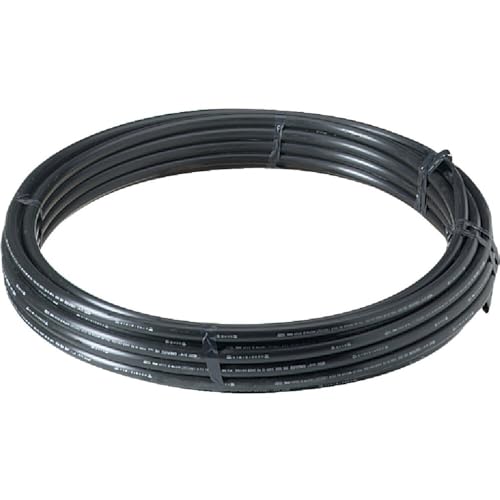
- Brand: Cresline Plastic Pipe
- Material: HDPE
- Size/Pressure: 1″ diameter, 100 feet, 100 psi
- Use: Drinking water piping in residential and commercial projects
Best for budget-conscious projects that still require potable water safety. This pipe is light, flexible, and suitable for short to mid-length water mains where high pressure is not a limiting factor. It’s a practical option when cost is a primary concern and NSF standards apply.
Limitation: Lower pressure rating than the 1-1/4″ variant means it may not be ideal for higher-demand portions of a main line or irrigation-heavy setups.
Pex-A Tubing 1-1/2 Inch x 100 Ft Coil, Non-Barrier

- Brand: SUPPLYGIANT
- Type: PEX A tubing, non-barrier
- Size: 1-1/2″ by 100 ft
- Use: Potable water distribution; flexible routing
Best for flexible plumbing runs where tight bends and fewer fittings are advantageous. PEX A provides the most bend radius among PEX types, which reduces installation time and potential leak points. Suitable for indoor potable networks and short outdoor runs where flexibility matters.
Caution: As with all PEX, ensure compatibility with fittings and insulation schemes in your climate to avoid instability or thermal expansion issues.
Pex-A Tubing 1 Inch x 300 Feet (Oxygen Barrier)
- Brand: SUPPLYGIANT
- Type: PEX A tubing, oxygen barrier
- Size/Length: 1″ by 300 ft
- Use: Hydronic radiant floor heating and potable water distribution
Best for radiant floor heating projects or indoor distribution where oxygen diffusion reduction is beneficial. Oxygen barrier helps protect the pipe system in closed-loop installations. Choose this if you’re integrating heating with potable water in a single system.
Limitation: Oxygen-barrier PEX is more specialized; ensure your fittings and accessories support barrier-type tubing to avoid compatibility issues.
Supply Giant QGX-X1100 PEX Tubing for Potable Water, 1 in. x 100 Feet
- Brand: SUPPLYGIANT
- Type: PEX B (non-barrier) tubing
- Size/Length: 1″ x 100 ft
- Use: Potable water distribution; budget-friendly option
Best for cost-effective installations requiring reliable potable water supply with standard PEX compatibility. It supports a range of fittings and is suitable for indoor plumbing networks. This option can be a practical choice when a full PEX B system is appropriate for the project scope.
Limitation: PEX B pricing and availability can vary; verify local code compatibility with PEX materials and fittings in your area.
SharkBite 1/2 Inch x 3/4 Inch MHT Washing Machine Valve
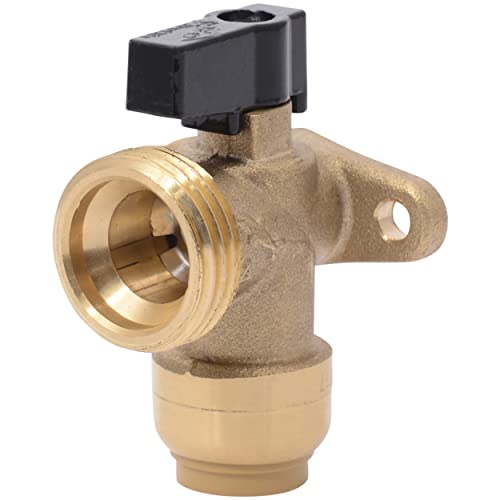
- Brand: SharkBite
- Type: Brass push-to-connect valve
- Inlet/Outlet: 1/2 in. push-to-connect inlet; MHT outlet
- Use: Washing machine connections; compatible with PEX, CPVC, PE-RT, HDPE, copper
Best for tight spaces where a quick install is needed without tools. This valve provides a reliable connection for washing machine lines and can be integrated with multiple pipe materials. Use this if your project requires a compact, tool-free valve solution.
Limitation: Not a main water pipe; this is a branch valve and should be used where appropriate in supply lines.
Pex-A Tubing Coil – 1 Inch x 100 ft (Non-Barrier)
- Brand: SUPPLYGIANT
- Type: PEX A tubing, non-barrier
- Size/Length: 1″ x 100 ft
- Use: Potable water distribution; flexible distribution runs
Best for shorter indoor runs where bend flexibility and ease of installation are priorities. This coil is suitable for replacing old piping in tight spaces and for complex routing with fewer joints. Consider this option when indoor plumbing demands versatile tubing.
Limitation: Non-barrier PEX is less ideal for outdoor exposure or long outdoor runs without protective shielding or insulation.
Buying Guide
- Material compatibility: For main potable water lines, prioritize HDPE (HDPE main pipe) for durability, chlorine resistance, and NSF approval. PEX options are typically used for indoor runs and radiant heating, offering flexibility and ease of installation.
- Pressure rating: Choose a pipe with an appropriate psi rating for your system. Higher psi ratings support demanding irrigation or mainline applications, while lower psi options may fit simple residential loads.
- Installation environment: Indoor, outdoor, and underground installations have different requirements. HDPE main lines often require fusion joints or mechanical fittings, while PEX benefits from push-to-connect and clamp methods.
- Codes and certifications: Ensure materials meet NSF/ANSI potable water standards and align with local plumbing codes. Barrier versus non-barrier PEX plays a role in oxygen diffusion and indoor heating integration.
- System design: Determine whether you need mainline HDPE for primary supply and supplementary PEX for distribution or radiant heating. Mixing materials is common when performance and installation practicality drive the choice.
- Budget vs. longevity: HDPE main pipe tends to be a robust long-term option for outdoor and underground runs. PEX is often more cost-effective and easier to install in interior spaces.
FAQ
- What is HDPE pipe best used for in water mains? HDPE pipe is well-suited for underground potable water mains due to its durability, corrosion resistance, and strong pressure rating.
- Are PEX tubes acceptable for potable water mains? PEX is commonly used for indoor distribution and radiant heating, but HDPE is typically preferred for main lines. PEX can connect to main lines via compatible fittings.
- Do I need barrier or non-barrier PEX? Barrier PEX helps limit oxygen diffusion in heating systems; non-barrier PEX is often used for standard potable water lines.
- What certifications should I look for? NSF/ANSI potable water certifications and adherence to local plumbing codes ensure safe, compliant installations.
- Can these pipes handle irrigation as well as drinking water delivery? Yes, many HDPE and PEX products are versatile for potable water and irrigation, but confirm PSI ratings and local code allowances for each application.
- Is fusion or compression preferred for HDPE joints? Fusion welding is a common method for HDPE mains, providing strong, leak-free joints, while mechanical fittings are also used in certain installations.
Add a Comment