Precision pressure calibration relies on reliable hand-operated pumps that deliver stable hydraulic or pneumatic pressure with minimal drift. This guide reviews five top hand pump pressure calibrators designed for calibration labs, field calibration, and instrumentation maintenance. Each selection emphasizes accuracy, ease of use, durable construction, and compatibility with common fluids and gases. Whether you need dual-source hydraulic and vacuum capability or compact low-pressure handling, these models offer robust performance for routine calibration tasks and critical testing environments.
Summary of selected products:
| Product | Brand | Key Strengths | Range (Pressure) | Weight | Url |
|---|---|---|---|---|---|
| High Pressure Hydraulic Hand Pump Calibrator DPI-2300 | INSTRUKART | Dual source (hydraulic pressure & vacuum), fine vernier, ergonomic design | 0 to 600 Kg/Cm² (0–700 Bar) | ≈2.5 kg | View |
| Hand Operated Pressure & Vacuum Calibrator AI-DP1-2200 | INSTRUKART | Compact, wide vacuum and pressure ranges, solid fittings | Vacuum to -0.9 Kg/Cm²; Pressure to 30 Kg/Cm² (435 PSI) | ≈3.3 Lbs. | View |
| Hand Operated Pneumatic Calibrator AI-DP1-2200 (60 Bar) | Ace Instruments | Lightweight, aluminum/stainless steel construction | Vacuum to -0.9 Kg/Cm²; Pressure to 30 Kg/Cm² (60 Bar) | ≈1.5 kg | View |
| AI-DP1-2300 Hand Pump Calibrator (DPI-2300) | INSTRUKART | Dual hydraulic and vacuum source, fine vernier, ergonomic | 0 to 600 Kg/Cm² (0–700 Bar) | ≈2.5 kg | View |
| Low Pressure LPP-01 Hand Pump | INSTRUKART | Fine micro-adjustment, compact form factor | 1 Bar max; Vacuum to -0.3 Bar | ≈600 g | View |
The products above cover a spectrum from low-pressure room monitoring to high-range lab calibration, including devices with dual hydraulic and vacuum capabilities, compact handheld units, and models optimized for field service. The choice depends on the required pressure range, the presence of vacuum functionality, device weight, and how fine-tuned the pressure adjustments must be for your calibration workflows.
High Pressure Hydraulic Hand Pump Calibrator DPI-2300

The DPI-2300 model from INSTRUKART offers a dual-source design combining hydraulic pressure and vacuum generation, supporting a broad range from 0 to 600 Kg/Cm² and up to 700 Bar. A built-in fine adjust vernier enables precise pressure setting, while a needle valve permits controlled pressure release. The selector valve toggles between vacuum and pressure generation, which is useful for calibration of instruments requiring both modes. The device is constructed from SS 304 and is designed for ergonomic handling, with molded handles and an adjustable stroke. Suitable fluids include water and oil, depending on configuration. Weight is about 2.5 kg, making it portable for bench or field use.
Key considerations for this model include its dual-source capability, which reduces the need for separate equipment when calibrating pressure transducers or gauges that require vacuum checks. The hardware materials (SS 304) promote corrosion resistance in typical calibration labs. Users should ensure compatible seals and fluids to maintain accuracy over time and verify the hydraulic/PV sources are properly calibrated for repeatable results.
AI-DP1-2200 Hand Operated Pressure & Vacuum Calibrator
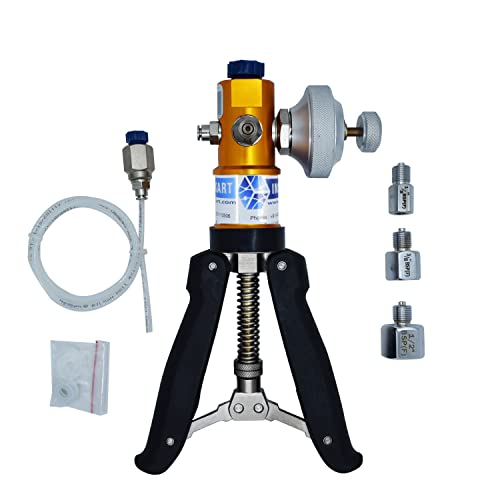
This handheld calibrator from INSTRUKART is designed for versatility in calibration labs and field service. It features both pressure and vacuum measurement parameters with a vacuum range up to ambient minus 0.9 Kg/Cm² (-13 PSI) and a pressure range up to ambient plus 30 Kg/Cm² (435 PSI). The unit ships with a comprehensive fittings kit (1/2” BSPF to 3/8” BSPF and 1/2” BSPF to 1/8” BSPF) and uses O-rings and fittings of SS 304, ensuring durability in demanding environments. The weight is around 3.3 pounds, and construction blends aluminum and stainless steel for both strength and lightness. This model is well-suited for technicians who need quick setup with reliable performance in both directions of pressure testing.
Considerations include ensuring compatibility with your existing adapters and hoses, as well as verifying the calibration traceability of the device. Calibration intervals depend on usage intensity, the fluids used, and the precision requirements of your testing programs. The dual-parameter capability supports multi-point calibration tasks efficiently.
AI-DP1-2200 Pneumatic Calibrator (60 Bar)

The Ace Instruments unit focuses on pneumatic calibration with a 60 Bar maximum pressure range and a seamless integration of vacuum capabilities (ambient to -0.9 Kg/Cm²). It uses a combination of aluminum and stainless steel in construction, contributing to a lightweight yet sturdy build with straightforward operation. Weighing around 1.5 kg, this model is particularly portable for technicians who need to carry a compact calibration device to job sites or smaller laboratories. The design emphasizes ease of use, with reliable seals and fittings that resist typical wear in field environments.
When considering this model, evaluate whether 60 Bar suits your typical calibration tasks or if higher-range units are required for your instrumentation. The pneumatic design offers quick responsiveness, but it may not replace hydraulic units in tasks requiring higher pressure ranges or more rigid vacuum control. Connectors and hoses should be kept in good condition to maintain accurate readings over time.
AI-DP1-2300 Hand Pump Calibrator (DPI-2300)
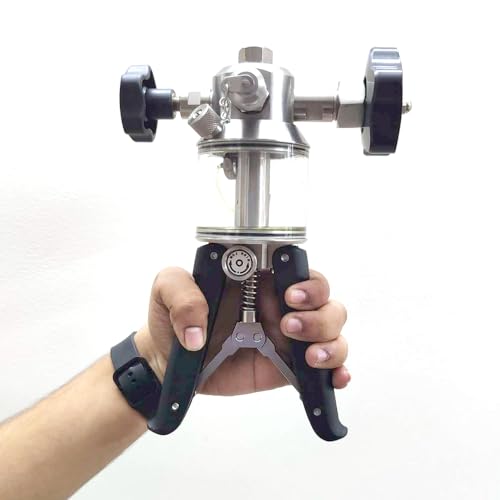
The DPI-2300 from INSTRUKART mirrors the high-range capabilities of the DPI-2300 model with a dual hydraulic and vacuum source. It features a built-in fine adjust vernier for precise micro-adjustments, and a needle valve that enables controlled release of pressure. The selector valve allows easy switching between vacuum and pressure modes, supporting intricate calibration steps for pressure transducers and gauges. The handles are ergonomically designed for comfortable long-duration use, and the stroke can be adjusted to match the user’s workflow. At 0 to 600 Kg/Cm², it is suitable for demanding lab calibration tasks, with construction in SS 304 and a light 2.5 kg weight profile for portability on benches and in field kits.
Key considerations include ensuring compatibility with your existing calibration routines and check whether you require secure locking features for high-precision regimes. Regular maintenance of seals, vernier alignment, and flow paths will help sustain accuracy across measurement campaigns. This model is especially appropriate for labs handling high-pressure transducers and calibrations requiring both vacuum and pressure generation in a single tool.
Low Pressure LPP-01 Hand Pump
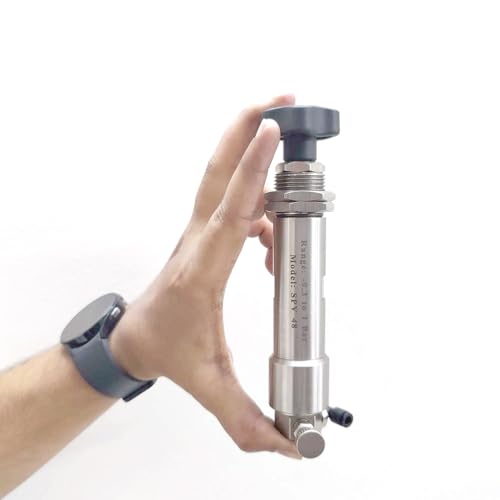
The LPP-01 is INSTRUKART’s low-pressure calibrator, designed for HVAC, room pressure monitoring, and filter monitoring applications. It provides fine pressure adjustment with a 1 Bar maximum and vacuum capability up to -0.3 Bar, making it ideal for environmental and building automation tasks where low-pressure monitoring is critical. Its brass construction with electroless nickel plating offers good durability and corrosion resistance, while the 4 mm push-fit hose to 1/4” BSP (F) master connection supports straightforward integration with standard piping hoses. The compact dimensions and relatively light weight make it convenient for in-field use and quick setup on equipment housings or control panels.
Purchase considerations for the LPP-01 include whether your calibration program prioritizes ultra-fine control at low pressures, and whether your system’s fluids are compatible with brass components. The device’s micro-adjustment capability is well-suited for routine verification tasks and low-pressure sensor alignment, though it may not replace higher-range equipment for pressurizing devices beyond 1 Bar.
Buying Guide: Key Purchase Considerations
- Pressure range: Match the calibrator range to your common tasks. High-range units handle industrial sensors and lab transducers; low-range devices are ideal for HVAC and building automation.
- Source type: Decide between hydraulic, pneumatic, or dual-source models. Dual-source units offer flexibility for instruments requiring both pressure and vacuum testing.
- Vacuum capability: If your calibration workflow includes vacuum testing or negative-pressure checks, ensure the device provides a stable vacuum range with reliable seals and valves.
- Accuracy and vernier control: A fine-adjust vernier and a precision needle valve improve repeatability, essential for calibration traceability.
- Materials and durability: Stainless steel (SS 304), aluminum, and brass with corrosion-resistant finishes extend lifespan in lab and field conditions.
- Ergonomics and weight: Lighter units enhance portability for field calibration; ergonomic handles improve comfort during extended use.
- Adapters and fittings: Check compatibility with standard BSP and BSPF connections and whether adapters are included for common hose sizes.
- Maintenance: Consider seals, O-rings, and calibration intervals. Devices with modular components simplify service and recalibration.
- Applications: For calibration labs, prioritize models with higher stability, traceable accuracy, and the ability to generate both pressure and vacuum at required ranges.
- Portability vs. capacity: Field technicians may prefer compact devices with adequate range, while benchtop lab units can emphasize maximum stability and repeatability.
In selecting the appropriate hand pump calibrator, weigh your typical measurement ranges, the need for vacuum generation, weight and portability, and the compatibility of fittings with your existing calibration hardware. The models reviewed here provide options across low- to high-range calibration scenarios, balancing rugged construction with user-friendly operation and adjustable precision to help maintain measurement accuracy across diverse environments.
Add a Comment