Answering the question: which gas-powered plate compactors deliver reliable hard-pack results for walkways, patios, and driveways? This guide highlights five solid choices for American buyers, focusing on engines, plate size, vibration rate, and ease of use. The selections cover professional-grade jobs and DIY projects alike. Each product is rated for who benefits most, with practical notes to help you decide between portability, power, and efficiency. A quick buying table follows the intro to summarize key specs at a glance.
| Product | Engine | VPM | Plate | Best For |
|---|---|---|---|---|
| VEVOR 6.5HP Plate Compactor | 196cc / 6.5HP | 5,600 | 12 in | Heavy-duty paving and larger projects |
| VEVOR Plate Compactor (2.8 HP) | 78.5cc / 2.8HP | 5,250 | 18.7 x 11.8 in | Smaller patios and walkways, budget-friendly |
| BILT HARD Plate Compactor | 196cc / 6.5HP | 5,500 | 21 x 14.5 in | Versatile, mid-to-large projects |
| SuperHandy Plate Compactor | 7HP / 196cc | 5,500 | 20 x 15 in | Dust control and heavy-duty tamping |
| WEN 6.5HP Plate Compactor | 196cc | 5,700 | Not specified in data | Balanced choice for DIY and light professional tasks |
VEVOR 6.5HP Plate Compactor — 12″ Plate, 5,600 VPM

The VEVOR 6.5HP plate compactor delivers a robust 196 cc engine with 5,600 vibrations per minute and a 12-inch stamped plate. This setup targets heavy-duty tamping and deeper compaction depth, making it suitable for larger paving jobs, road work, and dense fill. Best for contractors and DIYers tackling medium to large areas where speed and plate stiffness matter.
Best for: Professionals needing high output on sizable projects, and DIYers who value efficiency and durability.
Limitation: Heavier design and higher vibration may require operator stamina and good control techniques over long sessions.
VEVOR Plate Compactor (2.8 HP) — 18.7 x 11.8 in Plate
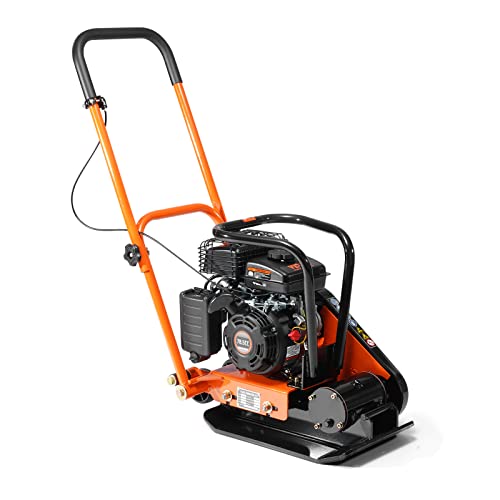
This second VEVOR model uses a smaller engine (2.8 HP) but offers a larger plate surface for efficient coverage on walkways and patios. It provides up to 5,250 VPM and an 8-inch maximum depth, with a 221-square-inch plate design. It is well-suited for compact spaces and quick turnarounds where maneuverability and reach matter.
Best for: Small to medium projects where a balance of weight, plate area, and cost is preferred.
Limitation: Lower engine power compared to the 6.5HP models, which can affect deep compaction on tougher substrates.
BILT HARD Plate Compactor — 21 x 14.5 in Plate

The BILT HARD unit pairs a 196cc engine with 5,500 VPM and a 21 x 14.5 inch plate for efficient compaction on sidewalks, patios, and parking areas. Folding transport wheels and a shock-absorption system improve operator comfort and mobility, making it a practical choice for frequent transport between sites.
Best for: Users needing a portable, comfortable machine that still delivers strong compaction on moderate-to-large surfaces.
Limitation: Heavier weight (about 126 pounds) can require some assistance for initial positioning on uneven ground.
SuperHandy Plate Compactor — 7HP, Water Tank

The SuperHandy model pairs a high-powered 7HP engine with a built-in water tank to minimize dust during slurry work and concrete preparation. It offers a 5,500 VPM, a 12-inch depth, and a 20 by 15 inch plate. This option is valuable for projects requiring dust suppression and heavy-duty tamping on loose soil or asphalt.
Best for: Projects where dust control is important, and tough compaction is needed on larger areas.
Limitation: The water tank adds weight and requires occasional refilling during long jobs.
WEN 6.5HP Plate Compactor — Wheels Included
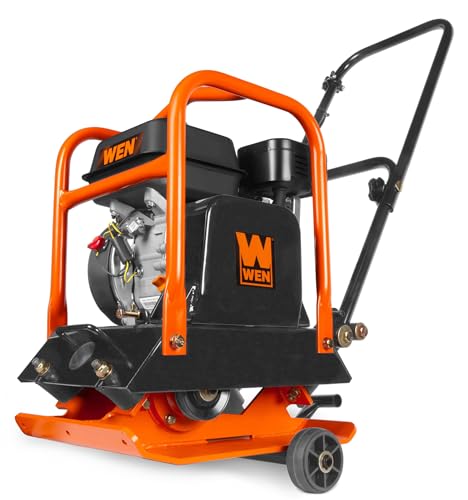
The WEN unit features a 196cc engine delivering up to 3,350 pounds of force at 5,700 blows per minute. A wheel kit and lifting handles simplify transportation and storage, making it a practical choice for DIY projects and light professional tasks where mobility matters more than peak power.
Best for: Homeowners tackling sidewalks and patios with frequent site movement; value-oriented choice.
Limitation: Lower peak compaction force compared to 6.5HP models, which may be less ideal for very dense soils or asphalt.
GAOMON 7HP Plate Compactor — 22.1 x 15.9 in Plate

The GAOMON 7HP model uses a 212cc engine to deliver up to 5,600 VPM and a large 22.1 x 15.9 inch plate for broad surface coverage and faster stabilization of soils and asphalt. This is a strong option for larger residential driveways or commercial pathways where surface finish matters.
Best for: Projects requiring a wide plate footprint and strong vibration for quick, even density gains.
Limitation: Higher horsepower means more operator effort needed to manage control and steering on uneven ground.
Stark USA 7.0HP Plate Compactor — 20 x 14 in Plate

The Stark USA unit provides a 212cc/7.0HP engine with 5,000 VPM and a 20 x 14 inch plate. It emphasizes a balance of velocity and plate size with a folding transport wheel kit to simplify storage and relocation around sites.
Best for: Users needing a reliable middle-ground option with solid power and manageable weight for frequent transport.
Limitation: Slightly lower compaction force than the heaviest 6.5HP models on very dense substrates.
BETTERI Plate Compactor — 6.5HP, 20 x 15 in Plate

The BETTERI model features a 6.5HP engine with 2,500 pounds of compaction force and 5,400 VPM. Its 20 x 15 inch plate supports effective coverage for medium-to-large areas, making it a practical option for walkways and paving projects. Folding handles and transport wheels support easy movement and storage.
Best for: Users who want a straightforward, EPA-certified machine for standard paving jobs with good efficiency.
Limitation: Noted for moderate depth capabilities; consider deeper-tamping needs if required.
Buying Guide: Key Considerations for Gas-Powered Plate Tampers
- Project size and surface type: Larger plates and higher VPM suit bigger areas and dense soils; smaller plates fit tight spaces and walkway work.
- Engine power versus weight: Higher HP models deliver stronger compaction but are heavier and more tiring to operate over long periods. Balance power with operator stamina.
- Portability features: Folding handles, transport wheels, and wheel kits reduce fatigue and improve site-to-site mobility.
- Dust and debris management: Models with water tanks help control dust on dry soils, improving air quality and visibility.
- Maintenance needs: Look for engines with accessible spark plugs, air filters, and simple fuel/oil mixing or separation requirements.
- Surface finish and depth: Consider maximum plate depth and vibration rate to ensure the chosen unit meets the project’s density and leveling goals.
- Regulatory and safety: Ensure EPA compliance where required, and follow operator safety guidelines for vibration exposure and noise.
Frequently Asked Questions
- What should I look for in a gas-powered plate compactor for driveways?
- Is a bigger plate always better?
- Do I need a water tank on a plate compactor?
- Which model is best for DIY homeowners?
- How important is EPA compliance?
- Can these units tamp asphalt and soil equally well?
Look for a plate size that matches the area, a vibration rate (VPM) that speeds compaction, and a robust engine to handle asphalt and soil densities.
Not always. A larger plate covers more area but can be harder to maneuver in tight spaces. Choose plate size based on project dimensions and access.
Water tanks help reduce dust on dry soils. They are beneficial for concrete dust control but add weight.
Models with wheels, lighter weight, and adequate VPM and plate size—such as WEN or BETTERI—offer a balanced DIY-friendly experience.
EPA compliance matters for legality and environmental standards in many regions; check local requirements before purchase.
Most models are designed to compact both soil and asphalt, but some perform better on soil due to plate size, weight, and VPM. Review the specified compaction force and depth for each task.
Add a Comment