Answering buyers seeking reliable gas-powered pumps for chemical transfer, drainage, or irrigation tasks. These options suit contractors, farmers, boaters, and homeowners who need portable, fuel-powered pumping strength. The following five products offer a mix of high flow, durability, and chemical resistance to handle water, mild chemicals, and agri-applications. The summary table below highlights key strengths for quick comparison.
| Product | Best For | Flow (GPM) | Notes |
|---|---|---|---|
| Honda WX10 32 GPM | Small-crew jobs, portable setups | 32 | Lightweight with Honda GX engine |
| PACER SE2UL E5.5 | General transfer, robust build | 200 | Self-priming, durable housing |
| PACER SE2PL E550 | Heavy-duty transfer, higher head | 150 | Corrosion-resistant construction |
| Red Lion 6RLPG-2U | Chemical transfer, portability | — | Chemical-friendly thermoplastic, lightweight |
| sjcdicnj 2 Stroke 43cc | Compact, field use | 282.5 ft³/h ≈ 118 GPM | High lift, efficient gas engine |
Honda WX10 32 GPM Water Pump

Best for: homeowners, boat owners, and small-scale drainage tasks. This self-priming pump uses regular gasoline and delivers 32 gallons per minute with a total head lift of 121 feet. It features a Honda GX series 4-stroke commercial engine for reliable starting and steady power. Weighing about 13 pounds, it is portable enough for moving around a yard or boat deck.
Why selected: The Honda engine reliability pairs with a compact, light design, making it ideal for quick pump-outs, pool draining, or pond maintenance. The included hose adapter, suction hose, clamps, and strainer add value for immediate use in diverse environments.
Caution: Gasoline-powered units require proper ventilation and handling; ensure the pump is on a level surface and secured during operation to prevent tipping.
Pacer Pumps SE2UL E5.5 Multi-Purpose Pump
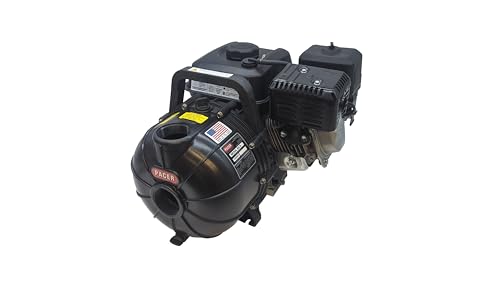
Best for: routine water transfer with a strong self-priming design. This model offers 2″ suction and discharge ports with a high flow capability of 200 GPM and a 120 ft. TDH, suitable for large-scale irrigation, drainage, or quick liquid transfers in industrial or agricultural settings.
Why selected: The SE2UL E5.5 is built for durability and versatility, including a self-cleaning double volute and a robust chemical- and corrosion-resistant construction, making it a reliable, long-lived option for challenging transfer applications.
Caution: Heavy-duty performance comes with a heavier unit; ensure appropriate lifting and mounting to prevent strain during operation.
Pacer Pumps SE2PL E550

Best for: heavy-duty chemical transfer that needs corrosion resistance. The SE2PL E550 features a glass-reinforced polyester case, corrosion-resistant EPDM elastomers, and stainless-steel fasteners. It delivers up to 150 GPM, with a 100-foot head and 50 PSI working pressure.
Why selected: The combination of chemical resistance and rugged construction makes this pump well-suited for everyday transfer tasks involving mild chemicals or fertilizers, while maintaining strong performance under pressure.
Caution: Check chemical compatibility with the intended liquid, as some aggressive substances may require additional seals or coatings.
Red Lion 6RLPG-2U Thermoplastic Pump

Best for: chemical transfer in portable setups. This lightweight model uses thermoplastic construction with carbon ceramic and EPDM seals, designed for handling agricultural chemicals and liquid fertilizers. It includes a built-in handle for portability and weighs around 50 pounds without fuel.
Why selected: The thermoplastic body improves chemical resistance and reduces weight, making it a better choice for on-field spraying setups and portable transfer tasks.
Caution: The weight is still substantial; plan for safe lifting and use with a stable support when filling or transporting.
sjcdicnj 2 Stroke 43cc Water Transfer Pump

Best for: portable, field-ready pumping tasks where space is limited. This 43cc two-stroke engine pump delivers a high lift of 98 feet and a robust flow, with a 0.26-gallon fuel capacity and efficient diaphragm carburetion for extended operation with reduced fuel use.
Why selected: Its compact design and solid lift make it ideal for gardening, irrigation, or drainage in tight spaces where larger pumps are impractical.
Caution: Two-stroke engines require correct air/fuel mixture and regular maintenance to ensure reliable operation in varying conditions.
Pacer Pumps SE2UL EL7 7HP Gas Pump

Best for: versatile pumping across water, wastewater, and mild chemical transfers. The EL7 models use a 7HP OHV gasoline engine and are designed for broad compatibility with various transfer tasks, including agricultural and environmental uses.
Why selected: This option provides a balance of power and adaptability, suitable for operators who encounter a mix of liquids and flow demands in daily work.
Caution: Ensure the pump is matched to the liquid’s chemical properties to prevent premature wear or seal damage.
Buying Guide
What flow rate do I need?
Higher GPM values speed up transfers, but you must size the pump to the liquid’s viscosity and the hose diameter. For large volumes or irrigation tasks, choose models rated around 150–200 GPM. For limited-space or yard work, 32–150 GPM options can be sufficient.
What head height matters?
TDH (total dynamic head) indicates how high the pump can push liquid. If your task requires lifting to a high elevation or over obstacles, select a pump with a TDH that meets or exceeds that height. Note that larger heads may reduce GPM.
Material and chemical compatibility
Ferrous metals corrode with many agricultural chemicals. Look for pumps with corrosion-resistant housings (glass-reinforced polyester, thermoplastic) and seals compatible with the liquids you’ll transfer. EPDM elastomers and stainless-fasteners improve longevity in chemical applications.
Portability vs. durability
Portable pumps are ideal for fieldwork and quick swaps between sites but may trade some durability for weight. Heavier units often offer stronger construction and higher PSI capacity, better for long-term projects in rugged environments.
Fuel type and maintenance
Gasoline-powered pumps are common for mobility. Check fuel tank size, engine displacement, and required maintenance schedules. Two-stroke engines are lighter and compact but require precise fuel mixing, while four-stroke engines offer steadier operation and lower maintenance in heavy use.
Best-use scenarios by product type
- Compact, portable tasks: Honda WX10, Red Lion 6RLPG-2U
- High-volume transfer: PACER SE2UL E5.5, sjcdicnj 43cc
- Chemical or fertilizer transfer: Red Lion and PACER SE2PL E550
- All-around versatile: PACER EL7 series, Flo-Fast kit for auxiliary transfers
Short FAQ
- What is the difference between a gas-powered and electric pump?
– Gas-powered pumps offer mobility and strong performance without a power cord, suitable for remote sites; electric pumps depend on nearby power but may be quieter and simpler to maintain. - Can these pumps handle chemical solutions beyond water?
– Some models are designed for mild chemicals or fertilizers; verify chemical compatibility with seals and housing materials before use. - Is self-priming important for transfer tasks?
– Yes, self-priming pumps reduce priming time and are helpful when the intake line is partially filled or below the liquid source. - Do these pumps require special maintenance?
– Regular checks of fuel mixture (for two-stroke engines), oil levels, seals, and hoses help ensure dependable operation and longer life. - How should I select a pump for irrigation?
– Prioritize flow rate, head height, and compatibility with irrigation liquids, plus durability and portability for field use.
Add a Comment