This guide helps buyers choose reliable gas engine hydraulic pumps by focusing on portable power, flow, and pressure. It suits contractors, DIY farmers, and heavy-duty users who need on-site hydraulic capability without electrical power. Each top pick is matched to a typical use case, with clear reasons for selection and practical limitations to consider. Below is a quick summary of the five chosen products to compare at a glance.
| Product | Engine Type | Typical Use | Key Strength |
|---|---|---|---|
| Hypro Diaphragm Pump D30GRGI with GX160QH | Gas Engine (GX160QH) | General hydraulics, spray/pressure tasks | High psi and flow with integrated regulator/gearbox |
| Primary Mover Gas-Powered Hydraulic Power Unit | Honda GX200 | Heavy-duty hydraulic work, dump/hoist | Higher flow, adjustable relief, field-start options |
| Hypro D30GRGI Diaphragm Pump | Gas Engine-driven diaphragm | Rugged hydraulic pumping, industrial tasks | Regulator and gearbox included, strong performance |
| MOBILE GAS POWERED HYDRAULIC TRAILER POWER UNIT | Honda GX390 | Trailer-mounted hydraulic power on site | High power, up to 3000 psi |
| AR RKA4G40HNL Horizontal Triplex Plunger Pump | Gas Engine (Horizontal Triplex) | High-precision, continuous hydraulic pumping | Reliable 4000 psi, 4 GPM |
Hypro Diaphragm Pump D30GRGI with GX160QH Gas Engine

The Hypro D30GRGI combines a diaphragm pump with an 4.8–5.5 HP GX160QH gas engine. It is capable of up to 9.6 gpm and 580 psi at 3600 RPM, suitable for demanding hydraulic tasks in remote areas. The included 9910-GS40GI pressure regulator helps manage pressure for delicate operations, while the AR1636 gearbox allows attachment to the engine with a 3/4″ shaft for compatibility with common hydraulic systems. Best for users needing solid power in compact form, such as spraying or lifting operations where electric power isn’t available.
Best for: contractors and farmers who value reliable hydraulic output in a portable package. Better for: tasks requiring higher pressure with compact engines. Avoid this if: you need extremely low-noise operation or a fully electric start system.
Primary Mover Gas-Powered Hydraulic Power Unit
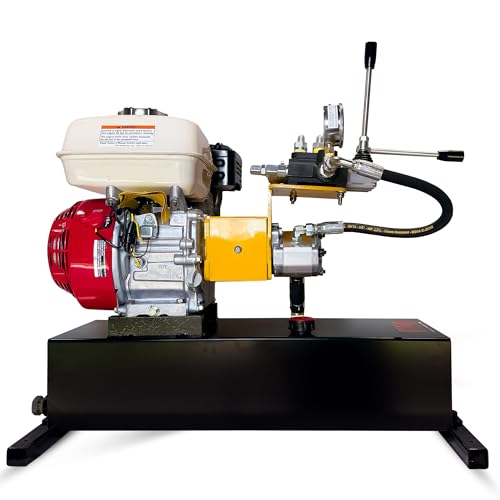
This unit centers on a Honda GX200 engine (200cc, 6.5 HP) delivering robust hydraulic flow and control. It features a single-stage gear pump with 2.5 GPM flow, a 3200 PSI adjustable relief valve, and an integrated pressure gauge for precise monitoring. It also offers flexibility with pull-start or electric-start options for field reliability. Best for professionals who need consistent performance for heavy-duty tasks like dump trailers and hoisting applications.
Best for: professionals requiring precise hydraulic control and reliable field-start options. Better for: larger projects that benefit from higher PSI regulation. Avoid this if: you need ultra-lightweight equipment or a purely electric-start setup.
Log Splitter Build Kit: 13 GPM Hydraulic Wood Splitter Pump

Although marketed for log splitter builds, this 13 GPM, 4000 PSI two-stage pump offers high flow and pressure suitable for custom hydraulic systems. It includes a shaft extension and mounting data that helps with integration into gas engines in DIY projects. Best for: builders creating a dedicated, high-flow hydraulic setup. Better for: those comfortable with assembly and alignment, as it is a kit rather than a turnkey unit. Avoid this if: you need an all-in-one packaged hydraulic power unit with integrated controls.
MOBILE GAS POWERED HYDRAULIC TRAILER POWER UNIT

This trailer-mounted unit uses a 13 HP Honda GX390 engine and a Prince gear pump delivering 5–6 GPM with a pressure ceiling around 3000 psi. It is designed for on-site hydraulic power where mobility and reach matter, such as trailer-mounted dump beds or portable hoists. Best for: crews needing a solar-agnostic, heavy-duty power source on a trailer. Better for: tasks where mobility and fuel autonomy at multiple sites are priorities. Avoid this if: you require compact equipment with light weight or lower PSI ranges.
AR RKA4G40HNL Horizontal Gas Engine Triplex Plunger Pump

The AR RKA4G40HNL provides a horizontal gas engine-driven triplex plunger pump rated for up to 4000 psi at 4.0 GPM. This configuration emphasizes smooth, high-pressure output suitable for precise hydraulic operations. Best for: users needing reliable, steady high-pressure performance in a compact horizontal engine setup. Better for: continuous, high-precision pumping tasks. Limitations: ensure engine compatibility and mounting specifics align with your system’s frame and shaft requirements.
Buying Guide
What should you consider when choosing a gas engine hydraulic pump?
- Power versus portability: Balance engine size (HP) with the need for mobility. Larger engines provide better flow and pressure but add weight and footprint.
- Flow and pressure: Choose GPM and PSI that meet your primary task—lift capacity, trenching, or log splitting. Higher PSI helps in stiff hydraulic lines or smaller orifices, while higher GPM reduces cycle times on big tasks.
- Startup and operation: Pull-start vs electric-start affects field use. Electric start offers convenience but requires a battery and charging setup.
- System compatibility: Confirm shaft diameters, gearbox compatibility, and regulator features. A built-in regulator helps prevent over-pressurization in delicate applications.
- Durability and materials: Look for robust housings, corrosion resistance, and seals rated for operating temperatures up to 140°F or higher as needed.
- Portability versus surface handling: Trailer-mounted units offer mobility for yards and job sites; compact units suit tight spaces and single-operator workflows.
Practical buyer tips
- For continuous heavy-duty use, prioritize units with integrated pressure control and reliable start options.
- Consider available spare parts and service access to minimize downtime on critical jobs.
- Match the pump’s inlet/outlet port sizes to your hoses and quick-connects to avoid bottlenecks.
FAQ
- What is the typical use for a gas engine hydraulic pump? — They power hydraulic systems on remote sites without electrical power, suitable for lifting, pressing, and driving hydraulic tools.
- How do you choose between diaphragm and triplex pump styles? — Diaphragm pumps excel in chemical compatibility and steady low-flow work; triplex plunger pumps offer higher precision and continuous high-pressure output.
- Are electric-start options worth it? — Electric starts improve field start speed and convenience but require batteries and maintenance.
- Can I retrofit a gas engine to an existing hydraulic system? — It’s possible but requires careful integration of shaft, valves, and controls; consult manufacturer guidelines or a technician.
- What maintenance is essential for gas-powered hydraulic pumps? — Regular engine oil changes, fuel carburetion checks, regulator calibration, and inspection of seals and hoses.
- Is trailer-mounted power always better for sites? — Not always; trailers add transport logistics but provide mobility across wide work areas.
Add a Comment