If you need unrestricted water flow for lawn irrigation, car washing, or high-demand outdoor projects, a full-flow ball valve is the right choice. These valves maximize water delivery by reducing internal restrictions and using larger bores. The following top picks are designed for 3/4″ garden hoses or similar connections and suit buyers who want durable brass or stainless-steel construction, easy operation, and reliable shut-off. The guide identifies who each valve is best for and why, plus a quick buying table to compare at a glance.
| Product | Brand | Best For | Why It Stands Out |
|---|---|---|---|
| STYDDI Full Flow Brass Garden Hose Shut Off Valve | STYDDI | Users needing maximum water volume in 3/4″ hoses | Very large bore (up to 0.6 inches) for 40-50% more flow; easy quarter-turn shut-off; comfortable lever. |
| Kruuvax 304 Stainless Steel Garden Hose Shut Off Valve | Kruuvax | Heavy-duty, high-flow irrigation or commercial tasks | Extra-wide bore with 50-60% more flow; ergonomic 360° rotatable connector; durable stainless/steel build. |
| YELUN Garden Hose Brass Shut Off Valve Full Flow | YELUN | Durable brass construction with reliable full port | Heavy-brass body; 0.68″ full port; butterfly handle for easy operation; includes packing with washers and tape. |
| Cekwiet Full Flow Garden Hose Shut Off Valve | Cekwiet | Best value with robust full-port design | 0.6″ internal bore; 360° swivel; corrosion-resistant brass body; reliable, long-term use. |
| Eastman 3/4 Inch IPS Full Port Ball Valve | Eastman | Inline shut-off or inline valve usage in water systems | Full port for maximum flow; stamped steel handle with vinyl coating for grip. |
STYDDI Full Flow Brass Garden Hose Valve

Best for high-volume garden watering and quick control. This valve uses a large bore up to 0.6 inches to reduce restriction, delivering significantly more water than standard valves. The brass swivel fitting reduces connection effort, while the interior ball valve and quarter-turn lever allow precise flow control. The lever’s rubberized coating provides a non-slip grip, even when hands are wet.
Avoid this if you require a compact unit for tight spaces; the larger bore and lever may take more space than slim-line models.
Kruuvax 304 Stainless Steel Full Flow Valve

Best for heavy-duty tasks and demanding irrigation. This valve features a wide stainless steel bore and a precision ball mechanism to deliver 50-60% more flow than typical valves. The upgraded ergonomic butterfly-style handle offers a comfortable, non-slip grip, facilitating easy operation even while wearing gloves. Use this for frequent use in gardens, farms, or landscapes requiring sustained high water output.
Note: Ensure the connection ports are tight to avoid leaks; the rotatable connector makes positioning important to prevent strain on hoses.
YELUN Garden Hose Brass Shut Off Valve Full Flow

Best for users needing a robust brass valve with a true full-port design. With a 0.68″ full port, this valve supports high-volume flow and quick drainage, making it suitable for rapid irrigation and debris-prone water lines. The butterfly handle provides easy operation, and the package includes pressure washers and sealing tape for straightforward installation.
Limitations: The full-port design can be slightly heavier than plastic-bodied valves; ensure compatibility with existing hose fittings.
Cekwiet Full Flow Garden Hose Shut Off Valve
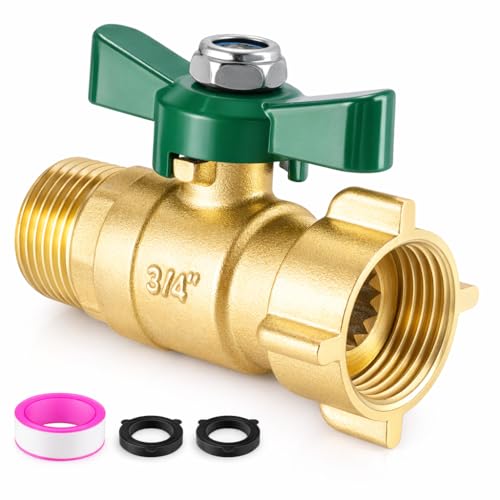
Best for versatile outdoor use where easy multi-angle operation matters. This valve uses a 0.6″ internal bore and a 360° rotatable swivel joint, allowing water to pass with minimal restriction while reducing hose kinking. The solid brass body provides corrosion resistance for long-term outdoor exposure. Choose this if you frequently reposition hoses during tasks.
Limitation: While robust, the joint may loosen over time if not tightened correctly; check fittings periodically.
Eastman 3/4 Inch IPS Full Port Ball Valve

Best as an inline shut-off valve within water systems or for connecting two pipe sections. It features a full port design that supports maximum flow and reduces pressure drop. A stamped steel handle with vinyl coating ensures a comfortable grip, making it a reliable option for regular use in pipelines or hoses connected to larger systems.
Better for permanent installations than quick-connect garden setups due to its inline design and heavier build. Ensure compatibility with IPS threads in your plumbing layout.
Buying Guide
- Port size and flow: Look for full-port valves with bore sizes around 0.6″–0.68″ for true high-flow performance. This minimizes flow restriction.
- Material: Brass and stainless steel bodies offer durability and corrosion resistance for outdoor use; plastic bodies are lighter but may wear faster under harsh conditions.
- Handle design: Ergonomic handles (butterfly or rubber-coated) improve grip, especially with wet hands. Consider the lever type if you need quick shut-off.
- Connection compatibility: Confirm thread standards (1/2″ NPT, 3/4″ GHT, IPS, etc.) match your hoses and piping. Inline valves are ideal for system integration; garden hose valves suit quick connections.
- Swivel joints: 360° swivels reduce hose kinking and allow flexible positioning. This is particularly helpful for large outdoor spaces.
- Installation tips: Use appropriate thread sealant or plumbers tape where needed; tighten connections to prevent leaks without overtightening.
- Usage scenario: For high-volume tasks (irrigation, cleaning, medium-duty farming), prioritize valves with large bores and robust materials. For frequent repositioning, a valve with a rotatable joint is advantageous.
FAQ
- What is a full-port ball valve? A valve with an unobstructed bore when open, allowing maximum water flow with minimal pressure loss.
- Which material lasts longest outdoors? Brass and stainless steel valves generally offer the best corrosion resistance and durability for outdoor use.
- Do full-flow valves fit all hose sizes? Not always. Check bore size and thread standards to ensure compatibility with your hoses and fittings.
- Is a larger bore always better? Not necessarily; larger bores improve flow but may be heavier and require more space. Choose based on your space and needs.
- How do I prevent leaks? Use thread sealant or PTFE tape as recommended; ensure threads are clean and snug without overtightening.
- When should I use inline valves vs. hose-end valves? Inline valves are best for plumbing systems and frequent maintenance; hose-end valves are ideal for quick control at individual hoses.
Add a Comment