Answer: For reliable secondary containment of frac tanks and drilling fluids, choose rugged berms designed to withstand vehicle traffic, chemical exposure, and on-site deployment. This guide highlights five strong options and who they suit best—explaining why each was selected and potential limitations to consider before purchase.
| Product | ||
|---|---|---|
| ENPAC FRAC Tank Spill Containment Berm | Oilfield operations requiring drive-over capability | Durable sidewalls with 12″ aluminum brackets for vehicle access |
| 8’x10’x4″ DuraFlex Drive-Over Foam-Wall Berm | Remote sites needing quick setup and portable containment | Automatic foam walls for easy vehicle access and quick deployment |
| 2nd Containment Spill Containment Berm (2′ x 2′ x 6″) | Small-area leaks, quick response, portable locations | Lightweight, foldable, fits inside a cabinet or vehicle cab |
| Proflex L-Bracket Berm (10’x20′) | Medium-to-large frac tanks and industrial use | Reinforced sidewalls, removable brackets, chemical-resistant liner |
| Proflex L-Bracket Berm (12’x12′) | Compact to mid-size containment needs | Same reinforced design, suitable for multiple sizes |
Summary: The five selections above balance drive-over durability, setup speed, and versatile sizing. ENPAC and the DuraFlex option emphasize quick on-site deployment and vehicle access. The 2nd Containment berm offers portability for tight spaces. The Proflex L-Bracket Berms provide robust chemical resistance and modular sizing for various frac-tank configurations.
ENPAC FRAC Tank Spill Containment Berm

Features show primary containment for storage tanks and drilling fluids in oilfield operations, with durable 12″ aluminum brackets that allow equipment and vehicles to drive over after brackets are removed. Quick setup enables fast deployment on-site. Best for: operators needing drive-over capability and durable on-ramp access. Caution: brackets must be removed when driving over the berm.
8’x10’x4″ DuraFlex Drive-Over Foam-Wall Berm
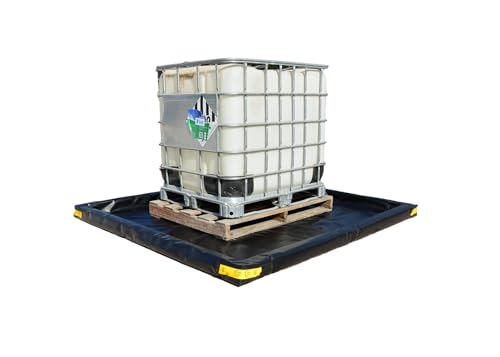
Best for: sites needing a lightweight, portable option that drives over easily. The foam-wall design automatically rises after vehicles exit, reducing manual adjustment. Limitations: data notes a geomembrane-based liner; ensure chemical compatibility with your specific fluids and consult the vendor for exact resistance specs.
2nd Containment Spill Containment Berm

Best for: rapid-response under valves or small-area leaks where quick setup and portability matter. This compact duck pond-style berm is foldable and can be stored in tight spaces. Caution: limited size means it may not contain larger spills or high-volume operations.
Industrial Drum Spill Pallet

Best for: garages, basements, labs, and desks requiring modular spill containment for up to 50 kg loads. This is a polyethylene tray designed to prevent leaks around paint buckets, chemicals, and oil drums. Caution: not a full berm; suitable for localized spills rather than large containment zones.
Proflex L-Bracket Berm (10’x12′)

Best for: industrial settings needing reinforced sidewalls and removable brackets with a chemical-resistant liner. The 10’x12′ size supports mid-sized frac tanks and equipment. Limitation: smaller than some full-tank berms, so ensure fit for your tank dimensions.
Proflex L-Bracket Berm (12’x12′)
Best for: square-footage balanced containment with robust sidewalls and removable brackets. Suitable for mid-size tanks and multiple configurations. Caution: ensure the available space and transport capability align with the 12’x12′ footprint.
Proflex L-Bracket Berm (12’x40′)
Best for: large industrial containment involving longer frac tanks and trucks. The 12’x40′ size offers extended perimeter protection. Caution: larger footprint requires more storage space and transportation planning.
Buying Guide: Key Considerations for Frac Tank Containment Berms
- Containment Capacity and Sizing: Match berm dimensions to your frac tank footprint and anticipated spill volume. Larger sites may require multi-section systems for complete coverage.
- Durability and Drive-Over Capability: If vehicles will cross the berm, prioritize drive-over designs with reinforced sidewalls and removable brackets. Confirm required removal steps before driving over.
- Material and Chemical Resistance: Look for geomembrane liners and high-density polyethylene or coated fabrics that resist common drilling fluids, fuels, and solvents used on site.
- Setup Time and Portability: Quick-deploy units with lightweight components reduce on-site downtime. Consider foldable or collapsible designs for easy transport between job sites.
- Storage and Maintenance: Consider how the berm will be stored when not in use. Lightweight, foldable options store compactly; tougher units may need dedicated storage space.
- Compatibility with Accessories: Check if brackets, anchors, and lids or liner reinforcements are compatible with existing containment systems you own or plan to buy.
FAQ
- Q: What is the primary purpose of a frac tank containment berm?
- A: It provides secondary containment to prevent spills from frac tanks and associated equipment, reducing environmental risk and facilitating cleanups.
- Q: Which berm is best for drive-over access?
- A: The ENPAC FRAC Tank berm and the DuraFlex Drive-Over Foam-Wall berm are designed for drive-over use, with different setup and maintenance requirements.
- Q: Are these berms easy to transport between job sites?
- A: Yes. Several models are foldable or lightweight, including the 2nd Containment unit, which is designed for compact storage and quick deployment.
- Q: Do all berms come with chemical-resistant liners?
- A: Many Proflex and similar models include chemical-resistant liners, but verify each product’s liner material and chemical compatibility for your application.
- Q: How do I determine the right size for my frac tank?
- A: Measure the tank’s length, width, and height, then choose a berm that provides at least a margin of containment around the entire footprint, plus space for hoses and accessories.
- Q: Do these products require any special installation steps?
- A: Some require bracket installation or bracket removal for drive-over use. Always follow manufacturer instructions to ensure proper setup and performance.
Add a Comment