Need reliable equipment to print dates, lot numbers, or logos on food packaging? This guide highlights five practical food packaging printing machines that fit small to mid-sized operations. Each entry includes who it’s best for, why it was chosen, and a practical limitation to consider. The listed products emphasize durable build, printing capabilities, and efficient sealing or wrapping features to help you choose confidently.
Summary table of chosen products:
| Product | Brand | Best For | Key Benefit |
|---|---|---|---|
| VisionTechShop CW-500E | VisionTechShop | Small factories needing a wrap and seal solution | Sturdy 20″ film capacity with heat plate |
| Phezer Automatic Inkjet Coder | Phezer | Product date/lot printing on various surfaces | Fast-drying, versatile content, multiple printing modes |
| U.S. Solid Vertical Ink Wheel Printer Sealer | U.S. Solid | Batch/date printing on vertical bags | Integrated ink print for traceability |
| SierraSquad Automatic Bag Sealer | SierraSquad | High-volume seal with branding | Fast heat seal and integrated date/logo printing |
| VEVOR Horizontal Bag Band Sealer with Printing | VEVOR | Flexible bag types with inline printing | Ink printing plus adjustable speed and temp |
VisionTechShop CW-500E, 20 Inch / 500 mm Hand Wrapping Machine Film Wrapper for Food Packaging

Best for small to mid-sized food packaging lines that require a robust hand-wrapping machine capable of handling a 20″ wide wrap. VisionTechShop CW-500E features a commercial stainless steel build and a 20″ / 500 mm wide roll capacity, making it suitable for wrapping trays, single-serve portions, or bulk packaging. The 155W adjustable power heating plate helps seal wrap film consistently. The unit is MADE IN KOREA, signaling a focus on solid construction and durability. A practical limit is the manual operation aspect, which may be slower on very high-volume lines compared to fully automated wrappers.
Who this is for: Small manufacturers or co-packers needing reliable wrap-and-seal capability without full automation. Best for those prioritizing durability and film width compatibility over speed.
Phezer Automatic Continuous Inkjet Coding Machine

The Phezer inkjet coder is designed for production date, time, barcode, QR code, and logo printing with a 7-inch touch screen. It uses a fast-drying black ink cartridge to print on multiple materials, including glass, metal, plastic, cartons, foil bags, and more. Three printing methods—foot pedal, hand press, and photoelectric sensor (sold separately)—provide flexible operation. This makes it a strong choice for small manufacturers seeking on-demand marking and variable data on product packaging. A potential limitation is ongoing maintenance of ink cartridges and ensuring surfaces are suitable for ink adhesion.
Who this is for: Businesses that need flexible, on-the-fly coding and labeling across varied packaging formats and materials.
U.S. Solid Vertical Automatic Ink Wheel Printer Sealing Machine

This vertical bag sealer includes an ink roller for batch number and date printing directly onto bags, improving product identifiability on vertical packaging lines. The machine supports sealing of larger vertical bags when a support frame is installed and includes a counting function to boost packing efficiency. A practical caveat is the potential need for compatible bag films and ink maintenance, which can impact long-term throughput if consumables are not managed.
Who this is for: Facilities that require inline date/batch printing on vertical pouches and improved packaging traceability.
Automatic Commercial Bag Seal Machine with Digital Temp Control

This metal-bodied bag sealer offers high-speed sealing up to 16 meters per minute and a sealing width range of 0.24 to 0.6 inches. It includes embossing and a type wheel for imprinting dates, logos, or batch numbers during the seal process. The durable build, coupled with a high-efficiency DC copper motor, supports busy commercial environments. A consideration is the need for compatible film types and the potential for ink wear if printing is frequently used on soft or textured surfaces.
Who this is for: High-volume operations needing fast, reliable seals with integrated printing for branding and traceability.
VEVOR Continuous Bag Band Sealing Machine with Printing
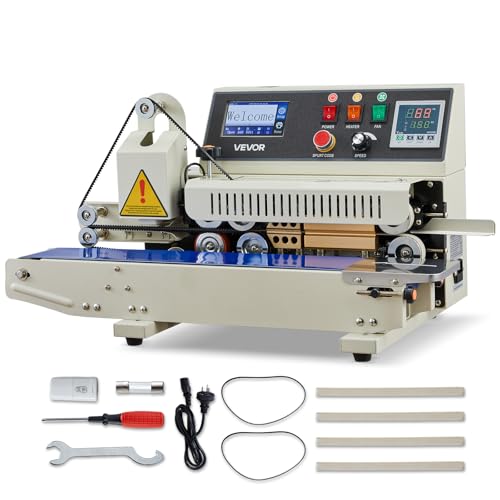
The VEVOR horizontal band sealer supports a 0.24–0.47 inch seal width and uses a 600W motor, delivering speeds up to 52.5 ft/min. It offers built-in printing capabilities via date, numbers, logos, barcodes, or QR codes through manual input or USB files. This makes it a flexible choice for producing labeled, sealed bags in moderate to high volume. A limitation is that ink printing may require additional consumables (ink cartridges) and configuration to match your exact branding needs.
Who this is for: Businesses that want an inline sealing and printing solution for a variety of bag types and sizes.
Buying Guide
What size and speed do I need?
Consider daily bagging volume and required seal speed. If your line runs at high speeds, choose a machine with faster sealing and stable uptime. For smaller batches, a compact model with reliable manual operation can be more economical and easier to maintain.
What kind of printing capabilities are essential?
Decide between inkjet, rotary ink wheels, or embossing/date wheels. Inkjet handles text, serial numbers, and QR codes across multiple surfaces, while ink wheels provide durable imprinting on bags. If you require batch tracking, ensure the printing method supports your chosen data format and is compatible with your packaging film.
Which bag materials and films will I use?
Check seal width compatibility and material types (PVC, PP, foil, plastic). Some machines excel with specific film thickness or bag shapes. If you use varied films, look for adjustable sealing widths and heat control to prevent material damage.
Maintenance and consumables
Consider ink cartridge availability, replacement parts, and routine maintenance. Machines with widely available consumables reduce downtime. Durable builds (steel frames, robust motors) generally offer longer service life in busy environments.
Footprint and installation considerations
Measure space, ventilation, and electrical requirements. Some units are compact enough for countertop use, while others require dedicated floor space and stable mounting. If you plan inline printing, ensure the setup aligns with your production line layout.
Safety and compliance
Look for features like built-in fuses, automatic shutoffs, and proper guarding around heaters and moving parts. For food packaging, ensure materials and processes meet relevant safety standards and avoid cross-contamination risks.
FAQ
- What is the main difference between a horizontal and vertical bag sealer? Horizontal sealers are typically faster for continuous, side-by-side packing, while vertical sealers are efficient for tall or upright bags and often include inline printing options.
- Can I use ink printing on all packaging materials? Printing compatibility depends on surface type. Inkjet works on many surfaces, but some plastics or coated films may require special inks or primers.
- Is inline printing worth it for small operations? If branding and traceability are priorities, inline printing can streamline labeling and reduce downstream steps, but it adds complexity and consumables costs.
- Do these machines require professional installation? Most models are designed for straightforward setup, but larger units may benefit from professional installation or technician support.
- How often should I replace ink cartridges or printing wheels? Replacement frequency depends on usage, printing density, and material type. Plan for regular restocking to avoid downtime.
- Are these machines suitable for commercial food packaging? Yes, these machines are designed for commercial use, focusing on wrap, seal, and print capabilities suitable for food packaging lines.
Add a Comment