Answering the need for safe, reliable lubrication in food and beverage environments, these products meet NSF H1 standards and perform in cold to hot conditions. Best for food processing plants, dairy and meat facilities, beverage lines, and ice cream equipment. This guide highlights top options, their suitability, and practical buying tips to help you choose.
| Product | Best For | Key Benefit | Notes |
|---|---|---|---|
| LewisCare BX-434 NSF H1 Grease | Ice cream machines, conveyors, chilly lines | Cold-ready performance (-15°C to 100°C) | Industrial-grade protection for bearings and gears |
| CRC Sta-Lube SL35610-14 | High-temp equipment, food plants | Wide temperature range and moisture resistance | NSF H1 certified synthetic formula |
| QMINOX SS304 Sight Glass | Sanitary tanks and process lines | Corrosion resistance, quick clamp access | Stainless steel with blue silicone gasket |
| LewisCare BX Food Grade Grease 2.8 oz | Wet environments, plumbing and valves | Excellent water resistance, cold start | NSF H1 certified, compact size |
The products below are selected for clear, objective comparisons across suitability for food safety, temperature resilience, and rugged industrial use. Each entry includes who should consider it, why it stands out, and any notable limitations supported by the listed features.
BX-434 NSF H1 Food Grade Grease — LewisCare

Designed for industrial applications in food processing, this grease protects bearings, gears, and chains in conveyors, mixers, fillers, and cold-drink/ice cream machinery. It is NSF H1 certified for incidental contact with food. Best for facilities needing reliable performance in both cold and standard processing environments, with smooth startup from -15°C to 100°C.
- Best for meat, dairy, beverage production lines and cold drink systems.
- Limitations: Data does not specify exact drop point; verify compatibility with all seal materials.
Sta-Lube Synthetic Food Grade Grease — CRC

STA-LUBE offers a dense synthetic formula with NSF H1 certification, suitable for food plant machinery. It handles a wide temperature range (-30 °F to 450 °F) and resists moisture and wash-out. The high dropping point (650 °F) provides excellent wear protection and EP performance for high-heat processes.
- Best for high-temperature equipment and moisture-prone environments.
- Limitation: Synthetic formulation may require specific reapplication intervals; confirm with equipment seals.
QMINOX SS304 Sight Glass 1.5″ Union

This stainless steel sight glass unit provides durable visibility in tanks and process lines. The 1.5-inch compact size saves space, while a quick-release clamp enables fast maintenance access. Best for sanitary systems where cleanability and easy inspection matter most.
- Best for sanitary processing lines and tanks requiring quick inspections.
- Limitation: Not a lubricant; intended for sighting and flow monitoring rather than lubrication.
LewisCare BX Food Grade Grease 2.8 oz
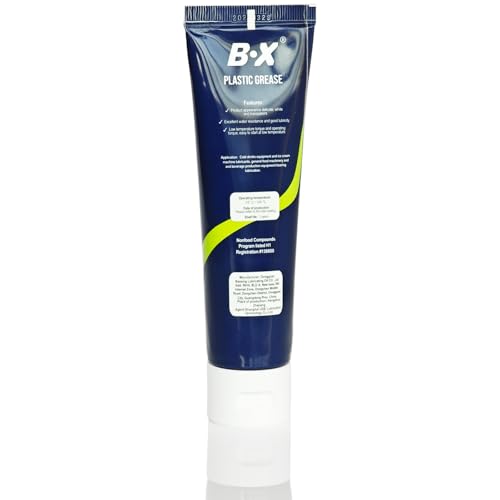
This compact grease is NSF H1 certified for incidental contact and features strong water resistance. It is well-suited for ice cream machines, kitchen appliances, and plumbing components operating in cold to warm conditions (-15°C to 100°C). Best for smaller equipment or locations with limited space.
- Best for compact equipment and wet environments.
- Limitation: Smaller package size may require more frequent reapplication in high-use zones.
Buying Guide
What to consider when choosing lubricants for food and beverage machinery
- Food safety certification: Look for NSF H1 rating to ensure incidental contact safety.
- Temperature range: Match the operating temperature to your equipment’s typical cycles, especially in cold drink lines and ice cream machinery.
- Material compatibility: Confirm compatibility with seals, gaskets, and bearings to avoid swelling or shrinkage.
- Moisture resistance: In wet environments or cleaning cycles, select lubricants with moisture resistance and wash-out protection.
- Viscosity and dropping point: Higher dropping points offer better wear protection at elevated temperatures; low-temperature startability matters for frozen products.
- Packaging and application: For small equipment, consider compact tubes or mini-packs; larger machines may require bulk grease or specialty lubricants.
- Maintenance intervals: Evaluate re-lubrication frequency based on equipment usage and exposure to cleaners or water.
- Regulatory considerations: Ensure the product complies with industry-specific standards for your facility (dairy, meat, beverage).
Practical comparison questions
- Which product is best for cold environments? The BX-434 grease offers cold-ready performance from -15°C to 100°C.
- Which is best for high-temperature processing? Sta-Lube SL35610-14 provides a very high temperature tolerance.
- Which option is ideal for sanitary tanks and visibility? QMINOX Sight Glass focuses on inspection access rather than lubrication.
- Which grease is best for small, tight spaces? The 2.8 oz LewisCare grease fits compact equipment well.
FAQ
- Is NSF H1 certification mandatory for food processing environments? It is widely recommended to ensure incidental contact safety, but requirements vary by facility and region.
- Can I use automotive or general-purpose grease in food facilities? No; standard greases may not meet food-grade requirements and can contaminate products.
- Will these greases protect equipment in both ice cream and beverage lines? Yes, the listed products are designed for cold and wet processing zones common in such equipment.
- How often should I reapply grease in food machinery? Reapplication intervals depend on usage, load, and exposure to wash-down; follow manufacturer guidelines and monitor bearing condition.
- Are sight glasses essential for every processing tank? They are highly useful for visibility but not a lubricant; they aid in monitoring liquid levels and clarity.
Add a Comment