Answering the question for buyers seeking extra fire safety in painted spaces: these fire retardant paint additives are designed to mix with regular paint to slow flame spread and reduce smoke. They’re best suited for homes, schools, offices, and workshops where extra protection matters. The top options span ready-to-use sprays and color-compatible additives, suitable for interior and exterior applications. This guide highlights five reliable products, why they fit specific needs, and practical trade-offs to help you choose wisely.
| Product | Best For | Notes |
|---|---|---|
| Flamecheck M-111PA Fire Retardant Paint Additive | Residential interiors and kids/pet areas | Non-toxic, easy mix with latex paints |
| Master Flame Class A Fire Retardant Spray | Wood, fabrics, and large surface areas | Clear, odor-free finish; spray-on |
| Flame Guard Liquid Fire Retardant | Painted surfaces needing easy integration | Class A tested, satin/eggshell compatible |
| Contego Original Formula Intumescent Coating | Homes and nurseries with no VOCs | Latex-based, swelling protection on fire exposure |
| Walla Walla Flame Guard Additive | General paints needing Class A rating | Granular, per gallon guidance |
Flamecheck M-111PA Fire Retardant Paint Additive
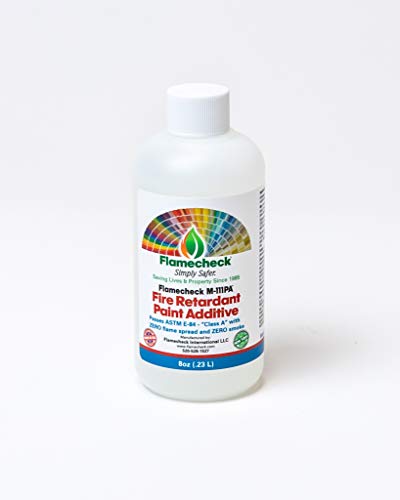
Best for: Interior spaces with children or pets where non-toxicity matters. The product is described as non-toxic and easy to use, mixing one 8-ounce bottle into one gallon of latex paint or primer without dilution. It is positioned for homes, cabins, and business spaces seeking added protection without harsh fumes. Selected for users who want a simple, mix-in solution rather than a spray system.
Caution: Ensure thorough mixing to distribute the additive evenly and follow substrate recommendations. It’s designed to complement standard latex coatings, with ASTM E-84 tests indicating zero smoke and zero flame spread on non-flammable substrates when used as directed. Consider pre-treating the substrate for maximum effectiveness.
Master Flame Class A Fire Retardant Spray for Wood, Fabric, Cotton & More

Best for: Larger areas or materials like wood and textiles where a spray coating is practical. The spray is certified to NFPA 701 and ASTM E84 standards and dries clear with no odor or residue, facilitating use in occupied spaces. This product is ideal for contractors or DIYers who need fast, uniform coverage and seek a non-toxic option.
Caution: Sprays require even application to avoid uneven protection. It’s compatible with subsequent water-based paints or stains after drying, but care should be taken to follow the drying window before topcoats.
Master Flame Class A Fire Retardant Spray (Quad, 1x Quart)

Best for: Similar applications as the gallon spray, offering a smaller quart option for spot treatments or smaller projects. It meets NFPA 701 and ASTM E84 standards and dries clear with no odor, allowing safe application in occupied spaces. Suitable for homeowners and small projects needing quick, targeted fire retardant coverage.
Caution: Coverage per quart will vary with surface absorbency; plan accordingly for larger rooms to avoid gaps in protection.
ForceField – FireGuard – Flame Retardant Spray, 22 oz

Best for: Fabrics and drapery where flame spread protection is desired without changing texture or appearance. This product emphasizes resistance to flame spread, smoke reduction, and suitability for water-based stain protection contexts. It’s a convenient option for fabric-heavy spaces such as living rooms and offices with fabric fixtures.
Caution: Performance depends on proper surface prep and application. It is a spray product, so even coverage is essential to avoid untreated patches that could compromise protection.
Contego Original Formula Intumescent Fire Resistant Coating

Best for: Homes and nurseries seeking no-VOC protection with strong adhesion. Contego Original is a latex-based intumescent coating that swells under heat to block oxygen and slow fire spread. It’s designed for seamless application with brushes, rollers, or sprayers and is noted for zero flame spread and smoke production according to the product description.
Caution: While designed for application like regular paint, ensure thorough film formation for optimal performance. Drying and curing times should align with environmental conditions and topcoat compatibility when used in layered systems.
Walla Walla Environmental Flame Guard Additive
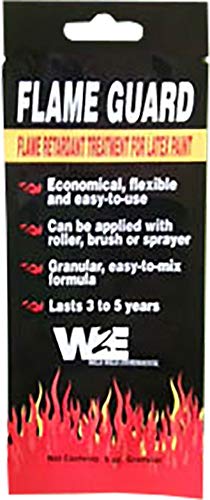
Best for: Existing paint systems where a granular additive approach can yield a Class A flame spread rating. This product is designed to be mixed per gallon with 2–6 ounces, depending on the desired class rating, making it flexible for different project sizes and color choices.
Caution: Follow mixing guidelines carefully to achieve the intended flame-spread classification. Granular format requires thorough dispersion to avoid uneven protection.
Buying Guide: Key Considerations for Fire Retardant Paint Additives
- Application method: Choose additives that align with your project workflow—mix-in liquids for standard paints or spray coatings for rapid coverage on fabrics and large surfaces.
- Target material and surface: Wood, drywall, fabric, and plaster may require different products (spray vs. intumescent coatings vs. mix-ins). Consider substrate flexibility and topcoat compatibility.
- Certification and standards: Look for NFPA 701, ASTM E84, and VOC considerations. Certifications indicate adherence to recognized fire-safety benchmarks.
- Safety and odor: Non-toxic formulations are preferable for occupied spaces, especially homes with children and pets. Drying time and odor-free performance can influence realistic use in living areas.
- Adhesion and topcoats: Some intumescent coatings work best with no-VOC bases or require compatible topcoats. Verify whether you can apply latex, oil-based, or water-based topcoats over the treated surface.
- Coverage and cost efficiency: Determine how much product is needed per gallon or per square foot. Granular additives may require more precise mixing, while sprays offer fast coverage for large areas.
- Reapplication and durability: Fire retardant protections can degrade over time due to wear, cleaning, or abrasion. Consider maintenance needs and potential reapplication schedules.
Frequently Asked Questions
- What is a fire retardant paint additive?
It is a material mixed into regular paint or applied as a coating to slow flame spread and reduce smoke during a fire.
- Do these products make surfaces completely fireproof?
No. They slow flame spread and reduce smoke but do not render surfaces fireproof. Proper fire-safe practices and building codes should still be followed.
- Are these additives safe for homes with kids and pets?
Many are described as non-toxic and safer for occupied spaces, but always follow manufacturer instructions and ensure proper ventilation during application.
- Which option is best for fabrics?
Spray coatings like Master Flame or ForceField products can be suitable for fabrics and draperies, depending on coverage and fabric compatibility.
- Can I apply these over existing painted walls?
Some products are designed to be mixed into new paint, while others are sprays or coatings that can be applied to prepared surfaces. Always follow product-specific guidelines.
- Do these additives affect paint color or finish?
Most additives are formulated to minimize color changes, but check product notes about topcoat compatibility and test on a small area if possible.
Add a Comment