Looking for high-quality, American-made 3D printing filament? This guide highlights top options that are produced in the United States and are well-suited for a range of projects. You’ll find tough, chemically resistant options, beginner-friendly PLA, and color-specific filaments. Best for makers seeking reliability, tight dimensional tolerance, and domestically sourced materials. The table below compares five strong picks, including two Pro PCTG filaments, a neon pink PLA+, a burnt-orange PLA from a Pantone palette, and a ready-to-print bundle from MarsWork.
| Product | Brand | Type | Key Benefit |
|---|---|---|---|
| 3D-Fuel Tough Pro PCTG Midnight Black | 3D-FUEL | PCTG Filament | Ultimate toughness; good chemical resistance |
| 3D-Fuel Tough Pro PCTG Charcoal Gray | 3D-FUEL | PCTG Filament | High durability with precise dimensions |
| Neon Pink AF PLA+ 1.75mm PLA Filament Made in the USA! | American Filament | PLA+ Filament | Bright color, easy printing for beginners and experts |
| Pantone 159 C Orange FilaCube 1.75mm PLA | FilaCube | PLA Filament | Vibrant burnt-orange color with good adhesion |
| MarsWork Pre-Dried PLA Basic Bundle | MarsWork | PLA Bundle | Multiple colors; pre-dried and ready to print |
3D-Fuel Tough Pro PCTG Midnight Black
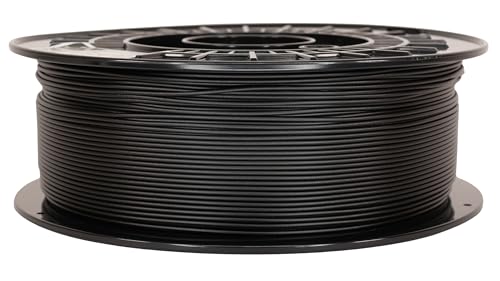
Best for heavy-duty parts and functional prototypes where dimensional stability matters. The Tough Pro PCTG formulation aims to outperform PETG in toughness and chemical resistance, while maintaining smooth extrusion. Suitable for all 3D printers with metal hotends, though it requires 250–270C extrusion and a 70C heated bed for optimal results. This filament is vacuum-sealed with a desiccant to minimize moisture uptake, which helps maintain print quality. Choose this for demanding projects that need durable parts and good surface finish.
3D-Fuel Tough Pro PCTG Charcoal Gray

Best for users needing consistent color-matched parts and strong mechanical performance. Like its Midnight Black counterpart, this filament promises toughness and chemical resistance superior to PETG. It also requires a hot-end temperature range of 250–270C and a heated bed around 70C for best results. The vacuum-sealed spool with a desiccant keeps moisture at bay. Use this for industrial-looking prototypes, jigs, and durable components that must endure stress and wear.
Neon Pink AF PLA+ 1.75mm PLA Filament Made in the USA!

This filament is designed for users seeking bright, vivid color with the ease of PLA+. The PLA+ formulation enhances toughness and layer adhesion compared to standard PLA, helping prints resist cracking under stress. It’s particularly well-suited for cosplay props, display pieces, or color-critical models. Best for hobbyists and educators who want a visually striking filament that remains easy to print. A potential limitation is that PLA+ can be less heat-resistant than ABS-like materials, so avoid high-temp environments.
Pantone 159 C Orange FilaCube 1.75mm PLA
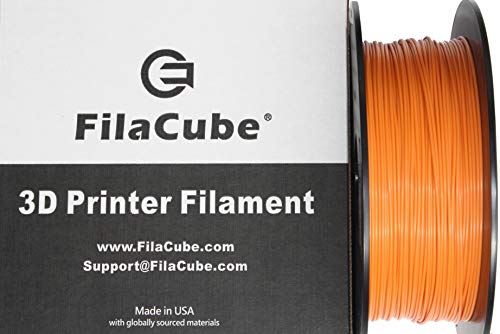
Best for color-specific projects where burnt-orange tone matters. This Pantone-aligned filament provides a distinct orange hue that can match university colors, team logos, or themed props. The PLA base offers easy printing, good bed adhesion, and smooth surface finishes. It’s a good fit for beginners and seasoned printers alike who want reliable color accuracy without complex printing profiles. A note: color consistency may vary slightly between batches, so test a small print first.
MarsWork Pre-Dried PLA Basic Bundle

The MarsWork PLA bundle offers a convenient multi-color setup for those who want variety without moisture-related print failures. The triple-dried and desiccant-sealed packaging aims to keep filament ready to print straight from the bag. Best for education kits, classroom projects, and hobbyists who enjoy exploring color combinations. Consider potential color differences between batches and verify that the bundle colors align with your project needs since the listed colors may vary by stock.
Buying Guide
- Filament material choice: PLA and PLA+ are easier to print and ideal for beginners or detailed decorative parts. PCTG offers higher toughness and chemical resistance, suitable for functional prototypes and demanding tasks. For heat resistance and performance, weigh PETG alternatives like PCTG against ABS or nylon when needed.
- Made in USA considerations: If domestic sourcing matters, prioritize brands explicitly stating USA production. Filaments from 3D-FUEL and American Filament in this list emphasize local manufacturing. Color variety and batch consistency can also vary by supplier.
- Dimensional accuracy and tolerances: Look for +/- 0.02 mm tolerance notes for reliable roundness and fit. Advanced extrusion control (CCD cameras, closed-loop systems) helps maintain diameter consistency for smoother feeding and fewer clogs.
- Moisture management: Vacuum sealing and desiccants reduce moisture uptake, which can cause bubbling and weak layer adhesion. If a spool isn’t vacuum-sealed, store it in a dry, airtight container with desiccant.
- Printer compatibility: Check hot-end temperature requirements. PCTG filaments often need higher temperatures and a heated bed, while PLA-based filaments print smoothly on most FDM printers.
- Color and finish considerations: Color-matching and surface texture vary by brand. Burnt-orange and neon pink are visually striking, but plan for post-processing needs like sanding or primer for best results.
Frequently Asked Questions
- Which filaments are made in the USA? The list includes several USA-made options such as 3D-Fuel Tough Pro PCTG (Midnight Black and Charcoal Gray) and Neon Pink AF PLA+ by American Filament, among others labeled Made in USA.
- What is PCTG, and why choose it? PCTG is a tough, chemically resistant material ideal for functional parts and prototypes that require durability and impact resistance, outperforming PETG in some properties.
- Is PLA still the easiest option for beginners? Yes. PLA and PLA+ are user-friendly, have good bed adhesion, and produce sharp details with minimal warping compared to ABS-like materials.
- How important is filament moisture control? Very important. Moisture can cause bubbling, reduced strength, and poor layer adhesion. Vacuum-sealed spools with desiccants help maintain quality.
- Should I worry about color consistency across batches? Yes. Even within the same product line, dye lots can vary slightly. If color precision is critical, print a swatch and compare batches before committing to a large print.
- What’s a good test print for a new filament? Use a small calibration model with both simple geometry and a few overhangs to assess extrusion consistency, bed adhesion, and surface quality before starting larger projects.
Add a Comment