Choosing the right fall protection anchor point is essential for worker safety on roofs. This guide reviews five reputable anchors, covering materials, certifications, and compatibility with different roof types. Each option is designed to help contractors and DIY roofers select a dependable anchor point for lanyards, lifelines, and harness setups. The choices span aluminum and steel constructions, permanent and temporary installations, and anchors suited for wood and metal surfaces. Use the buying guide at the end to compare key factors so you can pick the best fit for your project.
Summary of Selected Products
| Product | Brand | Key Benefit |
|---|---|---|
| Malta Dynamics Reusable Roof Anchor 1PK | Malta Dynamics | OSHA/ANSI compliant; lightweight; 5,000 lb rating |
| GGTE Permanent Roof Anchors | GGTE | High-strength aluminum; wide applicability; durable finish |
| Frontline ROB01 Bull Ring Reusable Roof Anchor | FRONTLINE FALL PROTECTION | Zinc-plated steel; versatile for wooden structures |
| Guardian RIDG-1 Single D-Ring Roof Anchor | Guardian Fall Protection | Stainless/ zinc-plated steel; long-lasting; seal holes |
| Tie Down Hitch Clip Roof Anchor 6-Pack | Tie Down | Lightweight aluminum; quick setup; reusable |
Malta Dynamics Reusable Roof Anchor

Malta Dynamics offers a reusable roof anchor designed for temporary fall protection needs. It meets ANSI Z359.18-2017, ANSI A10.31-12, and OSHA 1926 Subpart M standards, ensuring compliance for residential and commercial roofing jobs. The anchor features a durable zinc-plated alloy steel construction, built to endure harsh weather and heavy use. It is suitable for pitches up to 12/12, providing flexibility across a variety of roof slopes and project types. The 5,000 lb. breaking strength gives a robust security margin for fall arrest systems and restraint connections. This anchor is ideal for contractors who prioritize both compliance and portability on rooftop projects.
GGTE Permanent Roof Anchors
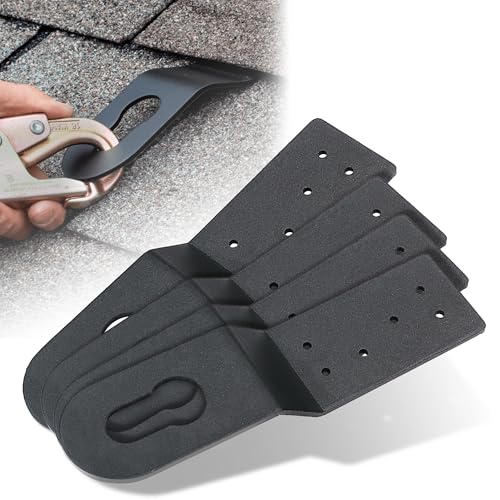
GGTE’s permanent roof anchors are designed for a broad range of roof types, including commercial timber frames and residential structures. The anchors integrate into the roof structure to provide a stable attachment point for lanyards, lifelines, or harnesses. They are constructed from high-strength aluminum alloy and finished with a black electrostatic coating for corrosion resistance. This combination yields a durable anchor point that maintains the roof’s aesthetics while delivering reliable fall protection. The emphasis on wide applicability makes GGTE anchors a practical choice for multi-project use in both new builds and retrofits.
Frontline ROB01 Bull Ring Reusable Roof Anchor

The Frontline ROB01 Bull Ring is a reusable roof anchor designed for fall arrest, fall restraint, positioning, and other safety applications. It fits most flat wooden structures and is manufactured from ASTM-rated steel for high strength and reliability. The zinc-plated steel construction provides enhanced corrosion resistance, helping the anchor maintain performance in outdoor environments. This anchor is well-suited for projects requiring a robust, adaptable point of attachment on wooden roofs, with straightforward installation and durable operation over time.
Guardian RIDG-1 Single D-Ring Roof Anchor

The RIDG-1 is a single D-ring roof anchor designed for secure connections on a variety of roof surfaces. It features stainless and zinc-plated steel construction for long service life and includes a butyl strip to help seal holes for permanent installations. The design supports use on metal roofs as well, expanding its compatibility across different materials. This anchor emphasizes longevity and reliable sealing, making it a strong option for permanent rooftop safety systems and frequent use in industrial settings.
Tie Down Hitch Clip Roof Anchor 6-Pack

Tie Down’s 6-pack roof anchors are built from lightweight, powder-coated aluminum for durability and corrosion resistance. The set is designed for quick, out-of-the-box setup with on-label drill-hole instructions to speed up installation. These lightweight anchors are suitable for use as fall protection connection points on wood roofs and other compatible substrates, offering a cost-effective reuse option for temporary or project-based safety needs. The pack provides multiple standalone anchors, useful for larger jobs or projects requiring several attachment points.
Buying Guide: Key Purchase Considerations
- Material and durability: Choose anchors made from corrosion-resistant metals (aluminum or stainless steel) for outdoor rooftop use and longer service life.
- Certification and standards: Prioritize anchors certified to OSHA, ANSI, or relevant industry standards to ensure compliance and safety performance.
- Surface compatibility: Consider whether the anchor is intended for wood, metal, or mixed roof substrates to avoid installation issues and ensure secure attachment.
- Permanent vs. temporary installation: Permanent anchors are ideal for ongoing facilities, while temporary anchors suit contractors and short-term projects with removable options.
- Installation method: Assess whether fasteners (screws, nails, or bolts) match your roof material and structural considerations. Some anchors include sealing features to deter water intrusion.
- Weight rating and load path: Review maximum breaking strength and how the anchor interfaces with lanyards, harnesses, and lifelines to prevent accidental detachment.
- Maintenance and reuse: Consider anchors that are easy to inspect, service, and reuse across multiple projects to maximize value.
- Cost and availability: Balance initial cost with longevity and the number of anchors needed for the job, especially for larger roofing projects.
- Installation environment: For high-wind or extreme-weather sites, prioritize robust designs with protective finishes and secure mounting hardware.
- Compatibility overlap: Some anchors are designed for permanent installations on metal or wood roofs, while others emphasize temporary usage on various substrates. Cross-check your project’s roof type and planned lifelines before purchasing.
- Maintenance routines: Periodic inspection for corrosion, loosening fasteners, and wear on D-rings or attachment points helps maintain safety standards over time.
- Complementary safety gear: Ensure you have compatible harnesses, lanyards, and lifelines rated for the anchor’s load capacity and your specific work scenario.
Add a Comment