Answering buyers who need reliable EPDM rubber sheets, this guide highlights five top options. Each product is described with who it’s best for, why it was selected, and practical cautions. Ideal for contractors, DIY enthusiasts, and industrial users seeking UV resistance, weatherproofing, and flexible gasket material. The table below compares key points at a glance.
| Product | Thickness | Size | Best For |
|---|---|---|---|
| Rubber-Cal EPDM Sheet 60A, 0.125″ | 60A | 24″ x 36″ | General weatherproofing and gasket work |
| Rubber-Cal EPDM Sheet 60A, 0.250″ | 60A | 24″ x 36″ | Extra-thick sealing and impact resistance |
| SUCOHANS Solid Rubber Sheets 1/8″ | 65A | 4″ x 10′ (rolled) | DIY gaskets and padding |
| MYOYAY 1/8″ Solid Rubber Sheet | 1/8″ | 118″ x 40″ | DIY gaskets and vibration sealing |
| Pushglossy EPDM Roof Membrane 50 Mil | 50 Mil | 39″ x 20 ft | Roof underlayment and waterproofing |
Rubber-Cal EPDM Sheet 60A – 0.125″ Thick

Best for small to medium sealing projects where flexibility and UV resistance are important. This EPDM sheet combines black commercial-grade EPDM with SBR to offer good resistance to UV, moisture, impacts, and abrasion. Available in 24″ x 36″ and similar dimensions for easy handling. Suitable for gasket material, weatherproofing, and DIY repairs.
- Best for: outdoor projects, window and door gaskets, and weather seals.
- Why selected: balanced thickness, solid durability, and broad compatibility with caulks and sealants.
- Caution: verify compatibility with solvents or oils before long-term exposure.
Rubber-Cal EPDM Sheet 60A – 0.250″ Thick
Better for projects requiring extra cushioning and resistance to wear. The thicker 0.250″ EPDM sheet is ideal for high-stress gasketing, vibration dampening, and protective pads. It shares UV and moisture resistance with thinner versions but adds more structural rigidity for heavy-use applications.
- Best for: industrial gaskets, vibration dampening, and load-spreading surfaces.
- Why selected: higher thickness provides enhanced durability and impact absorption.
- Caution: weight and stiffness increase with thickness; cut precisely to fit complex shapes.
SUCOHANS Solid Rubber Sheets – 1/8″ Thick

Best for DIY gaskets, protective strips, and general purpose applications where flexible, durable rubber is needed. These solid rubber strips offer good temperature and water resistance, with insulation properties that help reduce noise and vibration. The material is described as solid rubber, not foam, which contributes to its reliability in sealing roles.
- Best for: DIY projects, gasket making, and protective padding.
- Why selected: robust durability and easy customization for shaped parts.
- Caution: thickness is fixed at 1/8″, so cuts must be precise for tight spaces.
MYOYAY 118″ X 40″ X 1/8″ Solid Rubber Sheet
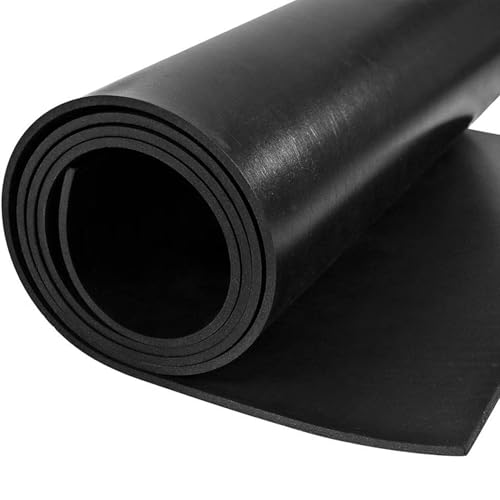
Choose this for large DIY projects requiring substantial area coverage. The long sheet is designed for easy customization into gaskets, liners, shields, and anti-vibration padding. It remains flexible under varying temperatures and offers good oil resistance and durability.
- Best for: large gaskets, floor padding, and vibration control on projects with broad surfaces.
- Why selected: large, continuous sheet minimizes seams in bigger applications.
- Caution: handling a long sheet may require cutting and rolling tools; plan for storage to prevent warping.
Pushglossy EPDM Roof Membrane – 39″ x 20 ft

Best for roof underlayment and waterproof barriers on flat and low-slope surfaces. The membrane is vulcanized EPDM with a self-adhesive backing for quick DIY installation. It forms a watertight layer that resists UV exposure and temperature fluctuations, reducing the risk of leaks on outdoor structures.
- Best for: RV roofs, sheds, garages, and patios with flat or low-slope roofs.
- Why selected: large, continuous sheet reduces seam points and provides durable protection.
- Caution: ensure proper surface preparation for adhesive backing to maximize bond strength.
Buying Guide
What to consider when selecting EPDM rubber sheets
- Thickness: Higher thickness offers more cushioning and durability but adds stiffness and weight. Choose 0.125″ for light-duty sealing and 0.25″ for higher impact areas.
- Size: Match sheet dimensions to project size to minimize waste and seams. For DIY projects, standard 24″ x 36″ sheets are convenient; for roofing, longer membranes are often preferable.
- Durometer: Most EPDM products here are around 60A; this hardness balances flexibility with shape retention. For flexible gaskets, lower hardness may be preferred; for pads, higher hardness helps shape retention.
- UV and weather resistance: EPDM’s UV stability is a major benefit for outdoor use. Ensure the specific product mentions UV resistance if exposure is a key factor.
- Temperature range and chemical exposure: Confirm resistance to oils, solvents, and extreme temperatures if used in industrial settings.
- Application method: Some products feature self-adhesive backing for easy installation, while others require separate adhesive or mechanical fastening. Plan accordingly.
Frequently Asked Questions
- What is EPDM rubber sheet best used for?
EPDM sheets are commonly used for weatherproof seals, gaskets, roofing underlayment, and vibration dampening in both outdoor and indoor applications.
- How thick should EPDM be for roofing?
For roofing underlayment, 0.050″ to 0.125″ is typical; thicker membranes (like 0.125″ or 0.25″) provide greater durability for high-stress areas.
- Is EPDM resistant to UV light?
Yes, EPDM offers strong UV resistance, which helps maintain elasticity and performance in outdoor conditions.
- Can EPDM sheets be cut to custom shapes?
Yes. Most sheets can be cut with standard scissors or a utility knife; ensure clean edges for effective sealing.
- What should I avoid when using EPDM sheets?
Avoid prolonged contact with certain solvents or petroleum-based chemicals unless the product specification confirms compatibility.
- Do self-adhesive EPDM membranes require primers?
Self-adhesive membranes are designed for mess-free installation; primers are not typically required, but follow product instructions for best results.
Add a Comment