Engine-driven hydraulic power units (HPUs) deliver portable hydraulic power where mains power isn’t available. They’re ideal for contractors, maintenance technicians, and fabrication shops that need reliable lifting, bending, pressing, or straightening on site. The top options here cover gas-powered and electric-driven configurations, with both single-acting and double-acting capabilities. Each selection highlights who benefits most, performance considerations, and practical trade-offs.
Quick reference
| Product | Best For | Key Benefit |
|---|---|---|
| Primary Mover – Gas-Powered HPU | Professional field work, remote sites | Honda GX200 engine, strong high-pressure output |
| LCyindu 750W Electric Driven HPU | Workshop use with electric power | Double-acting with solid pressure control |
| VEVOR 750W Double Acting HPU | Double-acting tasks, home shop | Pedal control for hands-free operation |
| VEVOR 750W Single Acting HPU | Single-acting lifting tasks | Long reach hose for versatile positioning |
| VEVOR 110V 10 Quart HPU | Heavy workloads, larger oil capacity | Extended oil tank, rugged build |
Primary Mover Gas-Powered HPU
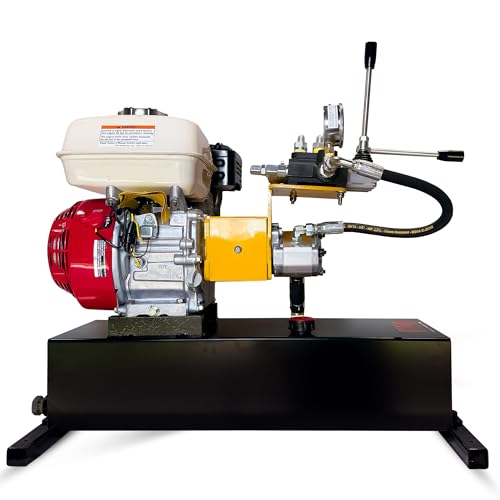
Brand: Primary Mover. This gas-powered HPU centers on a Honda GX200 engine, delivering higher hydraulic flow for fast cycle times. It includes a 3200 PSI relief valve, an integrated pressure gauge, and a 2.5 GPM gear pump for precise control.
Best for: On-site jobs requiring reliable diesel-free power in remote locations, such as dump trailers, hoists, or log splitters.
Why selected: Combines reputable engine performance with solid hydraulic control for heavy-duty tasks.
Caution: Gas units require fuel management and ventilation considerations on site.
LCyindu 750W Electric Driven HPU

Brand: LCyindu. This 750W 110V pump is a double-acting unit rated up to 10,000 psi with a 8L oil tank, two speed options, and a broad 8.2 ft high-pressure hose. It provides robust lifting and forming capabilities for punching and bending tasks.
Best for: Workshop environments needing electric power with strong high-pressure performance.
Why selected: Clear dual-speed operation and a generous oil capacity support longer, steadier work sessions.
Limitation: Electric power availability is a prerequisite on site; no portable gas capability.
VEVOR Electric Double Acting HPU

Brand: VEVOR. This unit combines a 750W motor with a double-acting power pack and a hands-free pedal valve, plus an 8.2 ft hose for long reach. It’s suited for lifting, bending, and straightening with precise control.
Best for: Professionals needing continuous operation with footprint-friendly equipment.
Why selected: Pedal switch enables hands-free control, which improves positioning safety and speed.
Caution: Only as powerful as the connected hoses and cylinders; verify compatible fittings before use.
VEVOR Single Acting HPU
Brand: VEVOR. This single-acting unit prioritizes lifting efficiency, with a similar 10,000 psi capability and an 8.2 ft hose. It’s ideal for tasks where a single-direction hydraulic flow suffices.
Best for: Bending and straightening operations where a simple return is acceptable.
Why selected: Simpler system often means easier setup and maintenance.
Limitation: Not suitable for applications requiring rapid bidirectional actuation without external return paths.
10000 PSI HPU With Foot Switch

Brand: njxbrek. This 10,000 PSI hydraulic power unit features a double-acting design, a 7L oil tank, and a foot switch for controlled operation. It’s designed for heavy-duty hydraulic tasks requiring high pressure and steady flow.
Best for: Industrial setups needing strong high-pressure performance with hands-free operation.
Why selected: Higher pressure support makes it suitable for demanding installations and tool heads.
Caution: Ensure compatibility of fittings and hoses with your tools and adapters.
Buying Guide: Engine-Driven Hydraulic Power Units
- Power source type: Choose gas-powered for remote sites or electric-powered for in-building workshops. Gas units offer portability; electric units simplify maintenance and startup in controlled environments.
- Actuation style: Double-acting units provide bidirectional control suitable for lifting and returning tasks. Single-acting units are simpler and can be suficiente for straightforward pressing or bending jobs.
- Pressure and flow: Look for max pressure around 10,000 PSI and match flow rate to your cylinder size and stroke requirements. More flow means faster cycles but higher heat generation; ensure your components tolerate the same.
- Oil capacity and tank design: Larger tanks reduce refueling intervals and support longer runs. Check the tank material and visibility features for easier maintenance.
- Hose length and fittings: Long hoses improve reach; confirm hose material is anti-burst and compatible with your port sizes (NPT 3/8″ is common).
- Controls and safety: Pedal valves and foot switches enable hands-free positioning but require stable workstations. Look for non-slip feet and vibration reduction features.
- Maintenance needs: Regular oil checks and filter maintenance extend life. Consider availability of spare parts and ease of refueling or oil replacement.
- Portability vs. capacity: Weigh the need for mobility against tank capacity and overall weight. Larger units may require dedicated transport arrangements.
Frequently Asked Questions
- What is the difference between single-acting and double-acting HPUs? Single-acting HPUs move fluid in one direction, with a return typically via gravity or external pressure. Double-acting HPUs move fluid in both directions for faster, more versatile operation.
- Do I need a specific hose or fittings? Yes. Verify port size (common is 3/8″ NPT) and hose burst rating to match your tool requires and safety standards.
- Which fuel type is best for field work? Gas-powered units offer portability and independence from power sources. Electric units suit controlled environments with reliable power access.
- How important is oil capacity? A larger oil tank reduces refueling frequency and maintains consistent pressure during longer jobs.
- What safety features should I look for? Pedal or foot-switch controls, anti-slip feet, and pressure relief valves are essential for safe operation.
- Can these units be used with standard hydraulic accessories? Most are designed for common hydraulic cylinders and adapters, but confirm port compatibility before purchasing.
Add a Comment