Find reliable endless conveyor belt manufacturers and pick devices that fit your production needs. This guide highlights five top options ideal for small workshops, mid-size factories, and scalable operations. Each entry explains who it’s best for, why it’s chosen, and any notable limitations to watch. This information helps engineers and procurement teams compare durability, adjustment options, and belt construction at a glance.
| Product | Brand | Key Suitability | Why It Stands Out |
|---|---|---|---|
| VEVOR Belt Conveyor, 59 x 7.8 in | VEVOR | General purpose, compact layouts | Industrial-grade stainless steel, adjustable speed, bidirectional operation |
| Moonshan Belt Conveyor, 20 in Desktop | Moonshan | Desk-to-assembly line tasks | Reverse switch, stepless speed control for quick changeovers |
| VEVOR PVC Belt Conveyor, 47 x 7.8 in | VEVOR | Smaller scale packaging or sorting | Stainless steel build with wear-resistant PVC belt and dual-direction capability |
| VEVOR Belt Conveyor, 59 x 15.7 in | VEVOR | Inkjet coding or larger items | Longer belt, heavy-duty build, adjustable speed |
| Moonshan Climbing Belt Conveyor, 39 in | Moonshan | Elevating conveyance tasks | 4-inch baffles for lifting and transporting, stepless speed regulation |
VEVOR Belt Conveyor 59″ x 7.8″ Table
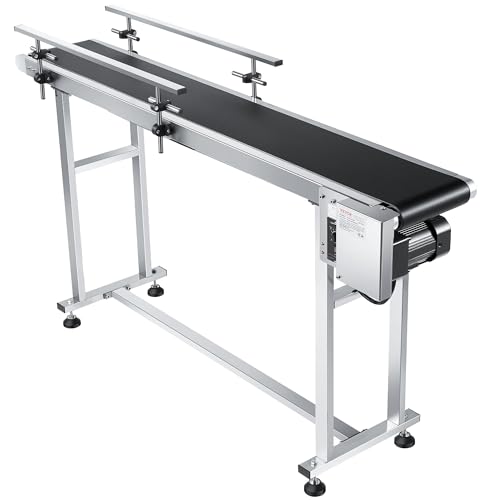
Best for small to mid-sized operations needing a compact, durable belt. This stainless steel, anti-static PVC belt model supports speeds from 30 to 120 RPM and runs in both directions. The rotating screw adjusts belt tension, and height-adjustable feet stabilize the unit on uneven floors. Ideal for production lines where space is at a premium and multi-direction movement is beneficial. Limitation: the smaller 59″ belt may require frequent transfers for high-volume throughput.
Moonshan Belt Conveyor 20″ Desktop

Better for desktop or benchtop packaging and light production lines. It offers a reverse switch and stepless speed regulation to accommodate varying speeds and directions during assembly. This is a good pick for small parts transfer or intermittent packaging tasks. Caution: the desktop form factor may limit throughput compared with larger floor-standing conveyors.
VEVOR PVC Belt Conveyor 47″ x 7.8″

Choose this for compact packaging lines or sorting stations requiring a mixed-size belt. It uses a durable stainless steel frame with a wear-resistant, anti-static PVC belt. The belt tension is adjustable via a rotating screw, and feet are height-adjustable for stability. Best for moderate throughput and tighter workspaces. Avoid if you need a longer conveyor path without replacing sections.
VEVOR Belt Conveyor 59″ x 15.7″

Best for larger items or inkjet coding tasks that require a longer transfer path. The heavier stainless steel construction and extended belt length support higher throughput and more versatile positioning compared to shorter models. It shares the same multi-adjustment features: adjustable speeds (30–120 RPM), dual-direction capability, tension control, and height-adjustable feet. Limitation: longer units may require more floor space and power considerations.
Moonshan Climbing Belt Conveyor 39″
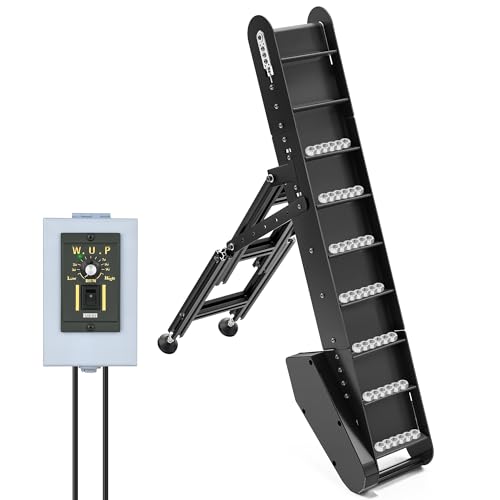
Best for elevating items during transfer, this model uses four-inch spaced baffles to enable lifting and movement across levels. It features stepless speed regulation via the control box, and the PVC belt is waterproof, flexible, and wear-resistant. Choose this when vertical movement is a key part of the process. Limitation: climbing designs may require precise setup and alignment on multi-stage lines.
Moonshan Desktop Belt Conveyor 39″

Best for compact desk-to-line tasks, this desktop model offers stepless speed regulation for easy speed matching during manual assemblies. The PVC belt is waterproof and wear-resistant, making it suitable for light-duty packaging or small parts transfer on a benchtop. Limitation: smaller belt length may limit continuous throughput for larger items.
Lounsweer 4 Inch Wide Conveyor Belt

Best for integration with small, bespoke conveyors or repair projects requiring a narrow belt. This PVK-covered belt is durable and oil-resistant, designed for compact systems. Its 4-inch width fits specialized equipment and limited-space setups. Limitation: narrow width reduces suitability for wide items or high-volume bulk handling.
Buying Guide: Key Considerations for Endless Conveyor Belts
- Application fit: Assess item size, weight, and required transfer distance. Longer belts support higher throughputs, while compact belts excel in space-limited environments.
- Belt material: PVC belts offer abrasion resistance and anti-static properties; ensure compatibility with items to prevent slipping or damage.
- Frame material: Stainless steel frames provide durability and rust resistance in industrial settings; consider corrosion risk and cleaning needs.
- Speed and direction: Look for stepless or stepped speed control and bidirectional operation if the line requires re-routing or pulsing transfers.
- Adjustability: Height-adjustable feet and belt tension screws help stabilize and tune performance across different workstations.
- Maintenance and support: Check for ease of part replacement, availability of belts, and service documentation from the manufacturer.
FAQ
- What is an endless conveyor belt?
An endless conveyor belt is a continuous loop used to transport items along a production line without gaps, enabling smooth and consistent movement.
- Which belt material is best for anti-static needs?
PVC belts with anti-static properties are commonly used where static buildup could damage components or cause sparks.
- Can these belts run in reverse?
Yes, several models offer bidirectional operation, helpful for re-routing items on a line without repositioning the entire system.
- How do I choose belt length?
Consider the available floor space and required transfer distance; longer belts suit longer lines, while shorter belts fit compact layouts.
- Are desktop conveyors suitable for production lines?
Desktop models are best for benchtop tasks, small parts transfer, or proof-of-concept setups rather than full-scale production.
- What maintenance is required?
Regularly check belt tension, clean the belt surface, and inspect the frame for corrosion or wear; replace worn belts promptly.
Add a Comment