If you’re powder coating at home or in a small shop, you need a reliable electric powder coating oven to cure finishes evenly. This guide highlights five solid options and explains who each is best for, plus practical considerations like heat control and fit. Ideal buyers include DIY hobbyists seeking compact, bench-top heating, small businesses doing periodic parts, and anyone needing precise cure timing. The comparison table below summarizes key strengths to help you decide quickly.
| Product | Best For |
|---|---|
| JEGS Bench Top Powder Coating Oven | Big internal space on a budget-friendly bench unit |
| Eastwood HotCoat Benchtop Oven | Precise timer and uniform heat for small-to-mid projects |
| Eastwood HotCoat PCS-250 Powder Coating Gun + Benchtop Oven Kit | All-in-one kit for quick setup |
| Eastwood HotCoat PCS-250 Powder Coating System + Benchtop Oven Kit | Two-coat versatility and clear color visibility |
| Control Panel for Powder Coating Oven (Briidea) | Upgrading or customizing 240V ovens with advanced controls |
JEGS Bench Top Powder Coating Oven
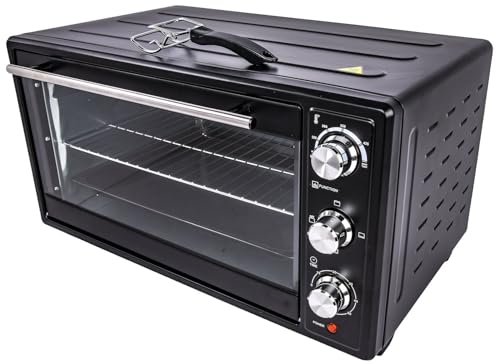
The JEGS bench top oven offers a large internal chamber measuring 17 inches by 12.5 inches by 11 inches and can reach up to 450 degrees Fahrenheit. It includes a three-foot cord for easier placement on a workbench and a built-in 60-minute timer for controlled curing cycles. Best for hobbyists and small shops needing significant internal space without a full-size oven. Caution: Ensure clearance around the unit for safe operation at high temperatures.
Why it’s selected: The spacious interior accommodates larger parts, reducing the need for multiple curing runs. The 450°F capability covers common powder systems, and the 60-minute timer supports repeatable cure cycles. Best for buyers who want straightforward operation and steady performance on a bench-top setup.
Eastwood Hotcoat Benchtop Powder Coating Oven

The Eastwood HotCoat Benchtop Oven is compact and designed for small-to-mid-size projects. It features upper and lower 400W heating elements with an integrated air circulation fan for uniform heat distribution. The built-in timer enables precise cure times up to 60 minutes, supporting the critical flow-out stage. Best for users who need reliable, evenly distributed heat in a small footprint and a controlled cure cycle.
Why it’s selected: The dual heating elements and fan provide consistent heating, which helps achieve even coating across parts. The precise timer supports repeatable results, reducing the risk of under- or over-curing. Choose this if you value even heat and straightforward operation in a limited space.
Eastwood HotCoat PCS-250 Powder Coating Gun Kit + Benchtop Oven

The PCS-250 kit combines a powder coating gun with a benchtop oven, enabling easy application and immediate curing. It includes two powder settings (low 15,000 volts and high 25,000 volts) for versatile coverage and faster color changes. Best for hobbyists and small shops seeking an all-in-one solution to coat and cure in under an hour. Limitation: The kit is designed for smaller projects; very large parts may require a larger oven.
Why it’s selected: The kit simplifies the workflow by pairing application and cure in one package, reducing setup time. The two voltage settings help control coating coverage on different part geometries. Choose this if you want a compact, integrated system that improves throughput for smaller jobs.
Eastwood HotCoat PCS-250 System + Benchtop Oven Kit

This PCS-250 system provides a powder coating gun with a benchtop oven, designed for standard 120V households. It features two powder settings for improved coverage on larger areas, while a clear bottle lets you monitor powder color and flow. Best for beginners or shops needing a straightforward setup for smaller items and quick color adjustments. Limitation: The system’s power and size are optimized for smaller projects; larger parts may require more capacity.
Why it’s selected: The clear bottle and dual voltage settings help you control color and coverage easily. The benchtop oven supports practical, on-demand curing for small components, making it a strong choice for entry-level users or light-duty operations.
Control Panel for Powder Coating Oven (Briidea)

The Briidea 240V 50A control panel offers precise temperature and time control for powder coating ovens, with a dual-line PID controller and dual-line timer. It supports heating elements up to 12,000 watts and includes high-temperature and end-of-cycle alarms. Best for builders who want to upgrade or customize an existing oven system for accurate, repeatable cure profiles. Caution: Installation requires electrical knowledge to safely integrate a high-power controller.
Why it’s selected: The dual-line PID controller provides tight temperature control, and alarms help prevent overheating or missed cycles. This is ideal for users who want to fine-tune curing profiles or build a more advanced powder coating setup.
Buying Guide: Key Purchase Considerations
- Oven size and part fit: Measure your most common parts and compare interior dimensions to avoid batch re-runs.
- Heat control: Look for multiple heating elements or high-quality controllers to ensure uniform curing and predictable results.
- Timer and cycle control: A clear, reliable timer helps reproduce flow-out and cure results consistently.
- System integration: Kits with powder guns and ovens reduce setup time; consider if you need a turnkey solution.
- Electrical requirements: Check voltage and amperage; some controllers require 240V service, others 120V.
- Upgrade path: If you plan to scale, choose products compatible with future controllers or larger ovens.
FAQ
- What is the typical bench-top oven temperature range for powder coating?
– Most bench-top ovens cure powders between 150°F and 450°F, depending on the coating formulation. - Is a built-in timer important for powder coating ovens?
– Yes. A timer helps ensure consistent cure times, improving coating flow and finish quality. - Do I need a separate powder coating gun with the oven?
– Many kits include a gun; if not, plan to purchase a compatible gun that matches your powder type and voltage. - Can I upgrade an oven with a controller kit?
– Some 240V controller kits allow integration with existing ovens for tighter temperature control and alarms. - What should I consider for larger parts?
– Look for ovens with larger interior dimensions or the option to run multiple curing cycles efficiently. - Are 120V ovens enough for most home shops?
– For small parts and hobby projects, 120V models are often sufficient; larger parts may require 240V setups.
Add a Comment