Answering the top questions for buyers: these deep cycle batteries are designed to deliver steady, prolonged power for golf carts and similar equipment. The best choices depend on your cart’s voltage, space, and maintenance preferences. The top picks here include both lead-acid and lithium options to cover standard golf carts, off-grid setups, and heavy-use environments. Use this guide to compare compatibility, cycle life, and practical limitations.
| Product | Voltage / Type | Best For | Key Advantage |
|---|---|---|---|
| US Battery US1800XC2 6V Deep Cycle Battery (Pack of 6) | 6V, Flooded Lead Acid | Standard golf carts needing GC2 fit | GC2 compatibility for golf carts and deep cycle reliability |
| Weize GC2 6V Golf Cart Battery, 240Ah | 6V, AGM | Long runtime, green solution | High capacity with maintenance-free design |
| Trojan T-875 8V Deep-Cycle Flooded Battery (Pack of 6) | 8V, Flooded Lead-Acid | Higher voltage carts and custom 8V systems | Long runtime with robust construction |
| Crown CR-GC150 12V 150Ah Deep-Cycle Batteries (Set of 4) | 12V, Flooded Lead-Acid | Standard 12V configurations for golf carts | High-capacity, reliable performance |
| U.S. Battery US8VGC 8V Deep Cycle Battery (Pack of 6) | 8V, Deep Cycle | 8V golf cart or multi-battery packs | GC8 compatibility with strong runtime |
US Battery US1800XC2 6V Deep Cycle Battery

Features alignment: BCI Group GC2, 6-volt deep cycle design, flooded lead-acid construction. This configuration is widely used in golf carts that require GC2-size batteries for a standard fit. Best for buyers who need proven durability, easy field replacement, and compatibility with common GC2 setups. A potential limitation is maintenance needs typical of flooded lead-acid cells, including water top-ups in some use cases.
Who this is best for: Golf cart owners who want a traditional, widely-supported 6V solution with straightforward replacement and established availability.
Why selected: The GC2 standard size and 6V design make it a classic, reliable choice for many carts and deep cycle applications.
Caution: Flooded lead-acid requires regular maintenance in some climates; ensure proper ventilation and water levels per manufacturer guidelines.
Weize GC2 6V Golf Cart Battery, 240Ah

Features alignment: 6V, AGM technology, maintenance-free, true deep cycle design with high grid/paste quality. Best for buyers seeking longer cycle life and less upkeep. Its 7–9 inch width and compact depth fit typical cart compartments, though it weighs about 67 pounds per unit, which impacts installation in some carts.
Who this is best for: Cart owners prioritizing maintenance-free operation and longer cycle life with good capacity.
Why selected: The 240Ah rating provides extended runtime for standard golf carts and other 6V deep-cycle applications.
Caution: Heavier weight may require assistance during installation and vehicle charging considerations for a multi-battery setup.
Trojan T-875 8V Deep-Cycle Flooded Battery

Features alignment: 8V system, deep cycle flooded design, robust case for durability and resistance to vibration. Best for higher-voltage golf cart configurations or systems that require 8V steps between cells. A potential limitation is maintenance common to flooded batteries, including electrolyte checks and periodic watering in some climates.
Who this is best for: Carts or setups designed around 8V blocks or where higher per-cell voltage reduces the number of batteries in the array.
Why selected: Delivers long runtime and reliable discharge for demanding use or multi-battery configurations.
Caution: Requires regular maintenance and careful handling due to flood design and venting needs.
Crown CR-GC150 12V 150Ah Deep-Cycle Batteries (Set of 4)
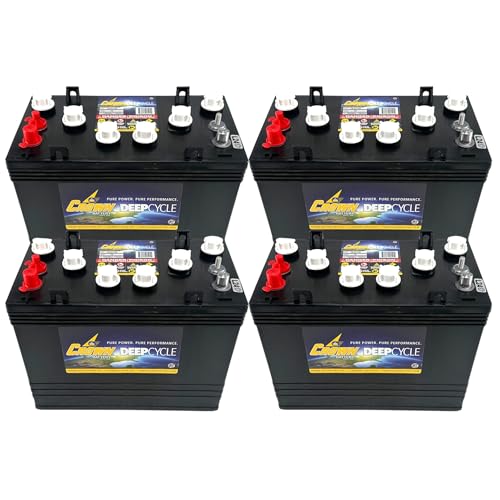
Features alignment: 12V format, 150Ah capacity, flooded lead-acid, designed for golf carts and other high-demand applications. Best for buyers who want a standard 12V pack with strong long-run capability. A limitation is the need for regular maintenance and venting appropriate for flooded cells.
Who this is best for: Golf cart operators upgrading to a robust 12V battery string or those replacing a four-battery 12V system.
Why selected: High capacity per battery supports longer operation between charges and compatibility with common 12V cart configurations.
Caution: Ensure proper ventilation and battery handling practices for flooded lead-acid systems.
U.S. Battery US8VGC 8V Deep Cycle Battery

Features alignment: 8V system, GC8 group size, deep cycle performance with extended runtime. Best for buyers who use 8V configurations or plan to build multi-battery packs with consistent 8V blocks. A potential limitation is the 8V-specific fit that may require compatible rack or tray upgrades in older carts.
Who this is best for: 8V golf cart configurations or projects requiring consistent 8V blocks for reliable discharge.
Why selected: Reliable 8V option with standard GC8 sizing makes it a practical choice for certain cart setups.
Caution: Verify compatibility with your cart’s voltage arrangement and charging system before purchase.
Buying Guide
- Cart voltage compatibility: Match the battery voltage (6V, 8V, 12V) to your cart’s specifications and the number of batteries in the pack.
- Battery type trade-offs: Flooded lead-acid batteries offer lower upfront cost but require maintenance; AGM and LiFePO4 options provide maintenance-free or longer lifespan but at higher initial cost.
- Capacity and runtime: Look at amp-hour (Ah) ratings and expected discharge rates to estimate runtime between charges for your typical driving cycles or loads.
- Physical dimensions and weight: Measure battery compartment space and weight limits; heavier packs may require assistance during installation.
- Ventilation and safety: Flooded lead-acid batteries need proper ventilation; sealed options reduce maintenance but may have different charging needs.
- Maintenance needs: Decide between maintenance-free AGM/LiFePO4 versus traditional flooded designs based on your environment and willingness to perform water top-ups or equalization charges.
- Lifecycle expectations: Consider cycle life and potential replacement intervals for budgeting and downtime planning.
Frequently Asked Questions
- What is the most common battery type for golf carts?
- Do I need maintenance for flooded lead-acid batteries?
- Is lithium a good option for golf carts?
- How do I choose battery capacity for my cart?
- Can I mix different voltages in a single cart?
- What maintenance considerations should I expect?
Most traditional golf carts use flooded lead-acid or AGM 6V or 8V batteries, with 12V packs common in multi-battery configurations.
Yes, floodable designs require orderly water topping, venting, and periodic equalization charges in some cases.
Lithium (such as LiFePO4) offers longer lifecycle and lower weight, but with a higher upfront cost and different charging requirements.
Choose based on typical driving cycles, terrain, and desired runtime between charges; higher Ah provides longer operation but adds weight.
It is generally not recommended; maintain uniform voltage and similar chemistry across the pack to avoid imbalanced charging and performance issues.
Lead-acid options require water checks and venting; lithium and AGM reduce maintenance but require appropriate chargers and protection circuitry.
Add a Comment