Looking for reliable conveyor chains and sprockets? This guide highlights five solid options designed for industrial drive systems, farming equipment, and heavy-duty conveyors. Each product is suitable for different torque, bore sizes, and mounting needs. Use this list to compare bore, tooth count, and material, so you can choose the right component for your setup. The buyer profiles below indicate who benefits most from each option and why it was selected.
| Product | Bore | Material | Best For | Notes | |
|---|---|---|---|---|---|
| Jeremywell #60 Roller Chain Idler Sprocket | 5/8″ | 15 | Hardened teeth | Compact drives | Good for light-to-moderate torque; 2.748″ hub |
| #50 Roller Chain Sprocket 20 Tooth | 1″ | 20 | Black oxide steel | Heavy-duty conveyors | Includes 2 set screws & key; rust-proof finish |
| #50 Roller Chain Sprocket 25 Tooth | 3/4″ | 25 | Black oxide steel | Industrial drives | Same advantages with larger gear ratio |
| CHR #40 Roller Chain Sprocket | 1″ | 15 | Carbon steel | ANSI #40 chains | Type B hub; reliable for standard drives |
| uxcell ANSI #40 / DIN 08A Idler Sprocket | 12mm | 14 | #45 steel | Durable fixed-position idlers | Two bearings for smooth rotation |
Jeremywell 60 Tooth Idler Sprocket, 5/8″ Bore

References: Hub diameter 2.748″, bearing 203KRR2, hardened teeth at HRC40-50, B type, 15 teeth, 5/8″ bore. Best for compact, low-profile idler roles in light-to-moderate torque conveyors. Choose this if space is limited and you need a hardened tooth surface for wear resistance. Caution: Not ideal for high-torque primary sprockets where power transmission is critical.
HJGuamou #50 Tooth Sprocket 1″ Bore

Best for heavy-duty conveyor drives in farm equipment and industrial settings. Features include 20 teeth, 1″ bore with 1/4″ x 1/8″ keyway, 2 set screws, and a black oxide rust-proof finish. Selected for strong shaft mounting and resistance to spinning under high torque. Limitation: Higher torque needs may demand larger bore or additional protective coatings in harsh environments.
HJGuamou #50 Tooth Sprocket, 25 Teeth
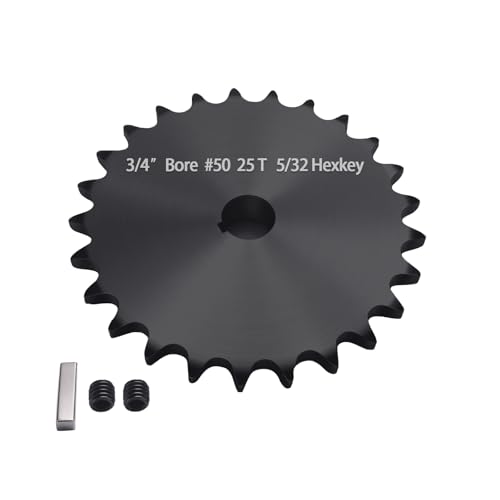
Best for expanding drive ratios in conveyor or packaging lines where a larger gear is beneficial. 25 teeth with a 3/4″ bore, 3/16″ x 3/32″ keyway, and 2 set screws. Black oxide finish adds corrosion resistance. Choose this if you need higher torque handling with moderate speed. Caution: Ensure alignment remains precise to prevent wear at the keyway.
HJGuamou #40 Tooth Sprocket, 36 Teeth

Best for standard ANSI #40 chains in go-kart, mini bike, or small tractor drives. Features include 36 teeth, 1″ bore, 1/4″ x 1/8″ keyway, and three set screws. Hardened 1045 steel for wear resistance. Better for consistent power transmission in compact drives. Limitation: Heavier-duty environments may require additional protective finishes or larger bore choices.
uxcell ANSI #35 DIN Idler Sprocket, 16 Teeth

Best for ANSI #35 / DIN 06C chains in light-duty tensioning and fixed-position applications. 12mm bore, 16 teeth, flat sprocket with precision bearing (6001ZZ). Made from #45 steel via quenching to harden teeth. Good wear resistance and long service life. Avoid if a two-bearing, high-load idler is required beyond moderate belt tension.
uxcell ANSI #40 DIN Idler Sprocket, 14 Teeth

Best for fixed-position, light-duty tensioners in ANSI #40 chains. 12mm bore, 14 teeth, two precision bearings (6201Z) for smooth rotation. The teeth are hardened via quenching for durability. Choose this when you need reliable idler tensioning with easy mounting. Limitation: May not handle high torque as a drive sprocket would.
Buying Guide: Conveyor Chains And Sprockets
How to choose the right option depends on bore size, tooth count, chain type, and mounting method. Consider these key questions:
- What is the chain size and ANSI/DIN standard in your system?
- Do you need a drive sprocket or an idler sprocket for tensioning?
- What torque and speed are expected in your application?
- Is rust resistance important for outdoor or wash-down environments?
- Is a keyway, set screws, or both required for secure mounting?
How to compare options quickly:
- Steady power transfer: choose larger teeth and appropriate bore for the drive sprocket.
- Durability: look for hardened teeth (e.g., 1045 steel, hardened to resist wear).
- Mounting security: set screws and keys help prevent slipping under torque.
Practical considerations include alignment accuracy, spacing, and compatibility with existing chains. For outdoor or industrial environments, rust-proof finishes such as black oxide coatings can extend life. Idlers should minimize friction while maintaining stable tension.
FAQ
- What is the difference between a drive sprocket and an idler sprocket?
A drive sprocket engages the chain to transmit power, while an idler sprocket primarily guides and maintains chain tension with minimal drive function. - Which bore size is most common for ANSI #40 chains?
A 1″ bore is common for drive sprockets; some idlers use 12mm or similar metric bore sizes. - Why choose a black oxide finish?
Black oxide provides rust resistance and a sleek appearance, suitable for outdoor or harsh environments. - What does “hardened teeth” mean for sprockets?
Hardened teeth are heat-treated to increase wear resistance and extend service life under repetitive loading. - What should I consider when selecting teeth count?
More teeth generally means smoother engagement and higher torque capacity; fewer teeth increase speed and may require higher strength components. - Are two-set screws necessary for mounting?
Two-set screws help secure the sprocket against rotation, especially under high torque or vibration.
Add a Comment