Finding the right conveyor chain sprocket depends on bore size, pitch, and the number of teeth. This guide highlights five practical options that suit common ANSI #40 / DIN 08A chains and 1/2″ pitch setups. Each product is chosen for durability, ease of installation, and suitability for light-duty conveyors, mini bikes, go-karts, and related DIY projects. This article helps buyers choose by explaining who each item is best for and why it was selected, with clear, comparison-friendly language.
| Product | Bore | Teeth |
|---|---|---|
| uxcell 2pcs ANSI #40 / DIN(ISO)08A Roller Chain Idler Sprocket | 12 mm | 14 |
| HJGuamou 17 Tooth Idler Sprocket | 1/2 inch | 17 |
| Saelno #40 Roller Chain Sprocket Type B | 1 inch | 12 |
| GREHUA 40 41 420 Chain Sprocket | 5/8 inch | 10 |
| Acxico 2Pcs 8mm Bore 10 Teeth | 8 mm | 10 |
uxcell 2pcs ANSI #40 / DIN(ISO)08A Roller Chain Idler Sprocket

Best for: hobbyists and DIYers who need a durable idler sprocket for fixed mounting on a shaft. This 14-tooth, 12 mm bore design pairs with ANSI #40 / DIN 08A chains for stable chain tension and smooth rotation. It features two precision bearings (6201Z) for reduced friction and long service life due to hardened teeth on quality #45 steel. Caution: Ensure correct shaft alignment to maximize bearing lifespan and avoid misalignment wear.
HJGuamou 17 Tooth Idler Sprocket

Best for: light-duty mini bike, go-kart, or small conveyor setups where a compact 17-tooth tensioner is desired. It includes a pre-installed 6201 bearing and a rust-resistant black oxide finish for outdoor use. This model is chosen for easy installation and reliable rotation with minimal setup. Limitation: It is primarily suited for small-diameter shafts and lighter loads; heavy-duty conveyors may require larger sprockets or different bore options.
Saelno #40 Roller Chain Sprocket Type B
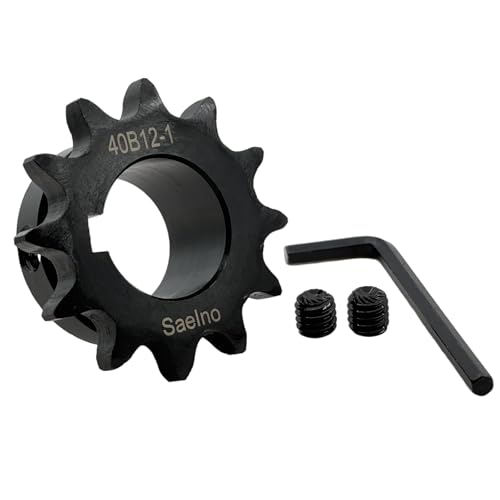
Best for: replacement in ANSI #40 chain systems with a 1-inch bore and 12 teeth. Made from ANSI 1045 carbon steel with hardened teeth (HRC38-42), its blackened surface provides corrosion resistance. This choice suits moderate-load conveyors and small go-kart/mini bike projects. Caution: Ensure keyway and set-screw alignment match your shaft design to avoid slip under load.
GREHUA 40 41 420 Chain Sprocket 10 Tooth

Best for: Coleman CT200U and similar mini bikes or small go-karts requiring a 5/8″ bore and 10-tooth configuration. The sprocket is designed to be easy to install on the engine output shaft and works with 40/41/420 chains to modulate speed and torque. Caution: The 10-tooth option increases top speed but reduces the torque bite compared with larger tooth counts; match to terrain and rider weight.
Acxico 2Pcs 8mm Bore 10 Teeth

Best for: small 8 mm bore belt and chain drives in compact machinery, with a 10-tooth configuration for light-to-moderate loads. The parts emphasize durability and hardness suitable for hardware, molds, and mechanical applications. Caution: Verify bore compatibility with your shaft and confirm keyway dimensions before installation.
Buying Guide
Key considerations when selecting conveyor chain sprockets:
- Bore size and shaft compatibility: Match bore to the shaft diameter or use adapters where allowed by design.
- Chain pitch and tooth count: Ensure the sprocket fits the chain type (e.g., ANSI #40 / DIN 08A) and choose tooth count to balance speed and torque for the application.
- Material and hardness: Hardened steel teeth reduce wear in high-use systems; consider corrosion resistance for outdoor use.
- Bearings and maintenance: Pre-installed bearings simplify installation and improve rotation efficiency; check for lubrication needs.
- Mounting configuration: Idler sprockets are typically fixed on a shaft; ensure alignment to prevent belt and chain wear.
- Environment and load: For wet or dusty environments, select rust-proof finishes and sealed bearings to extend life.
Frequently Asked Questions
- What is the difference between a tensioner and a drive sprocket?
– A tensioner (idler) primarily maintains proper chain tension and alignment, while a drive sprocket engages the chain to transmit power. - Which sprocket is best for upgrading top speed on a mini bike?
– A smaller tooth count (like 10 or 12 teeth) can boost top speed, but reduces torque; choose based on terrain and rider weight. - Do I need pre-installed bearings?
– Pre-installed bearings simplify assembly and reduce initial friction; verify bearing compatibility with your shaft. - Is stainless steel necessary for outdoor use?
– Stainless or rust-resistant finishes help in outdoor or wet environments, extending life in corrosive conditions. - How do I ensure proper alignment?
– Align the sprocket with the chain path and verify shaft runout; use shims or mounting brackets as needed to minimize misalignment. - Can I mix sprockets with different tooth counts on the same chain?
– Mixed tooth counts can be used for complex drive systems, but ensure overall chain tension and alignment remain within design tolerances.
Add a Comment