This guide helps buyers find reliable water tanks ideal for construction sites, worksites, and outdoor projects. Each top pick is suited for different needs—from portable handwashing stations to large-capacity tote tanks. If you need quick-off-the-ground hygiene at a job site, a compact portable unit may fit best. For longer jobs requiring steady water supply, high-capacity stackable tanks offer scalable storage. The selections below balance portability, durability, and ease of use to support crews, site managers, and safety officers. A brief comparison table follows to kick off your decision process.
| Product | Brand | Capacities | Key Strength |
|---|---|---|---|
| CoPar Portable Hand Washing Station | CoPar | 6.6 gallons | Portable hand hygiene for multiple sites |
| YITAHOME 10.6 Gallon Tank | YITAHOME | 10.6 gallons | Mobility with wheels and handle |
| WaterPrepared 55 Gallon Tank | WaterPrepared | 55 gallons | Stackable, space-saving design |
| 30 Gallon Emergency Tank | Emergency Water Tanks | 30 gallons | Compact, stackable for vertical storage |
| Chapin 40-Gallon Tank | Chapin International | 40 gallons | Durable, easy transport and drainage |
CoPar Industrial Portable Hand Washing Station

Best for quick, on-demand handwashing at multiple job-site points. This unit includes a 6.6-gallon water tank and an 8-ounce soap dispenser to support frequent use in outdoor environments. The adjustable flow nozzle enables about four minutes of continuous spray when fully opened, which helps crews stay compliant with hygiene standards without constant refilling.
Who it’s best for: small to medium construction crews or event setups needing portable hygiene stations. Why chosen: its portability and generous soap/water capacity reduce downtime between wash breaks. Caution: limited water supply means it may require more frequent refills on busy days.
YITAHOME 10.6 Gallon Tank

Best for mobile water storage with easier transport on larger worksites. The 10.6-gallon capacity is paired with wheels and a metal handle, allowing crews to move water where it’s needed without heavy lifting. The tank’s durable PP construction supports repeated use in outdoor environments.
Who it’s best for: crews requiring a mobile water reservoir to service multiple areas of a site. Why chosen: prominent mobility features reduce effort when supplying water across uneven ground. Caution: wheels and handle add weight, which may complicate storage in tight spaces.
WaterPrepared Stackable 55 Gallon Tank

Best for long-term on-site water storage with high capacity. This 55-gallon tank is designed with a stackable layout to maximize storage efficiency in limited spaces. It uses food-grade, UV-proof HDPE to maintain water quality and resist outdoor exposure.
Who it’s best for: projects needing a scalable water supply with secure long-term storage. Why chosen: its stackable design supports expansion while keeping footprint manageable. Caution: larger footprint means less portability for small crews.
Emergency 30 Gallon Stackable Tank
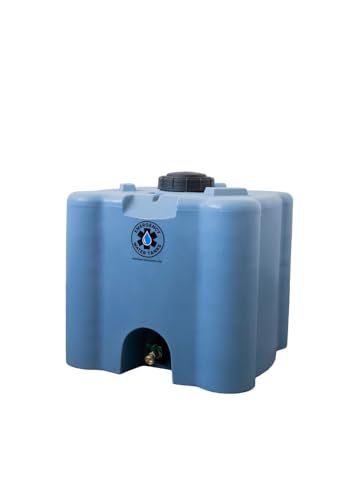
Best for compact, space-saving storage on smaller homes or RVs. The 30-gallon unit is designed to stack with other tanks, enabling vertical expansion while keeping a tidy storage solution. Made from BPA-free, lead-free rotationally molded polyethylene suitable for long-term potable storage.
Who it’s best for: small sites or households needing an expandable yet compact water reserve. Why chosen: balance of capacity and stackability. Caution: may require additional tanks for very high water demand.
Chapin 40-Gallon Water Storage Tank

Best for medium-sized sites requiring a robust, portable storage option. The Chapin 40-gallon tank is translucent for visibility and includes a 2″ drain plus a garden-hose port for quick emptying, aiding efficient site maintenance.
Who it’s best for: crews needing reliable transport and drain functionality. Why chosen: durable, easy-to-move design with fast drainage. Caution: translucence can reveal contents, so keep lids closed to prevent contamination.
Buying Guide
What capacity do you really need?
Assess peak water demand at the site. For hygiene stations, smaller portable tanks work well. For irrigation, cleaning, and large crews, larger stacks or 55-gallon options reduce refills.
Portability vs. capacity
Portable units excel on dynamic sites, while stackable tanks maximize space in storage yards. Choose based on how often you’ll relocate or expand your water system.
Material safety and durability
Food-grade, BPA-free materials protect water quality. UV resistance helps with outdoor storage. For long-term use, ensure the tank supports your climate and exposure conditions.
Drain and connection considerations
Consider drainage needs and attachment compatibility. Regular drains and hose ports speed up maintenance and contamination prevention.
Site-specific considerations
If hygiene is crucial, prioritize a unit with an integrated soap dispenser and controlled nozzle. For remote sites, prioritize portability and easy transport features.
FAQ
- What should I consider when choosing a water tank for a construction site? – Capacity, portability, material safety, drainage options, and storage footprint.
- Are stackable tanks suitable for all sites? – They work well where vertical storage is possible, but may be less portable for frequent relocation.
- Should water tanks be BPA-free? – Yes, BPA-free materials help maintain water quality over time.
- Is a hand washing station necessary on most sites? – It improves hygiene compliance and reduces cross-contamination at outdoor worksites.
- What is the benefit of a tank with wheels or a handle? – It eases movement across uneven terrain and reduces physical strain.
Add a Comment