Confined spaces demand reliable monitoring of combustible, toxic, and oxygen-deficient atmospheres. The following picks represent popular, feature-rich 4-gas monitors with pumps, long battery life, data logging, and multi-alarm systems. Each option supports rapid detection and durable design for tough environments, making them suitable for industrial work, maintenance, and home safety applications. Below you’ll find concise overviews, key features, and linked product pages to compare at a glance.
| Product | Brand | Key Gases Detected | Special Features |
|---|---|---|---|
| TopTes Guard-101 | TOPTES | H2S, CO, LEL, O2 | 4-gas, 14h battery, triple alarm, data storage |
| Forensics Detectors FD 4 Gas with Pump | FORENSICS DETECTORS FD | O2, CO, H2S, LEL | USA NIST calibration, pump option, adjustable alarms |
| MSA 4XR Multigas Detector | MSA | O2, H2S, CO, LEL | Traceability, large alarms, data logging, MotionAlert |
| Forsensal 4 Gas Detector with Pump | Forsensal | CO, O2, H2S, LEL | Long battery, pump, calibration kit, LCD display |
| XLA Alert Portable 4 Gas Monitor | XLA Alert | LEL, O2, CO, H2S | LCD, alarms, portable, rugged housing |
TopTes Guard-101 Gas Detector Overview
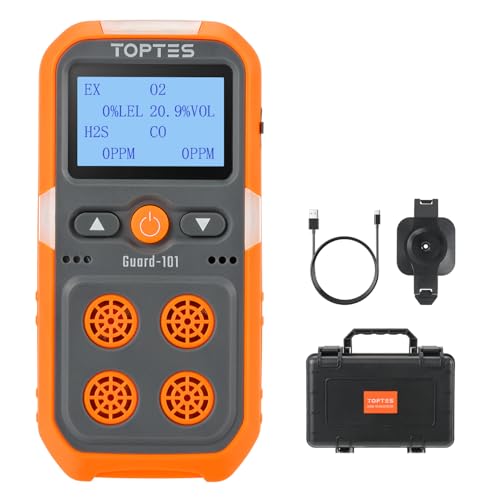
The Guard-101 is a compact 4-gas detector designed for rapid identification of H2S, CO, LEL, and O2. With up to 14 hours of battery life, it supports extended monitoring in confined spaces. Built from high-strength ABS, it is water, dust, and explosion-proof, and a back-clip aids portability. The device provides password protection to prevent accidental operation and uses a triple alarm system (LED, vibration, sound) to ensure alerts persist until gas levels normalize. Alarm data can be stored for later review.
Forensics Detectors FD 4 Gas with Pump

This 4-gas monitor features sensors for O2, CO, H2S, and LEL, with USA NIST calibration and a calibration certificate. It offers a pump option for sample uptake, an adjustable alarm system (audio, visual, vibration), and timestamped alarm logs. The device emphasizes reliability with QA and national calibration standards, suitable for confined-space monitoring and compliance-ready workflows.
MSA 4XR Multigas Detector

The MSA 10178557 4XR provides measurement for LEL, O2, H2S, and CO with strong traceability features. It records 500+ alarm events and 50+ hours of data, and includes a rechargeable Li-polymer battery with up to 24 hours of runtime. Safety features include a bump pass/fail LED indicator, MotionAlert for a potential worker-down scenario, and InstantAlert for quick manual alarms, plus end-of-sensor-life warnings.
Forsensal Gas Detector with Pump

This 4-gas detector includes a built-in pump, measuring CO, O2, H2S, and LEL. It comes with a Calibration Certificate and a password-protected initial access code, with a large display for gas concentrations. The unit emphasizes long battery life (standby >8 hours) and includes a calibration kit, hose, USB-C charger, and accessory items for field calibration and reliable operation in confined spaces.
XLA Alert Portable 4 Gas Monitor

The XLA Alert 4-gas monitor detects LEL, O2, CO, and H2S with a portable, rugged design and an LCD display. It features adjustable audio, visual, and vibration alarms and a long-lasting battery for extended field use. The device emphasizes quick, readable gas concentration readouts and a durable ABS housing with anti-slip rubber grip for confined-space use.
Buying Guide: Confined Space Gas Monitor Considerations
Gas-monitoring needs vary by environment and regulatory requirements. Consider the following when selecting a 4-gas monitor for confined spaces:
- Sensor technology and gas coverage: Ensure the unit monitors the four core gases (O2, CO, H2S, LEL) with electrochemical sensors for O2, CO, H2S and catalytic or infrared LEL sensors. Some models offer optional pump sampling for fast response in stagnant air.
- Response time and alarms: Look for sub-1 second or around 0.5 second response time, with multi-modal alarms (audible, visual, vibration) and data logging for incident review.
- Battery life and power options: Longer battery life supports all-day monitoring; check USB-C or dedicated chargers and the potential for spare batteries or hot-swappable packs.
- Durability and protection: Choose models with water/dust resistance, explosion-proof classifications where required, and rugged housings for harsh environments.
- Data logging and connectivity: Consider whether the device stores alarm histories, bump tests, calibration records, and offers USB data export or cloud options for reporting.
- Calibration and certification: Some monitors come with NIST or supplier calibration certificates, helping with compliance and audit trails in regulated settings.
- Ergonomics and wearability: A comfortable form factor, back clip, harness compatibility, and pump options can affect daily use in tight or awkward spaces.
- Maintenance and calibration cadence: Review how often sensors require calibration and sensor life expectancy to plan service intervals.
- Cost of ownership: Include training, spare parts, calibration services, and warranty duration when comparing total costs over time.
Add a Comment