Confined spaces pose unique gas hazards that demand reliable, fast-acting monitoring. The following 5 gas detectors are designed to detect the four main threats—H2S, CO, O2, and LEL—in tight environments, with features like triple alarms, data logging, and pump-assisted sampling. This guide highlights practical choices for industrial, maintenance, and home scenarios, helping you compare durability, sensor life, alarm systems, and data export options. Each entry links to its official Amazon listing for quick access to product details and purchasing options.
| Product | Brand | Key Feature |
|---|---|---|
| TopTes Guard-101 Gas Detector | TOPTES | 4-gas monitoring with fast 0.5s response; 14h battery life; triple alarms |
| TopTes Guard-863Pro | TOPTES | 4-gas monitor with TFT color display; 5-year O2 sensor; USB data export |
| Forensics Detectors FD 4 Gas Monitor with Pump | FORENSICS DETECTORS FD | NIST calibration; pump sampling; adjustable alarms |
| Forsensic Detectors 4 Gas with Pump | Forsensal | 4 gases; large LCD; 3000mAh battery; pump option |
| ACEGMET 4 Gas Monitor | ACEGMET | H2S, CO, O2, LEL; fast <30s response; rugged build |
TopTes Guard-101 Gas Detector
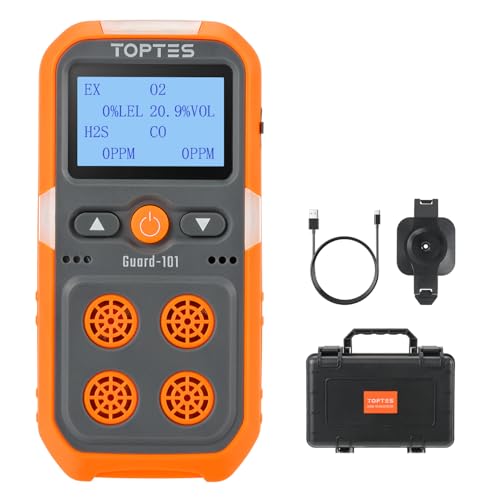
Guard-101 is a lightweight four-gas monitor designed for rapid detection of H2S, CO, LEL, and O2. Battery life reaches up to 14 hours, supporting long shifts without frequent recharges. The device uses high-strength ABS plastic for durability and includes a back clip for convenient carrying. A password-protected interface helps prevent accidental operation, with an initial password of “69”. It features triple alarms—LED, vibration, and audible—and stores alarm data for later review. The detector responds within 0.5 seconds and continues alarming until gas levels return to safe limits.
TopTes Guard-863Pro 4 Gas Monitor

Guard-863Pro adds a TFT color display for real-time gas readings and charts. It maintains a fast 0.5-second response and an international-safety-tested build for demanding environments. The upgraded oxygen sensor provides up to five years of life, reducing replacement frequency. Data export via USB supports efficient record-keeping of alarms, calibration, and operation history, aiding compliance and analysis. Its continuous triple alarm system ensures visibility across varying lighting conditions and distances.
Forensics Detectors FD 4 Gas Monitor with Pump

This model includes a USA NIST calibration certificate and a built-in pump to draw gas samples from confined spaces. It monitors Oxygen (O2), Carbon Monoxide (CO), Hydrogen Sulfide (H2S), and Combustibles (LEL). Alarms are adjustable in audio, visual, and vibration, with a digital time stamp and local logging to support incident reviews and safety compliance.
Forsensal 4 Gas Monitor with Pump

The Forsensal 4 Gas Monitor combines pump-assisted sampling with four gas sensors for CO, O2, H2S, and LEL. It features a 3000mAh rechargeable battery offering extended use, a large LCD for clear readings, and a calibration-friendly workflow. The package typically includes essential accessories like calibration caps and hoses, supporting ready-to-use deployment after purchase.
ACEGMET 4 Gas Monitor
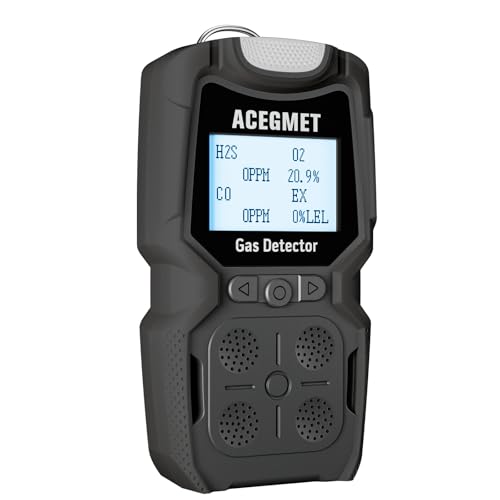
ACEGMET’s detector targets H2S, CO, O2, and LEL with a rapid sub-30-second response. It emphasizes durability and personal protection for use in confined spaces, tanks, silos, and tunnels. The device is designed for real-time readings and is built to withstand harsh conditions. Calibration procedures are recommended to ensure measurement accuracy over time, and the unit supports convenient field use with a protective design.
Buying Guide: Key Purchase Considerations for Confined Space Gas Detectors
Choosing the right gas detector for confined spaces involves balancing sensor coverage, response speed, durability, and data capabilities. Consider these perspectives:
- Gas Coverage: Ensure the model detects the four core hazards (H2S, CO, O2, LEL). Some models include extra options such as CO2 or VOCs, but four-gas devices are most common for confined spaces.
- Response Time: A fast response (0.5 seconds or better) reduces exposure risk. Some models offer even quicker alerts and continuous alarm until conditions normalize.
- Alarm Systems: Look for triple alarms (audible, visual, vibration) for noisy or dim environments. Check for alarm history and data logging capabilities for compliance and investigations.
- Durability: For harsh workplaces, choose explosion-proof or rugged housings with waterproof and dustproof ratings. Back-clip designs aid portability in tight spaces.
- Power and Runtime: Battery life should align with shift lengths. Some detectors offer rapid charging or long-life batteries, and pump-enabled units are valuable for stagnant air.
- Calibration and Verification: Models with NIST or international calibration support and easy USB data export help maintain accuracy and traceability.
- Data Management: If you need audit trails or trend analysis, prioritize devices with data logging and export options. Consider the ease of downloading alarm and fault logs.
- Maintenance Needs: Assess sensor life (especially O2 sensors) and whether replacement parts or service are readily available in your region.
- Use Case Fit: For routine inspections, a compact unit with a clip may be ideal. For heavy confined-space entry, a pump-enabled model improves sample collection and accuracy.
Comparison at a Glance
- Fast responders: Guard-101, Guard-156, and Guard-863Pro offer quick readings and rapid alarms.
- With pumps: Forensics FD and Forsensal models provide pumped sampling for hard-to-reach gases.
- Data capabilities: Guard-863Pro and several Forensics models include USB data export and alarm logging for traceability.
- Durability: Most options use rugged ABS housings with waterproof and dustproof features; explosion-proof designs are common in professional settings.
When selecting, align the device’s features with the specific confined-space profile, shift length, environment, and required documentation. Safety programs benefit from devices that balance strong alarm performance with reliable data capture and rugged construction.
Add a Comment