If you’re looking to optimize an industrial or DIY compressed air setup, this guide highlights five essential monitoring and filtration options. These picks are aimed at professionals needing stable pressure, clean air, and easy data readings, as well as hobbyists prioritizing indoor air quality in workspaces. The top selections cover regulators, particulate filtration, and a compact air quality monitor to track environmental conditions. This overview explains who each product is best for, and why it was chosen for inclusion.
| Product | Best For | Why Included |
|---|---|---|
| THB Heavy Duty In-Line Compressed Air Pressure Regulator | Hard-wearing systems needing precise control | Wide 7–215 psi adjustment; high flow; wall mount included |
| THB Heavy Duty High Flow In-Line Particulate Filter | Moisture and debris-prone lines | 5-micron filtration; visible sight glass; metal bowl |
| BONKZEBU Indoor Air Quality Monitor, 18 in 1 | Indoor environments needing real-time air metrics | 13 metrics; 2.8″ display; 7-hour battery |
| THB Industrial Rated Particulate Filter With Water Trap | Moisture control in tougher lines | 5-micron filter; 5oz metal bowl; visible sight glass |
| Walfront Air Pressure Regulator Vacuum 100 to -1.3 kPa | Vacuum/negative pressure regulation | Clear dial; easy monitoring; compact |
THB Heavy Duty In-Line Compressed Air Pressure Regulator

Key features: 3/4″ female NPT in-line regulator, handles up to 250 PSI input with 215 PSI max output, adjustable from 7 PSI to 215 PSI, includes wall mounting bracket and gauge, 140 CFM flow rate.
- Best for: systems requiring robust, adjustable pressure control in tight spaces.
- Why chosen: The wide adjustment range and included mounting gauge simplify set-and-forget operation in workshops and shops.
- Caution/limitation: Larger NPT size may require compatible fittings in existing lines.
Multi-Speed Powerful Compressed Air Duster

Key features: Cordless air duster with six gear speeds and LED battery display; high-speed operation (up to 160,000 RPM); USB-C charging.
- Best for: electronics cleaning, keyboards, and delicate components where canned air is impractical.
- Why chosen: Battery-powered portability and speed control make it a versatile cleaning tool beyond simple dusting.
- Caution/limitation: Battery-powered devices require charging access and may not provide continuous run-time for heavy-duty jobs.
THB Heavy Duty In-Line Particulate Filter With Metal Bowl

Key features: 3/4″ NPT, 5-micron filtration, metal bowl with visible sight glass, 250 PSI max input, 215 PSI max output, 140 CFM.
- Best for: removing moisture and debris from compressed air lines in demanding environments.
- Why chosen: The metal bowl and sight glass enable quick inspection and maintenance.
- Caution/limitation: In-line filters require regular drain and replacement of the element to maintain performance.
Walfront Air Pressure Regulator Vacuum
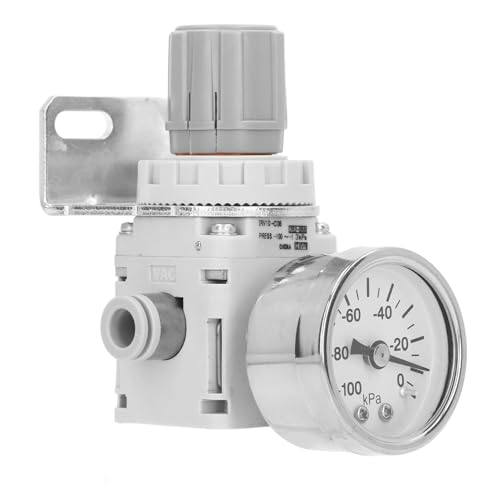
Key features: Operating range from -100 to -1.3 kPa; clear dial for monitoring; simple three-step setup.
- Best for: vacuum systems or negative-pressure control in compact installations.
- Why chosen: The straightforward design facilitates quick adjustments and monitoring in tight spaces.
- Caution/limitation: Negative-pressure range is specialized; confirm suitability for your process before deployment.
Air Regulator, Negative Pressure -1.3KPa

Key features: Compact regulator with a negative pressure range of -100 to -1.3 KPa; three-step lockable adjustment; easy to carry and set up.
- Best for: portable or space-constrained air systems requiring precise negative-pressure control.
- Why chosen: Compact size helps in mobile or small-shop environments where space is at a premium.
- Caution/limitation: Negative-pressure applications may require careful integration with other components to avoid leaks.
Buying Guide: Key Purchase Considerations
What should I look for in a compressor air regulator?
Look for a wide adjustable pressure range, compatible NPT sizing, and included mounting options. A gauge helps ensure accurate settings and stable output for sensitive tools.
Why add filtration and moisture control?
Filters and moisture traps prevent debris and water from reaching tools, reducing wear and improving performance. Moisture removal is essential in humid environments or lines with long runs.
How to choose an indoor air quality monitor?
Consider the metrics tracked (CO2, TVOC, PM, HCHO, temperature, humidity), display readability, battery life, and data logging capabilities. For busy workspaces, a clear, real-time display helps with quick decisions.
Are combination sets more cost-effective?
Yes, combination sets that include regulators, filters, and moisture traps can simplify installation and maintenance, reducing downtime and ensuring a cohesive system.
What maintenance steps keep these devices reliable?
Regularly inspect sight glasses, drain moisture bowls, replace filter elements, and verify regulator accuracy with a gauge. Periodic checks help prevent leaks and pressure drops.
FAQ
- What is the purpose of a compressed air regulator? It controls the air pressure delivered to tools, protecting equipment and ensuring consistent performance.
- How often should I replace a filter element? Replace according to your system’s usage and manufacturer recommendations, or when flow decreases or moisture is visible.
- Can I use these regulators with any air compressor? Most regulators use standard NPT fittings, but always verify thread size and airflow requirements for your setup.
- Is an indoor air quality monitor necessary in a workshop? If you work with chemicals, powders, or enclosed spaces, monitoring helps maintain a healthier work environment and can guide ventilation decisions.
- What is the benefit of a metal bowl in a filter? A metal bowl is more durable and easier to inspect for moisture accumulation than plastic bowls in demanding environments.
- Should I buy multiple devices from one brand? Brand-consistency can simplify maintenance, but prioritize features and compatibility over brand alone.
Add a Comment