Detecting and pinpointing leaks in compressed air systems is crucial for reducing energy waste, downtime, and maintenance costs. The following hand-picked products represent a mix of advanced acoustic imaging, chemical/ultraviolet detection, and practical moisture control tools designed to help facilities quickly locate leaks and seal inefficiencies. The list emphasizes accuracy, ease of use, and real-time visualization to support proactive maintenance programs.
| Product | Brand | Key Benefit |
|---|---|---|
| FOTRIC TD2 Acoustic Imager | FOTRIC | 64 MEMS mics, real-time acoustic imaging, wide frequency range |
| RectorSeal Better Bubble 65554 | Rectorseal | Fast, portable leak detection for various gases |
| TOPTES RT-389 | TOPTES | Rechargeable refrigerant leak detector with 3 sensitivity modes |
| ComStar Leak Bubbles Yellow | ComStar | Fast, safe bubble-based leak detection |
| ComStar Leak Bubbles Blue | ComStar | Blue version, fast bubble-based leaks, non-corrosive |
FOTRIC TD2 Acoustic Imager

The TD2 combines 64 high-sensitivity MEMS microphones with a 66°×52° field of view to localize sound sources accurately. It supports a broad frequency range from 2 to 100 kHz, enabling detection of both audible and ultrasonic leaks. A 13-megapixel camera adds detailed visual reference for precise analysis. This setup is well-suited for compressed air leak detection, vacuum leaks, fastener checks, and seal integrity verification, all without interrupting operations.
Acoustic imaging focused by adaptive noise reduction helps isolate the source of noise and pairs with dB-level outputs for quantitative assessment. The real-time visualization helps maintenance teams confirm leak locations and plan repairs efficiently, reducing unplanned downtime and energy waste.
RectorSeal Better Bubble 65554 Advanced Leak Detector

Better Bubble is an advanced, easy-to-use leak locator that detects refrigerant gas, air, oxygen, and other gas leaks. It tolerates surface temperatures from 20°F to 250°F and is suitable for pipes, tubes, tanks, pressure vessels, condensers, and refrigerant coils. The spray method makes it quick to identify leak points, including difficult-to-reach areas, while remaining safe for various materials and systems. It supports rapid triage in HVACR and industrial plants where quick leak confirmation matters.
Users should consider application surfaces, temperature ranges, and compatibility with refrigerants or process gases when selecting this method. The product is favored for its fast action and portability, contributing to faster maintenance cycles and reduced gas losses.
TOPTES RT-389 Refrigerant Leak Detector

The RT-389 provides adjustable sensitivity with three modes (High, Middle, Low) and a 14.5-inch flexible gooseneck, ideal for automotive, home, and commercial HVAC systems. It detects CFCs, HCFCs, HFCs, HFOs, and HCs with a maximum sensitivity of 3 g/yr. Triple alarms (sound, visual, vibration) can be configured independently, and a quick mute option enhances workflow efficiency in noisy environments. A color display with adjustable brightness offers real-time refrigerant concentration readings and trend tracking for long-term monitoring.
Consider the detector’s sensor quality, gooseneck reach, and alert options to match your inspection routines. The device suits mobile service tasks and tight spaces where fast, repeatable detection is essential.
ComStar Leak Bubbles Yellow HVAC & Gas Detector

Leak Bubbles Yellow uses a bubble-based method for rapid leak detection across natural gas, refrigerant gas, nitrogen, air, and CO2. It is formulated to be environmentally safe, non-toxic, and non-corrosive, making it suitable for a wide range of surfaces and components in HVAC and industrial gas systems. The spray approach provides quick visual confirmation of leak points, supporting efficient commissioning, maintenance, and safety audits.
When selecting this tool, consider the required bubble strength, surface compatibility, and local safety regulations for gas detection to ensure reliable results in field conditions.
ComStar Leak Bubbles Blue HVAC & Gas Detector
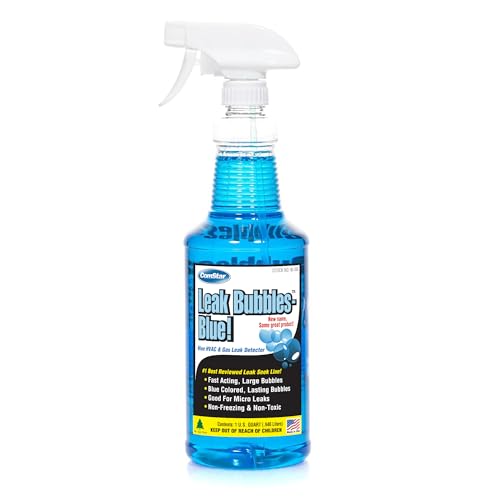
Leak Bubbles Blue mirrors the Yellow variant with a blue formulation for detecting leaks in natural gas, refrigerants, nitrogen, air, and CO2. It provides a fast visual indication of micro and macro leaks, is non-toxic, and designed for safe use across various materials. Like the Yellow version, it is well-suited for quick screening during construction, retrofit, or routine maintenance to identify leak-prone areas and verify seal integrity after repairs.
For best results, calibrate the application amount to the system layout and verify that the bubbles remain visible at the expected leak points, ensuring an actionable visual cue for technicians.
Buying Guide: Key Considerations for Choosing Compressed Air Leak Detection Equipment
When evaluating leak detection tools, several factors influence effectiveness and return on investment. The following perspectives help balance performance, cost, and practical workflow integration.
- Detection method: Acoustic imaging, chemical/UV detection, and bubble-based approaches each suit different scenarios. Acoustic imagers like the FOTRIC TD2 are powerful for locating leaks in hard-to-reach areas, while bubble detectors like ComStar models offer fast visual confirmation for straightforward surfaces.
- Sensitivity and range: For compressed air systems, high sensitivity and broad frequency coverage improve leak localization accuracy. Detectors with multiple sensitivity modes provide flexibility for varying pressures and leak magnitudes.
- Ease of use and portability: Tools with intuitive interfaces, clear visual feedback, and compact form factors reduce inspection time and training requirements, especially in large facilities.
- Environmental and safety considerations: Non-toxic, non-corrosive formulations are preferable for facility safety and equipment longevity. Compliance with local regulations and manufacturer recommendations matters for warranty and service support.
- System compatibility: Ensure detectors work with your refrigerants, gases, and pipe materials. Some products are tailored for HVACR, while others cover broader industrial gas leak scenarios.
- Maintenance and consumables: Bubble solutions require periodic replacement, while electronic detectors demand battery management and sensor calibration. Factor ongoing costs into the total cost of ownership.
- Support and documentation: Access to clear user manuals, spare parts, and responsive vendor support can reduce downtime during installation and repairs.
- Application scope: Consider whether you need portable field devices, fixed-mount detectors, or a combination to cover preventive maintenance programs across diverse facilities.
In practice, a mixed toolkit often yields the best results: an acoustic imaging system for precise localization, complemented by bubble-based detectors for quick confirmations and refrigerant detectors for HVAC-related checks. This combination supports comprehensive inspections, faster repairs, and improved energy efficiency in compressed air systems.
Add a Comment