Answering the need for dependable grease management, these commercial grease traps are designed for restaurant kitchens, cafes, and food prep areas. They help prevent clogs, reduce odors, and protect sewer systems. This guide highlights five top options, explaining who each is best suited for and why. Whether you operate a high-volume diner or a smaller cafe, these picks aim to balance capacity, durability, and ease of installation.
| Product | Best For | Key Benefit |
|---|---|---|
| Wentworth 70 Lb WP-GT-35 | Medium to high-volume kitchens | Large capacity with rugged build |
| BEAMNOVA 25 Lbs | New installs and upgrading | Ready-to-install with accessories |
| Wadoy 25 Lbs | Budget-conscious restaurants | Thick stainless steel with good sealing |
| Wentworth 40 Lb WP-GT-20 | Smaller kitchens with solid performance | Balanced size and flow |
| Beseder 10 GPM | Small kitchens or under-sink installs | Plastic body, compact footprint |
Wentworth 70 Pound Grease Trap WP-GT-35

Best for high-demand kitchens, the Wentworth WP-GT-35 uses 11-gauge carbon steel with a heavy-duty anti-corrosion powder coat. Its large 70-pound capacity supports significant grease and solids separation, making it suitable for full-service restaurants with heavy dishwashing loads. Ideal for operators who need fewer maintenance intervals and robust construction. A potential limitation is the unit’s size, which may require more under-sink space and careful installation planning.
BEAMNOVA Commercial Grease Trap 25lbs

Best for installations that benefit from an all-in-one package, this model includes outlet piping, a user manual, and all required accessories. It features a thicker weld process, rounded corners to reduce scratching, and a rubber seal to prevent leaks. It’s well-suited for new builds or retrofits in medium- to large-scale kitchens. Limitations may include the need for solvent-welded piping for a secure fit and ensuring a flat floor for proper installation.
Wadoy 8 lbs Commercial Grease Trap (Under Sink)

Best for compact setups or small kitchens, this smaller capacity model provides essential FOG separation and is built from thick 201 stainless steel with reliable sealing features. Its compact dimensions make it easy to install under sinks, and the threaded outlet interface helps secure piping. A caveat is the smaller capacity, making it more suitable for light-to-moderate workloads rather than high-volume service.
Wentworth 40 Pound WP-GT-20

Best for mid-sized kitchens needing reliable performance without the biggest footprint, the WP-GT-20 combines a solid 40-pound capacity with a compact form factor. It uses heavy-duty carbon steel and anti-corrosion coating for longevity. Choose this if you need a balanced option between capacity and installation space. Limitation: not as high-capacity as the WP-GT-35, so maintenance could be more frequent in very busy operations.
Wentworth 20 Pound WP-GT-10

Best for small under-sink needs, the WP-GT-10 provides essential grease separation with a compact footprint. It suits light-duty kitchens, coffee shops, or food prep areas with moderate grease loads. A limitation is its smaller capacity, which may require more frequent cleaning in high-traffic environments.
Beseder 10 GPM Grease Trap
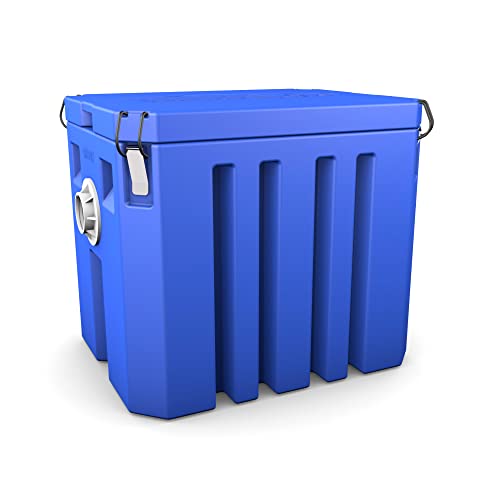
Best for value-driven installations, the Beseder grease trap emphasizes a durable plastic body with thick walls (about 1/4 inch) for long-term protection against leaks and deformation. It supports up to 10 gallons per minute, making it suitable for small restaurants or under-sink fits in kitchens with moderate grease loads. Limitation: plastic bodies may appeal less to operators seeking metal durability for very demanding environments.
Buying Guide
What capacity do you actually need?
Capacity correlates with daily grease load and dishwasher use. Higher-capacity models reduce maintenance frequency but require more space and cost. Match capacity to peak meal times and expected waste volume.
What installation space is required?
Measure under-sink clearance and floor flatness. Larger units like the WP-GT-35 demand more room but offer longer service between cleanouts, while compact models fit tight spaces but may need more frequent servicing.
Materials and durability
Stainless steel bodies resist corrosion and rust, while high-grade carbon steel with powder coatings can provide robust protection in busy kitchens. Consider the environment, cleaning frequency, and potential chemical exposure when selecting materials.
Leak prevention and sealing
Look for sealed lids, rubber gaskets, and solid outlet seals. Models with threaded outlets and rubber seals reduce leakage risk and simplify maintenance checks.
Installation and maintenance considerations
Some traps arrive fully assembled and easy to install, while others require piping work. Plan for regular cleaning intervals and ensure accessibility for servicing and emptying the grease.”
Practical selection tips
- Choose best for: high-volume kitchens — Wentworth WP-GT-35
- Choose better for: compact installs — Beseder 10 GPM or Wentworth WP-GT-10
- Avoid this if: you cannot accommodate the size — WP-GT-35 in limited spaces
FAQ
- What size grease trap do I need for a restaurant?
- How often should a grease trap be cleaned?
- Can grease traps be installed under a sink?
- What materials are best for durability?
- Do I need professional installation?
- Are grease traps required by local codes?
Assess daily grease load, sink counts, and dishwashing volume. Higher volume requires larger capacity units (e.g., 40–70 pounds).
Frequency depends on usage, but many restaurants inspect every 1–3 months and clean as needed to prevent backups.
Yes. Compact models fit under sinks, while larger units may require dedicated space in a utility closet or basement condensate area.
Stainless steel bodies with anti-corrosion coatings offer long-term durability in busy kitchens; plastic bodies are lighter and cost-effective for smaller setups.
For most under-sink units, standard plumbing knowledge suffices; larger or more complex installs may benefit from professional assistance to ensure code compliance.
Many jurisdictions require grease traps or interceptors for commercial kitchens. Check local plumbing and health department regulations.
Add a Comment