Whether you tackle decks, sidewalks, or heavy-duty exterior surfaces, choosing the right pressure washer matters. The following selection highlights reliable electric and gas models, plus essential accessories, to help you decide what fits your commercial or heavy-use needs. Each pick balances power, flow, and durability for tough cleaning without sacrificing ease of use.
| Product | Max PSI | GPM | Key Benefit | |
|---|---|---|---|---|
| Westinghouse WPX3000e Electric | 3000 | 1.76 | Electric | Induction motor, onboard soap tank |
| Westinghouse WPX4400 Gas | 4400 | 4.2 | Gas | High power for large surfaces |
| IvyBess Professional 4200 PSI | 4200 | 4.0 | Gas | Heavy-duty commercial-grade engine |
| Westinghouse WPX3200e Electric | 3200 | 1.76 | Electric | Balanced everyday cleaning |
| WOJET 20″ Surface Cleaner | — | — | Accessory | Stripe-free surface cleaning |
Westinghouse WPX3000e Electric Pressure Washer
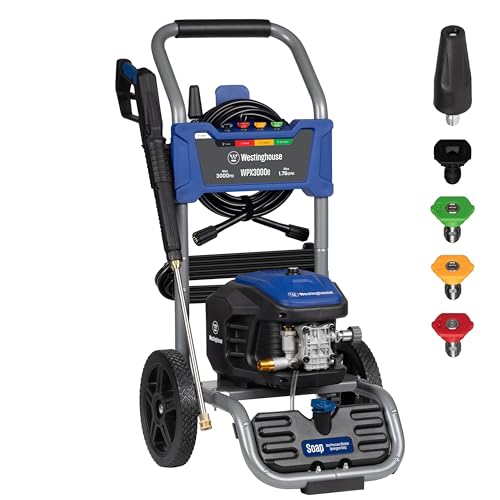
The WPX3000e delivers up to 3000 max PSI with 1.76 max GPM, while providing 2600 PSI and 1.1 GPM at rated flow. Its induction motor supports a compact, quiet operation suitable for decks, fences, and cars. An onboard soap tank adds convenience for detergent-based cleaning, and a 25-foot hose with five quick-connect nozzles enhances versatility for various tasks. Compatible accessories expand the range of possible applications, including surface cleaners and foam cannons when paired with appropriate fittings.
Westinghouse WPX4400 Gas Pressure Washer

This gas-powered model operates at 4400 PSI with 4.2 GPM, making it well-suited for large-scale cleaning jobs like exterior walls, driveways, and heavy grime. It features a 1.7-gallon fuel tank, a 50-foot heavy-duty hose, and a set of five quick-connect nozzles. The long-lasting triplex brass head pump and a 420cc Westinghouse OHV engine enable sustained performance on demanding projects, while compatibility with surface cleaners and foam cannons expands its utility for professional use.
IvyBess Professional 4200 PSI Gas Pressure Washer

Equipped with a 4200 PSI max and 4 GPM, this gasoline-powered washer suits heavy-duty jobs. It uses a 212cc 4-stroke engine with recoil start and a durable axial cam pump. The unit ships with five quick-connect nozzles (0°, 15°, 25°, 40°, and soap), plus a 33-foot hose and 10-inch wheels for mobility. A 3L foam bottle supports soap application, enabling effective cleaning of driveways, fences, and paint prep tasks while meeting EPA/CARB/ETL standards for compliance.
Westinghouse WPX3200e Electric Pressure Washer
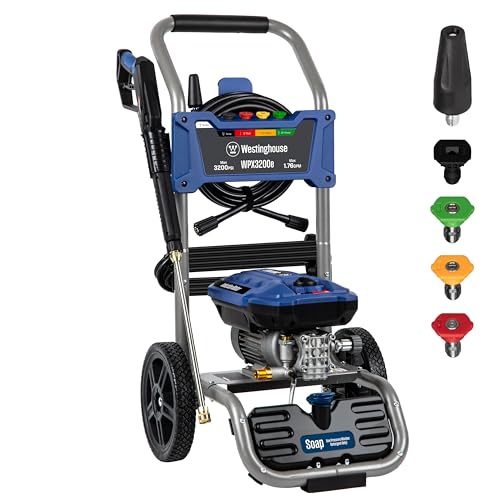
The WPX3200e offers 3200 max PSI and 1.76 max GPM, with rated 2800 PSI and 1.1 GPM. It includes a built-in 0.61-gallon soap tank and a 25-foot hose with five quick-connect nozzles (0°, 15°, 25°, turbo, soap). The induction motor and a maintenance-friendly axial cam pump deliver solid reliability for regular cleaning tasks on decks, fences, and autos, while weighing less than typical gas models.
WOJET 20″ Surface Cleaner for Pressure Washers

Designed to deliver stripe-free cleaning, the WOJET 20″ surface cleaner uses two high-pressure jets for thorough, even cleaning across concrete, brick, and paved surfaces. It features four wheels and dual handles for easy maneuverability, plus a pre-greased, sealed swivel to reduce maintenance and prevent debris clogs. Built with durable stainless steel, this attachment can withstand frequent use in commercial or heavy-duty residential settings.
Buying Guide: Key Purchase Considerations
- Power source and ongoing costs: Electric models tend to be quieter and require less maintenance, with lower upfront costs but limited mobility by cord length. Gas models offer more power and mobility but require fuel, oil, and more frequent maintenance.
- PSI and GPM balance: PSI measures pressure; GPM indicates water flow. For concrete, siding, and decks, look for 3000–4200 PSI with 3.5–4.5 GPM for efficient, streak-free cleaning. For delicate surfaces, prefer lower PSI and a wide nozzle pattern to avoid damage.
- Portability and durability: Consider hose length, wheel size, and overall weight. Long hoses and larger wheels improve mobility on outdoor projects. Durable pumps (brass or brass-head, axial cam) extend service life in tough environments.
- Nozzle versatility: A five-nozzle setup (0°, 15°, 25°, 40° or 60° and soap) covers most tasks from aggressive stain removal to gentle rinsing. Soap or detergent compatibility adds value for cleaning grime on wooden decks.
- Accessories and expandability: Surface cleaners, undercarriage cleaners, and foam cannons extend capability. Check compatibility with M22 fittings and your existing tools to avoid mismatches.
- Compliance and emission considerations: Gas-powered units may have EPA/CARB/ETL compliance requirements depending on location. Electric models generally have fewer emissions and are easier to use indoors with adequate ventilation.
- Maintenance needs: Induction motors can offer longer life with less vibration, while axial cam pumps typically require routine inspection of seals and hoses. Look for maintenance-free components where possible to reduce downtime.
- Noise and safety: Quieter electric models are better for residential areas. Always use appropriate PPE, manage chemical cleaners safely, and verify outdoor use suitability for your building materials.
Add a Comment