Answering the needs of business owners and facility managers, this guide highlights top commercial pest control equipment designed for high-traffic environments. Each product is selected for effectiveness, practicality, and suitability for spaces like restaurants, hospitals, schools, offices, and warehouses. The top picks cover insect control, rodent deterrence, and integrated pest management tools. This buyer’s guide is anchored by clear usage scenarios and objective comparisons to help you choose with confidence.
| Product | Primary Use | Best For | Notes |
|---|---|---|---|
| BASF PT Phantom II Spray | Non-repellent insecticide | Commercial kitchens, healthcare facilities | Stealth action, may reduce resistance |
| CSI Viper Insecticide | Crack-and-crevice interior spray | Food-contact and non-food areas | Effective indoors; odor considerations |
| Faicuk Fly Light Trap | Mechanical fly trap | Hospitals, food service, retail spaces | Great coverage; not for outdoor use |
| Nibor-D Insecticide Foam | Foam with IGR | Kitchens, bathrooms, drains | Dual-action; easy to apply |
| CSI Spectre PS Insecticide | Chlorfenapyr-based insecticide | General indoor pest control | Medium can size; specialized ingredient |
BASF PT Phantom II Pressurized Insecticide Spray

The BASF PT Phantom II is a ready-to-use, non-repellent insecticide designed for crawling and flying insects. Its active ingredient, chlorfenapyr, works by entering the insect and transforming into a more toxic form, which helps reduce resistance development. This makes it suitable for tough environments such as commercial kitchens, hospitals, and schools where fast-acting, hard-to-detect control is beneficial. Best for facilities needing durable interior coverage with minimal disturbance to occupants.
Best for: Restaurants, healthcare facilities, and other high-traffic interiors where residual control matters. Limitation: Non-repellent products may require careful placement to ensure thorough coverage in wall voids and hidden areas.
CSI – Viper – Insecticide (16 oz)

Viper EC is a versatile interior spray designed for crack-and-crevice use in nonfood areas, including cabinets, windows, doors, closets, baseboards, and garages. It is also suitable for outdoor broadcast spraying. With a recommended mix rate of 1.3 oz per gallon of water, Viper provides comprehensive interior coverage and is often chosen for its strength against persistent pests. Best when precise application control is needed in tight spaces.
Best for: Indoor crack-and-crevice targeting and light outdoor applications; better for spaces with visible harborage points. Caution: It has an odor that may be noticeable indoors; test outside if odor sensitivity is a concern.
Faicuk Wall Sconce Fly Light Trap
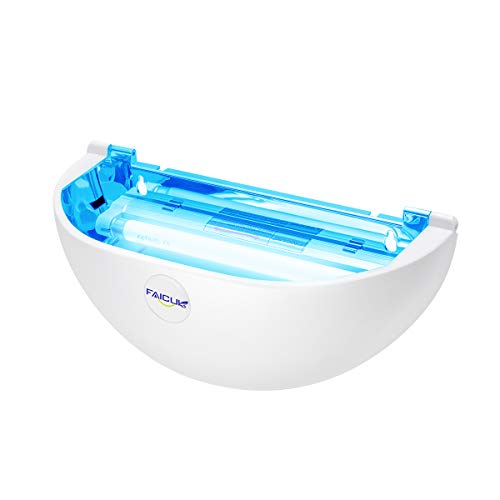
This fly light trap uses 365nm and 395nm wavelengths to attract and trap flying insects on glue boards, reducing buzzing and bites in indoor spaces. Its reflective inner coating increases UV output, expanding the effective coverage to about 600 square feet. It is suitable for indoor use in kitchens, stores, offices, and hospitals. Best for environments with high fly activity and where quiet operation matters. Limitation: Not intended for outdoor use and may require regular glue board replacement for continuous effectiveness.
Nibor-D Insecticide Foam With IGR

The Nisus Nibor-D foam combines a borate-based insecticide with an insect growth regulator to rapidly kill on contact and disrupt life cycles. Its 17-inch detachable hose enables precision treatment in drains, cracks, crevices, and voids—ideal for kitchens and restrooms where infestations often originate. Best for: Indoor spaces where deep penetration into hidden areas is needed. Limitation: Indoor use only; spray volumes should align with room size and infestation level.
CSI Spectre PS Insecticide

Spectre PS features chlorfenapyr at a 0.5% active ingredient level, designed for indoor pest control. It is available in a 15 oz can and is positioned for general pest management where a powerful, systemic approach is advantageous. Best for: Interiors with stubborn pest populations where a pro-insecticide action is required. Limitation: Availability may be restricted in some regions; check local regulations before selection.
Buying Guide
Key considerations when choosing commercial pest control equipment include target pest type, application environment, and safety requirements.
- Target pests: Determine whether you need coverage for crawling insects, flying insects, rodents, or a combination. Select products proven to address those pests.
- Indoor vs. outdoor use: Some devices are strictly for indoor use (glue traps, foam, interior sprays), while others support outdoor or mixed environments. Choose accordingly.
- Application method: Sprays, foams, traps, and electronic repellents each have distinct advantages. Consider ease of use, coverage area, and safety for occupants.
- Active ingredient profile: EPA-registered ingredients like chlorfenapyr or pyrethroids impact effectiveness and resistance management. Understand mode of action and rotation needs.
- Resistance management: For persistent pests, rotate ingredients to minimize resistance development. Pair with sanitation and exclusion strategies for best results.
- Safety and compliance: Review label directions, necessary PPE, and facility restrictions (food prep areas, healthcare settings) before purchase.
- Installation and maintenance: Consider the need for ongoing maintenance, parts availability, and ease of replenishment (glue boards, refills, hoses).
Practical comparison at a glance
- Best for stealth interior control: BASF PT Phantom II Spray
- Better for precise interior spots: CSI Viper Insecticide
- Choose this if you need continuous flying insect capture: Faicuk Fly Light Trap
- Avoid this if you require indoor-only quick-acting foam for drains: Nibor-D Foam with IGR
- Use Spectre PS when a stronger systemic approach is needed: CSI Spectre PS
FAQ
- What is the difference between non-repellent and repellent insecticides?
Non-repellent formulations stay undetected by pests and can provide longer residual control in areas where pests hide. Repellent products may drive pests away from treated zones but can require repeated applications in high-traffic spaces. - Can these products be used in food-service areas?
Only some products are approved for use in food-handling environments. Always follow the label instructions and restrict application to non-food contact surfaces unless explicitly allowed by the product label. - Are these devices suitable for hospitals and schools?
Yes, several products are designed for healthcare and educational facilities, but you should verify compatibility with facility policies and comply with any specific room-use restrictions. - Do these products require professional application?
Some items are ready-to-use for consumer application, while others are intended for professional use or require trained personnel for proper deployment and safety. - How should I rotate active ingredients to prevent resistance?
Rotate products with different modes of action and integrate sanitation, exclusion, and monitoring to minimize resistance development over time. - What should I consider for large facilities with multiple zones?
Assess zone-based planning, selecting a mix of interior sprays, traps, and monitoring devices to tailor coverage per area and reduce cross-zone pest migration.
Add a Comment