The top choice for commercial agricultural filtration relies on 4″ x 40″ reverse osmosis (RO) membranes designed to deliver high capacity, strong impurity rejection, and reliable performance in challenging water conditions. This article spotlights five robust options that are well-suited for farm irrigation, processing water, and industrial farming setups. Each membrane is analyzed for suitability to agricultural needs, ease of integration, and practical limitations. This guide helps buyers choose membranes that balance purity, throughput, and cost over time.
Summary table of selected products:
- ULP-4040 2600 GPD — Strong overall performer for agricultural and industrial workflows.
- XLP-4040 2300 GPD — Versatile, good choice when whole-farm integration is needed.
- ULP 4040 (Classic) 2600 GPD — Comparable performance with strong durability.
- XLE-4040 2600 GPD — Designed for small commercial systems with efficient low-pressure operation.
- BW-4040 2500 GPD — High-efficiency filtration suitable for brackish water and industrial reuse.
Max Water ULP-4040 2600 GPD Membrane — ULP 4040 for Agriculture

Best for agricultural operations needing high daily output with strong impurity rejection. The ULP-4040 membrane offers up to 2,600 GPD and 99.35% impurity rejection. It is optimized for North American water quality with a 600 psi maximum and a recommended operating pressure near 100 psi (80-150). It targets heavy metals, fluoride, organic compounds, and minerals with a 0.0001 micron TFC layer. Not ideal for direct whole-house filtration; use this in a farm-scale or industrial RO train tailored to your water chemistry and flow requirements.
Who it’s best for: larger farms or agricultural processors needing dependable production and robust impurity removal. Why selected: high output, strong contaminant rejection, and compatibility with common farm treatment setups. Limitation: not designed for single-household filtration; requires a dedicated RO system configuration.
Max Water ULP-4040 Membrane — 2600 GPD, Desalination/Industrial Use

Best for versatile agricultural and industrial filtration where reliable, high-capacity production is essential. This membrane emphasizes optimal purity (99.35%), 600 psi maximum pressure, and a comprehensive range of filtration capabilities. It is designed to handle heavy metals, inorganic contaminants, and organics with a 0.0001 micron TFC barrier. It’s important to pair this membrane with a correctly calibrated pressure and chemistry plan for best results. Limitation: indicates not for direct whole-house filtration; ensure an appropriate RO stage arrangement for farm use.
Max Water XLP-4040 2300 GPD Membrane — Agricultural & Industrial

Best for whole-farm or multi-use facilities where a balance between capacity and integration flexibility matters. The XLP-4040 delivers up to 2,300 GPD with 99.2% impurity rejection. It’s compatible with several leading 4040 models and supports integration into broader farm water-treatment systems. Choosing this membrane helps farmers who need a modular solution that can scale with expansion. Caution: not intended for direct, single-stage whole-house filtration without a tailored multi-stage setup.
Max Water XLE-4040 2600 GPD Membrane — Small Commercial System

Best for small commercial systems that still require substantial daily output. The XLE-4040 can produce up to 2,600 GPD with a 99.0% impurity rejection rate under typical operating pressures around 100 psi (80–150). It emphasizes compatibility with common 4040 stages such as XLE-4040 and HF4-4040 in farm settings. It is not a direct whole-house solution; use within a farm or processing setup. Limitation: slightly lower impurity rejection than some 99.3% options, depending on water chemistry.
BW-4040 Membrane — Brackish Water & Industrial Reuse
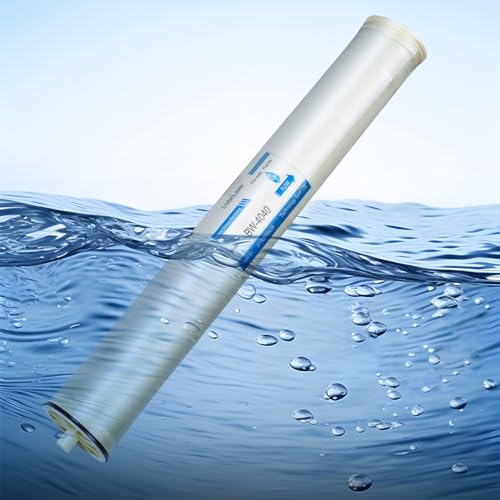
Best for brackish water treatment and agricultural reuse scenarios where higher salt loads exist. The BW-4040 membrane offers 2,500 GPD and a high salt rejection rate of 99.6%, with a durable polyamide shell and TFN technology for strong performance across varying feed pressures. It is suitable for farm complexes or processing lines that encounter saline inputs. Caution: match to a brackish water profile and ensure system pressure is set within the recommended range to maintain efficiency.
Hydron BW-4040 Membrane — 2400 GPD, Wide Applications

Best for farms requiring a versatile, high-output RO membrane with broad application coverage, including commercial, industrial, agricultural, and whole-house configurations. The Hydron BW-4040 provides up to 2,400 GPD and 99% desalination, making it suitable for varied farm water sources. It is compatible with multiple 4040 model families for flexible integration. Limitation: performance can depend on feed water quality and pressure; ensure proper pretreatment alignment.
Buying Guide: Key Considerations for Farm-Scale RO Membranes
- Water source and contaminants: Identify whether water contains fluoride, lead, chromium, nitrates, or high salinity. Choose a membrane with proven high rejection in those categories and confirm pore size suitability (0.0001 micron is common for strong mineral and organic removal).
- Daily production target: Calculate needed gallons per day (GPD) for irrigation, processing, or livestock operations. Choose a membrane whose rated GPD comfortably exceeds peak demand to avoid bottlenecks.
- System compatibility: Review the membrane’s fit with your existing or planned RO train, including end pressures, pump capabilities, and tolerances. Some models integrate better with Dow Filmtec or other 4040 families.
- Operating pressure range: Most 4040 membranes perform best around 100 psi with an 80–150 psi operating window. Confirm that your pumps and pretreatment help maintain stable pressure.
- Water chemistry and pretreatment needs: Water chemistry, pH tolerance (often 3–10), and total dissolved solids (TDS) influence membrane choice and pretreatment design (e.g., antiscalants, cartridge filters, or remineralization).
- Durability and lifecycle: Membrane materials (polyamide shells, TFN technology) contribute to longevity. Consider the total cost of ownership, including pretreatment, replacement frequency, and energy use.
- Application alignment: Distinguish between agricultural, industrial, and whole-house use. Some membranes are not suitable for single-stage whole-house filtration and require a farm-specific RO configuration.
Frequently Asked Questions
- What does GPD indicate for agricultural RO membranes?
It indicates the maximum daily water production under test conditions; higher GPD supports larger farming operations and processing lines. - Is a 4″ x 40″ membrane always suitable for farms?
Often, yes, but system design, feed water quality, and required purity levels determine the best fit. - Can these membranes treat brackish water?
Some models are optimized for brackish intake and high salinity, but verify the membrane’s salt rejection rate and compatibility with your feed water. - Do I need pretreatment with these membranes?
Yes. Pretreatment reduces scaling, fouling, and chlorine damage; expect cartridges, media filters, or pH adjustments as part of a farm RO train. - Are these membranes suitable for whole-farm filtration?
They are typically used in multi-stage farm systems rather than direct single-stage whole-house setups. Plan a system architecture accordingly. - What comes after selecting a membrane model?
Design the RO system around feed water analysis, pressure control, and a maintenance plan to maintain impurity rejection and flow.
Add a Comment