Answering the need to efficiently clear debris, level ground, and trench with compact excavators, these five bucket attachments are ideal for small diggers. They target ditch cleaning, slope leveling, trenching, and site prep, helping homeowners, landscapers, and small-contractor crews select the right tool for specific jobs. The following selections emphasize flat-back, trenching, and screening buckets that pair well with units under 2 tons. Quick summary: the best all-around pick is a versatile flat bucket; better for trenching and edge work are the bolt-on tooth buckets; the screening bucket is ideal for prep work and topsoil readiness.
| Product | Best For | Key Benefit |
|---|---|---|
| 1000mm Flat Bucket Accessories for Small Excavators 1-1.5 Tons | Ground leveling and debris removal | Large capacity with manganese steel |
| DANWIWEE 31.5IN Mini Excavator Bucket Attachments | Flat backhoe work and ditch dredging | Teeth-free edge for smooth material |
| ONECHOI Mini Excavator Bucket | Trenching in narrow spaces | Two bolt-on teeth for better cutting |
| DANWIWEE Mini Excavator Digging 11.8in Bucket | Precise trenching and garden work | Three-tooth design for dense soil |
| Jecoupoon 600mm Screening Bucket | Soil separation and screening | Screening bucket for rocks and debris |
1000mm Flat Bucket Accessories for Small Excavators 1-1.5 Tons

The flat bucket is designed for leveling slopes, removing debris, and handling soft materials like sand. Its large capacity makes it suitable for ditch cleanups and road leveling, especially when a wide, smooth edge is preferred over digging teeth. Best for buyers who need quick material movement and slope preparation rather than heavy digging. The manganese steel construction adds durability for regular site use. Caution: lacks teeth, so it should not be used to dig or carry heavy objects.
DANWIWEE 31.5IN Mini Excavator Bucket Attachments

This 31.5-inch flat backhoe bucket features a toothless edge for smooth material handling and efficient ditch work. It is ideal for digging sand, dirt, and other soft materials in gardens, landscapes, and small construction sites. Best for users who need a straightforward, high-efficiency bucket for light to moderate trench or curb-edge work. Limitation: lacks teeth, which may reduce penetration in compacted soils.
ONECHOI Mini Excavator Bucket

Engineered for mini excavators up to 2 tons, this bucket focuses on trenching in confined spaces. The 0.98″ pin compatibility and two bolt-on teeth offer enhanced cutting width and precision, making it suitable for utility installations and drainage projects. Best for operators needing controlled trench edges and quick edge shaping in narrow sites. Choose this if you work in tight spaces and require reliable cutting performance; note that the design emphasizes trenching rather than broad material loading.
DANWIWEE Mini Excavator Digging 11.8in Bucket
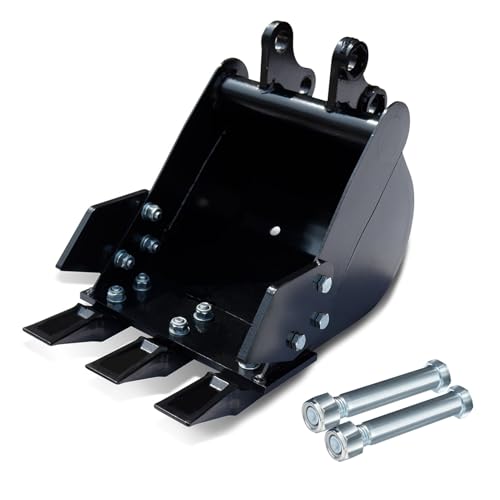
This 11.8-inch trench bucket is designed for precise trenching and ditch cleaning on small construction sites and gardens. With a three-tooth design and manganese steel construction, it offers improved penetration in dense soils and exceptional durability. Best for operators who need targeted digging in narrow trenches and edge work. Limitation: smaller footprint may reduce material loading capacity compared to wider flat buckets.
Jecoupoon 600mm Screening Bucket

The screening bucket is designed to separate soil from larger fragments, making it ideal for topsoil prep, landscaping, and site cleanup. It helps remove rocks and debris while preserving soil for immediate use. Best for buyers who prioritize material separation before backfilling or planting. Caution: screening efficiency depends on material size and moisture content, which may require multiple passes for fine separation.
Buying Guide: Key Considerations For Choosing The Right Bucket
- Application and soil conditions: Choose flat, bolt-on tooth, or screening buckets based on whether you need leveling, trenching, or material separation.
- Loader compatibility: Verify pin size, mounting style, and bucket width to ensure a proper fit with your excavator’s lift capacity.
- Material and durability: Look for manganese steel or other sturdy alloys for long service life in dense soils or rocky materials.
- Tooth design and replaceability: Teeth improve penetration; bolt-on teeth are quick to replace, reducing downtime.
- Maintenance and uptime: Consider edge wear, welded joints, and coating protection against water and mud exposure.
- Site restrictions: In tight spaces, opt for narrower buckets with tapered side plates to minimize interference and improve dumping.
Frequently Asked Questions
- What bucket is best for ditch cleaning on a small excavator?
– A flat back or flat bucket with a wide capacity is typically best for leveling slopes and removing loose debris in ditches. - Should I choose a toothless bucket or one with teeth for trenching?
– Toothless buckets are smoother for loose soils and fine materials, while toothed buckets offer better penetration in dense or compacted soils. - Can a screening bucket replace a standard dirt bucket?
– For projects involving soil separation and topsoil preparation, a screening bucket is advantageous; for bulk loading, a standard dirt bucket is often better. - What should I check before buying a bucket attachment?
– Check pin size, mounting compatibility, bucket width, and material durability to ensure fit and expected service life. - Is a smaller bucket better for tight spaces?
– Yes, narrower/shorter buckets can maneuver more easily in confined sites, though they may reduce loading capacity. - How do I maintain a bucket attachment?
– Regularly inspect welds and teeth, clean mud buildup, and protect metal surfaces from corrosion with appropriate coatings.
Add a Comment