Finding the right chemical resistant solenoid valve hinges on compatibility with aggressive fluids, temperature ranges, and reliable actuation. This guide highlights five compatible options designed for durable performance in air, water, gas, fuel, and oil applications. Each product is analyzed for best-use scenarios, potential limitations, and what makes it stand out for specific buyers such as installers, contractors, or DIY enthusiasts.
| Product | Best For | Key Benefit |
|---|---|---|
| U.S. Solid 3/8″ Brass Electric Solenoid Valve | Industrial environments with fuels and gases | Low power coil with heat reduction |
| QWORK 1/4″ NPT Brass Electric Solenoid Valve 12VDC | General purpose control for water, air, gas, fuel | Fast, reliable response |
| Beduan Brass Electric Solenoid Valve, 1/2″ 110V | Higher flow and mixed media | Durable brass with copper coil |
| TAILONZ PNEUMATIC 1/4″ NPT Solenoid Valve | Multi-voltage versatility | Compact, robust brass design |
| U.S. Solid 1/4″ Stainless Steel Valve 24VDC | Higher pressure and corrosion resistance | Stainless steel body, VITON seal |
U.S. Solid 3/8″ Brass Electric Solenoid Valve

Best for harsh chemical environments requiring corrosion resistance and low heat, this 3/8″ valve uses a VITON gasket for high-temperature and chemical resistance. It is designed for direct-acting operation and is suitable for air, gas, fuel, and related fluids. The coil reduces heat generation with a staged power profile, starting at ~19W and dropping to ~10-13W as it warms. Caution: brass construction means avoid potable water projects and applications involving drinking water.
- Type: Direct acting, normally closed
- Material: Brass body with VITON gasket
- Voltage: 12V DC
- Best for: Fuel, gas, and hydrocarbon fluids in non-potable contexts
Selected for buyers who need a robust, heat-conscious option that can withstand hydrocarbons and lubricants. Not ideal for drinking water or potable systems due to brass composition.
QWORK 1/4″ NPT Brass Electric Solenoid Valve 12VDC
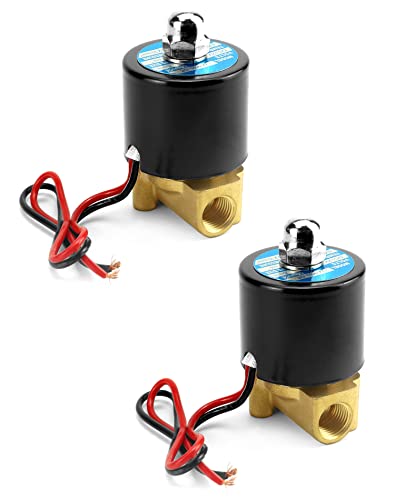
Best for general-purpose control where fast response and durability matter. This 1/4″ NPT valve uses brass construction with durable seals designed to withstand high temperatures and aggressive chemicals. It is well-suited for water, air, gas, fuel, and oil applications. Limitations include potential sensitivity to extreme media temperatures beyond its design range and the need to verify gasket compatibility with each fluid.
- Material: Industrial brass with high-performance seals
- Voltage: 12V DC
- Response: Opens/closes in under 1 second
- Best for: Fast-acting shutoff in mixed-media lines
Choose this if you want a quick, straightforward valve that balances performance with a broad media range. Avoid if you require potable water compatibility due to gasket materials and brass use.
Beduan Brass Electric Solenoid Valve, 1/2″ 110V

Best for higher flow and versatile media including water, air, gas, and oil. Beduan advertises durable brass construction and a copper coil to support extended operation. This model is a good pick for systems requiring reliable performance in mid-range lines. Caution: confirm compatibility with highly corrosive media and ensure proper containment to prevent brass exposure to potable water scenarios.
- Port size: 1/2″ NPT
- Voltage: 110V AC
- Coil: Copper for reliability
- Best for: Medium to higher flow lines with general media
Better for projects needing a larger port and a sturdy copper coil. Not the optimal choice where ultra-high chemical resistance is required or where 12V control is necessary.
TAILONZ PNEUMATIC 1/4 Inch Solenoid Valve

Best for flexible voltage configurations and compact installations. This 2W025-08 model covers 12V, 24V, 110V, and 220V options in a 1/4″ NPT brass body. It is suitable for water, air, and diesel lines. Limitation: multi-voltage variants require correct model selection to ensure reliability under intended electrical supply conditions.
- Voltage options: DC12V to 220V variants
- Port size: 1/4″ NPT
- Material: Brass
- Best for: Small-line automation with voltage flexibility
Choose this when installation calls for multiple voltage compatibility in a compact valve package. Avoid misselecting voltage, which can cause improper actuation or damage over time.
U.S. Solid 1/4″ Stainless Steel Electric Solenoid Valve

Best for high-pressure and corrosion resistant needs with potable water compatibility. Stainless steel body offers durability and leak resistance, while a VITON seal provides temperature and chemical resistance. The valve is fast-acting, opening or closing in under one second when energized, and is designed for long life under proper maintenance. Caution: stainless steel improves resistance but does not guarantee compatibility with every highly aggressive chemical.
- Material: Stainless steel body
- Seals: VITON
- Response: < 1 second
- Best for: High-pressure and corrosion-resistant water or hydrocarbon lines
Better for systems requiring both durability and potential water compatibility. Avoid for small, low-flow lines where a smaller valve would be more cost-efficient.
Beduan 2 Way Normally Closed DC 12V Electric Solenoid Air Valve

Best for general pneumatic and light fluid control in 1/4″ NPT lines. The Beduan model uses anodized aluminum and a 12V coil to provide reliable actuation in air, gas, and light liquids within modest pressure ranges. Limitation: aluminum bodies may be less durable in extremely abrasive or high-impact environments compared to brass or stainless steel.
- Port size: 1/4″ NPT
- Voltage: 12V DC
- Material: Anodized aluminum
- Best for: Pneumatic systems and light-duty fluid control
Choose when you need a lightweight valve for compact pneumatic setups. Avoid if you require heavy-duty corrosion resistance or very high pressures.
Buying Guide: Key Considerations For Chemical Resistant Solenoid Valves
What media will pass through the valve? Identify compatibility with fuels, oils, gases, water, or chemical solvents. Material choices like brass, stainless steel, and seals such as VITON influence corrosion resistance and temperature tolerance.
What are the pressure and temperature requirements? Higher pressures often favor stainless steel bodies, while certain media may demand elevated temperature seals. Ensure the selected valve’s operating range matches your system.
Which voltage and actuation type are needed? Solenoid valves come in various voltages (12V, 24V, 110V, 220V). Direct-acting designs offer reliable shutoff, while compact models may suit tight spaces.
Does the application involve potable water? If so, verify that materials are approved for drinking water and avoid brass or certain gasket chemistries that could introduce contaminants.
What is the expected lifespan and maintenance plan? Valves with robust seals and durable bodies typically endure longer in harsh environments. Plan for periodic inspection to prevent leaks or sticking.
Comparative Quick Reference
- Best for hydrocarbons and high-temperature fluids: U.S. Solid 3/8″ Brass (12V) and stainless steel 1/4″ valve
- Best for fast actuation in mixed media: QWORK 1/4″ Brass (12V)
- Best for higher flow and durability: Beduan 1/2″ Brass (110V)
- Voltage-flexible option for compact setups: TAILONZ 1/4″ NPT
FAQ
- Are these valves safe for drinking water? Some models use brass bodies and may not be suitable for potable water unless explicitly rated. Check material certifications and gasket compatibility.
- What does normally closed mean? It means the valve remains closed when not energized and opens when energized, suitable for fail-safe shutoff in many systems.
- Do these valves work with natural gas? Many are designed for natural gas and similar fluids, but verify compatibility with your gas line and local regulations before installation.
- What maintenance is required? Regular inspection for leaks, corrosion, and coil heating is recommended. Replace seals if they show signs of wear.
- Can I use a 12V DC valve in a 24V system? No, use the valve with the correct voltage as specified by the manufacturer to ensure proper actuation and longevity.
- Which valve is best for high-pressure applications? Stainless steel and certain brass valves designed for higher pressures are better suited for these conditions.
Add a Comment