Answering the search for affordable aluminum SBC heads, this guide highlights value-oriented options that fit common small-block Chevy engines. Best for budget-conscious builders who want better airflow and a gain in horsepower without large investments. The picks below are suited for street builds, daily drivers, and weekend cruisers that require a straightforward bolt-on power upgrade. A quick summary table follows to compare key points at a glance.
| Product | Engine Fit | Chamber (cc) | Notes |
|---|---|---|---|
| Speedmaster Assembled Cylinder Heads (205cc/64cc) | Small Block Chevy 265–400 | 64 | Ready-to-bolt with springs/valves installed |
| IMOOA Angle Plug Cylinder Head (205cc/64cc) | Chevy SBC 283–400 | 64 | Angle spark plug design |
| VEVOR Engine Cylinder Head Assembly | SBC 327/350/383 | Not specified in listing | High-precision CNC machining |
| DNA MOTORING Aluminum Bare Cylinder Head | Chevy SBC 302/327/350/383/400 | 68 | High-flow port design; lightweight |
| Auto Dynasty Aluminum Bare Cylinder Head | SBC 302/327/350/383/400 | 68 | 200cc intake, 68cc chamber |
Speedmaster Assembled Cylinder Heads for Small Block Chevy

Best for: Budget builders who want a complete, ready-to-bolt head set. These 205cc intake runners provide high-velocity air for strong mid-range and top-end power on SBC engines. The heads come assembled with springs, retainers, locks, valves, and seals, ready for gasket and torque installation.
Why selected: The kit offers an assembled option that reduces setup time and helps avoid sourcing individual components. The 64cc chambers balance compression for street driving.
Limitation: Pushrod length and intake manifold port match should be verified, and direct compatibility with non-stock blocks may require minor adjustments.
IMOOA Angle Plug Cylinder Head for Chevy SBC

Best for: Builders who want an angle spark plug design for specific clearance or header configurations. Suited for models covering SBC 283–400 V8 engines up to 1986.
Why selected: The 205cc intake runner and 64cc chamber provide a competitive balance between flow and compression. Angle plug design can help with valve cover clearance in certain builds.
Caution: Ensure pushrod lengths and cam compatibility with your existing valvetrain before installation.
VEVOR Aluminum SBC Cylinder Head Assembly

Best for: Enthusiasts seeking a CNC-machined head with smooth airflow and precise component alignment for SBC 327/350/383. Aimed at Corvette, Camaro, and Z06 applications where airflow and sealing are priorities.
Why selected: CNC precision machining improves combustion chamber matching and port alignment, aiding reliable sealing and airflow without manual hand-fitting.
Limitation: As a complete head assembly, installation requires correct valve train fitting and potential cam compatibility checks with your engine combo.
DNA MOTORING Aluminum Bare Head for Chevy SBC
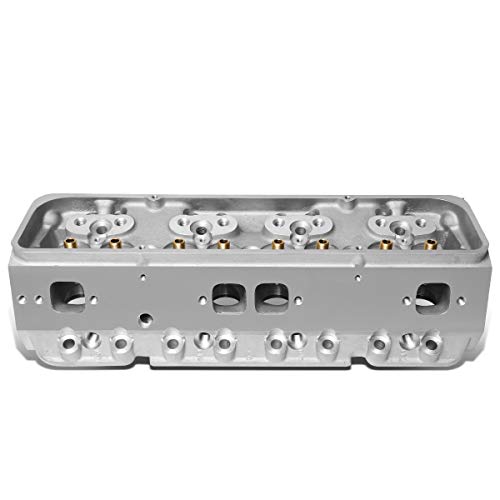
Best for: Builders who want a lighter aluminum head with a strong flow profile and a balance of price and performance for SBC 302–400 ranges.
Why selected: Provides a robust port design and larger valve options with 68cc chambers for favorable street performance. Dual pattern valve covers add flexibility for cover configurations.
Limitation: Confirm compatibility with your existing intake and exhaust manifolds due to port and gasket variations.
Auto Dynasty Aluminum Bare Cylinder Head for SBC
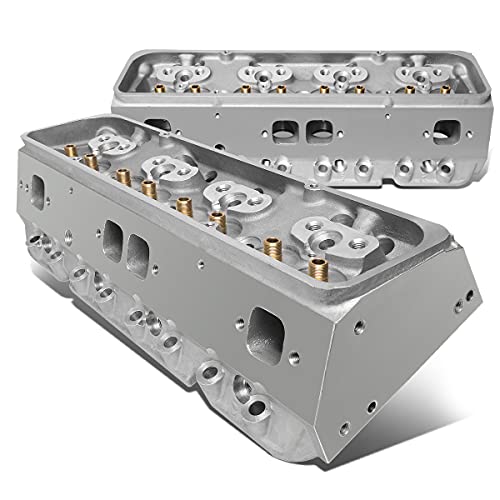
Best for: Builders looking for a cost-effective aluminum head with 200cc intake and 68cc chamber suitable for 302/327/350/383/400 small-block Chevys.
Why selected: The 200cc intake runner supports improved airflow, contributing to power gains over stock heads in many practical builds.
Limitation: Fitment should be verified with your specific intake manifold and valve train to avoid clearance issues.
Buying Guide: Key Considerations For Aluminum SBC Heads
- Engine compatibility: Verify engine model years and deck height to ensure direct bolt-on fit or determine if machine work is needed.
- Chamber size and compression: Smaller chambers (e.g., 64cc, 68cc) raise compression; larger chambers provide potential for different camshafts and fuel requirements. Match with piston dish or innovative deck clearance for optimal squish and clearance.
- Flow characteristics: Look for intake runner volume (e.g., 190cc, 205cc) and port design. Higher flow improves mid-range and top-end power but may require tuning adjustments.
- Valve train readiness: Some heads come assembled with valves and springs; others are bare. Ensure you have compatible springs, retainers, and pushrods for your cam and lifters.
- Material and weight: Aluminum heads reduce weight and assist heat dissipation compared to cast iron. This can influence throttle response and cooling considerations.
- Installation considerations: Check gasket patterns, bolt hole alignment, and compatibility with existing intake manifolds and exhaust headers. Some heads require milling or valve-sealing adjustments.
- Avoid common pitfalls: Do not assume universal fitment for all SBC variants. The small differences in deck height, valve angles, and port sizes can affect performance and sealing.
FAQ: Quick Answers For Buyers
- Q: Are aluminum SBC heads worth the upgrade on a daily driver? A: They can offer weight reduction and improved airflow, potentially boosting efficiency and performance with proper tuning.
- Q: Do all aluminum SBC heads require a new cam? A: Not necessarily, but many combinations benefit from matched cams to maximize airflow and timing.
- Q: What should I verify before purchasing bare heads? A: Valve seat quality, port geometry, and compatibility with your manifold and rockers. Confirm chamber size and valve sizes match your build.
- Q: Can I install aluminum heads on any SBC block? A: Mostly yes for standard-deck blocks, but verify deck height, bolt pattern, and pushrod clearance for your exact model.
- Q: Are there warranty considerations with cheap aluminum heads? A: Warranty terms vary by seller; review return policies and any restrictions on installation or race use.
- Q: Which head is best for a budget performance build? A: A head with a balance of chamber size, 64–68cc range, and adequate flow (around 190–205cc intake) often provides solid gains without overcomplication.
Add a Comment