Answer: For reliable heavy lifting, choose manual chain hoists, lever hoists, and chain slings that balance capacity, control, and durability. This guide highlights five capable options suited for shop, warehouse, and garage use, with guidance on who benefits most from each. If you move large loads regularly, look for safety brakes, rotating hooks, and robust alloy steel chains. For occasional tasks, lighter-duty rope hoists or multi-leg slings can save time and space.
| Product | Capacity | Type | Notes |
|---|---|---|---|
| Manual Chain Hoist | 1 Ton | 1 Ton / 2,000 lbs | Manual chain block hoist | Heavy-duty steel, load brake, 360° hook |
| VEVOR Hand Chain Hoist, 1 Ton | 1,1000 lbs (1Ton) | Manual chain hoist | G70 galvanized chain, 10 ft lift |
| VEVOR Chain Sling 5 ft | 11,000 lbs | Chain sling with hooks | Four adjusters, 5 ft length |
| XSTRAP STANDARD Rope Hoist | 2,000 lbs | Rope hoist with wheels | Reflective rope, soft loops included |
| Kivomot G80 Lifting Chain Sling | 6,600 lbs | Chain sling | Automatic welded, 3/8″ links |
Manual Chain Hoist 1 Ton — Glorousamc

The Glorousamc manual chain hoist offers a 1-ton capacity with 2 hooks and a 10-foot lift. It uses premium alloy steel and 20Mn2 chain for strength, supported by a heavy-duty steel frame for durability. A mechanical load brake provides precise control, enhancing safety during lifting tasks. The chain block rotates fully 360° to reduce twisting and bending issues during operation.
Best for: small to mid-sized workshops or garages needing dependable, compact lifting with precise control. Choose this if you want a robust, simple-to-use hand hoist with a focus on safety and stability.
Caution: Ensure the hook latch is properly secured before lifting, and avoid side-loading the hoist to prevent premature wear.
XSTRAP STANDARD 50 Ft Reflective Rope Hoist

This rope hoist uses a 50-foot rope with a 2,000 lb capacity and includes two 18-inch soft loops. Its reflective threading improves night visibility, and a zinc-plated steel housing provides wear resistance. It’s best for simple, light-to-moderate lifting tasks where visibility and ease of use are priorities.
Best for: contractors or hobbyists needing a portable, visible rope hoist for occasional lifts in low-light environments. Better for lighter, more flexible loads than a metal chain unit.
Limitation: Not ideal for continuous heavy-duty use or very high lifts where chain hoists excel in control and load sharing.
VEVOR Chain Sling, 5/16″ x 5 ft

The VEVOR chain sling features a 5-foot length with 11,000 lbs working capacity, built from G80 alloy steel chain and alloy hooks. Four adjusters allow length customization for irregular loads. It suits engine lifts and heavy machinery handling with added safety margins.
Best for: heavy lifting where a longer chain and precise length adjustment improve stability. Choose this if you frequently lift irregular items with a need for secure four-point versatility.
Caution: Inspect chain for wear at the links and ensure all adjusting points lock securely before lifting.
VEVOR Manual Lever Chain Hoist, 1 Ton
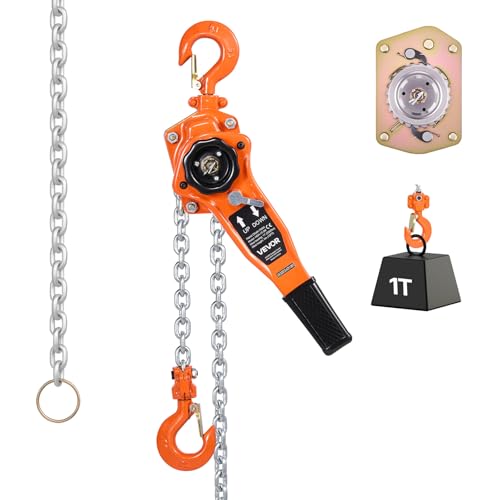
The VEVOR lever hoist provides 1-ton capacity with a 10-foot lift and dual pawl mechanical brake for precise control. A 360° rotating hook improves maneuverability in tight spaces, and a three-position selector supports lifting, neutral, and lowering. Its all-steel construction emphasizes durability for garage and warehouse use.
Best for: users needing precise, one-person operation in confined spaces with reliable braking and easy maneuverability. Choose this if you value a versatile lever hoist for varied tasks.
Limitation: Full-load operation may require careful control to avoid abrupt movements, especially in cluttered work areas.
Kivomot G80 Lifting Chain Sling

The Kivomot sling uses G80 alloy steel with a 6,600 lb capacity and a 6:1 safety factor. It features 3/8″ links, automatic welded connections, and corrosion-resistant surface treatment. Painted hooks and shackles reduce rust risk and improve longevity in demanding environments.
Best for: heavy-duty lifting applications where maximum strength is required and long service life matters. Choose this when you need a robust chain sling for engine lifting or industrial equipment handling.
Caution: Ensure compatible shackles and hooks are used with the sling to meet the 6:1 safety factor and avoid overloading any single link.
Buying Guide: How to Choose The Right Chains And Lifting Tackle
What load and lift height do you need?
Start with capacity: select equipment that exceeds your heaviest load by a safety margin. Consider lift height and the reach of the hoist or sling to avoid extensions or reconfiguration mid-task.
What is the best material and construction?
Alloy steel chains (G80) and heavy-duty steel housings offer durability for frequent use. Rope systems are lightweight and portable but may be less suitable for very heavy loads or precise control over long lifts.
Which safety features matter?
Look for mechanical brakes, dual pawls, secure hooks with latches, 360° rotating hooks, and clear load-securing hardware. A 4-point sling or adjustable chain with locking pins improves stability on irregular objects.
How important is ease of use and maneuverability?
Levers and handles with ergonomic grips reduce fatigue. Rotating hooks and compact designs help in tight spaces. For night work, reflective or high-visibility features can improve safety.
What about maintenance and inspections?
Regular inspection of chains, links, hooks, and hooks’ latches is essential. Replace any worn or damaged components promptly to maintain lifting integrity.
How should you combine multiple tools?
For full-spectrum capability, pair a lever or chain hoist with chain slings for multi-point lifting. Choose rope hoists when visibility and portability are priority, but keep to lighter loads and shorter lifts.
FAQ
- What is the typical capacity of a manual chain hoist? Most common models range from 1,000 to 2,000 pounds, with higher-end variants offering more capacity for industrial tasks.
- Is a 360° rotating hook necessary? It helps maneuver loads in tight spaces and reduces twisting, which can improve control and safety.
- When should I choose a chain sling over a rope hoist? Chain slings are typically more durable for heavy, irregular, or high-load applications; rope hoists are lighter and more portable for simpler tasks.
- What maintenance is required? Regularly inspect chains, hooks, and brakes. Lubricate moving parts as recommended by the manufacturer and replace worn components promptly.
- Can I use these tools for engine lifts? Yes, several options (like the 11,000 lb VEVOR sling or the 6,600 lb Kivomot sling) are designed for heavy engine lifting with secure attachment points.
- Do these tools meet any safety standards? The listed features emphasize safety-driven design (brakes, locking hooks, and robust materials), but always verify compliance with local safety regulations before use.
Add a Comment