If you need reliable calibration gas cylinders for carbon monoxide (CO) monitoring and multi-gas safety testing, you’re looking for stable, compatible mixtures that match your instrument’s calibration requirements. This guide highlights five well-suited calibration gas options for CO-focused and multi-gas applications. It explains who should choose each product, why, and any practical limitations to consider. The goal is to help safety professionals and facility managers choose the right gas mix for accurate calibration, quick setup, and long-term use.
| Product | Key Use | Best For |
|---|---|---|
| Norlab by Norco Multi Calibration Gas: 25 PPM H2S, 50 PPM CO, 2.5% CH4 (50% LEL), 12% O2, Balance N2 (29 L) | Includes CO and H2S with methane and oxygen balance for precise multi-gas calibration. | Facilities needing CO and H2S verification with moderate oxygen balance |
| Kidde CO Alarm With Explosive Gas Detection | Plug-in CO and explosive gas detector with digital readout | Home or small office environments requiring standalone CO and explosive gas awareness |
| Norlab by Norco Multi Calibration Gas Mix: 25 PPM H2S, 100 PPM CO, 2.5% CH4 (50% LEL), 18% O2, Balance N2 (29 L) | Expanded CO concentration for higher CO span testing | Calibration tasks needing higher CO reference levels |
| MSA 10048280 Calibration Cylinder, 34 L, 1.45% CH4, 15% O2, 60 PPM CO, 20 PPM H2S | Versatile gas mix including CH4, O2, CO, and H2S for comprehensive calibration | Calibrating multiple gas sensors and systems |
| Norlab by Norco Multi Calibration Gas: 10 PPM H2S, 50 PPM CO, 2.5% CH4 (50% LEL), 18% O2, Balance N2 (29 L) | Lower H2S concentration for sensitive CO sensor checks | Calibration of CO sensors that require low H2S baseline |
Multi Calibration Gas: 25 PPM H2S, 50 PPM CO, 2.5% CH4, 12% O2, Balance N2 (29L) by Norlab

This calibration gas mix provides a balanced combination of carbon monoxide (CO) and hydrogen sulfide (H2S) at 50 PPM and 25 PPM, respectively, with methane and oxygen components to reflect a range of real-world gas conditions. The 29-liter cylinder is designed for regular calibration workflows and is compatible with multiple regulator families including 500 Series Preset Flow, Trigger Control Series, 6000 Series Multiflow, and 8000 Series Demand Flow. Best for industrial environments where both CO and H2S accuracy matter and where a mid-level CO concentration is appropriate for routine checks. Note that this mix uses 12% oxygen, which may be a limitation for sensors that require different baseline oxygen levels.
Kidde CO Alarm with Explosive Gas Detection
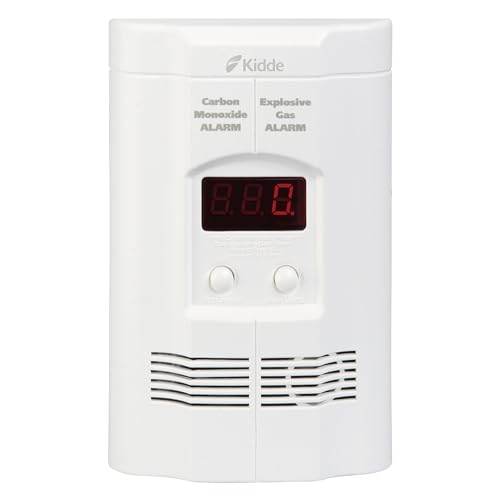
This device functions primarily as a consumer-grade alarm rather than a calibration gas, but its digital display and 9V battery backup are useful for home environments where CO and explosive gas presence must be quickly identified. Best for residential use or small offices where a standalone alert system is required. A potential limitation is that it’s not a professional calibration gas cylinder and should not replace dedicated calibration mixtures for industrial gas sensors.
Norlab by Norco Multi Calibration Gas Mix: 25 PPM H2S, 100 PPM CO, 2.5% CH4, 18% O2, Balance N2 (29L)
This higher-CO version supports a broader CO calibration range up to 100 PPM with H2S at 25 PPM, providing a broader calibration envelope for CO sensors. It uses 18% oxygen to emulate ambient air conditions more closely. Best for calibration workflows requiring higher CO verification and for facilities that manage multiple sensor types. Limitation: higher CO concentration may not be suitable for all detectors, so verify sensor range before use.
MSA 10048280 Calibration Cylinder, 34 L, 60 PPM CO, 20 PPM H2S

This aluminum gas bottle provides a fixed multi-gas mix including 60 PPM CO and 20 PPM H2S, with 1.45% CH4 and 15% O2 for a comprehensive calibration scenario. Best for labs and field teams that require compatibility with Galaxy GX2 systems and a balanced multi-gas profile. A potential limitation is the fixed gas composition; ensure it aligns with your sensor calibration needs before use.
Norlab by Norco Multi Calibration Gas: 10 PPM H2S, 50 PPM CO, 2.5% CH4, 18% O2, Balance N2 (29L)
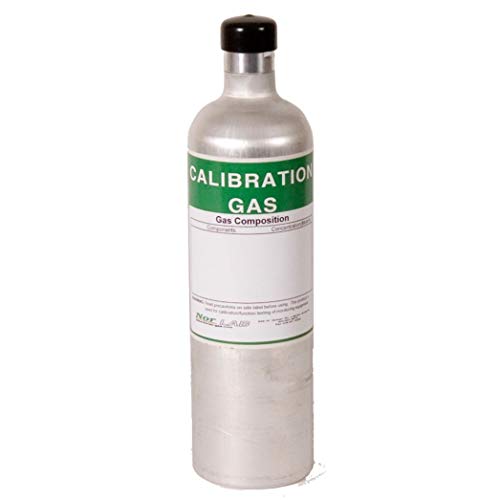
This blend lowers H2S to 10 PPM while maintaining 50 PPM CO and 18% oxygen, creating a gentler baseline for sensitive detectors. Best for facilities needing CO verification with minimal H2S exposure or where sensor tolerance to hydrogen sulfide is strict. Caution: lower H2S may require alternative verification for devices tuned for higher H2S ranges.
Buying Guide: Key Considerations For Choosing Calibration Gas Cylinders
- Gas concentrations: Match CO, H2S, CH4, and O2 levels to your sensor’s calibration range. A wider CO span helps verify accuracy across more devices but may not suit low-range detectors.
- Balance and environment: Oxygen balance (12%–18%) mimics ambient air; some detectors require different atmospheres. Choose a mix that aligns with your equipment’s calibration protocol.
- Regulator compatibility: Ensure the cylinder works with your regulator system (500 Series, 6000 Series, etc.). This affects setup speed and stability during calibration.
- Cylinder capacity: 29 L or 58 L cylinders provide longer calibration runs; select based on how often you calibrate and the number of devices per session.
- Safety and compliance: Use products designed for calibration, not consumer alarms, for professional sensor testing. Verify compatibility with your testing standards and workflows.
- Shelf life and stability: Some mixes include shelf-life data (e.g., 24 months for certain blends). Plan replenishment to maintain calibration accuracy.
- Use-case fit: For multi-gas calibrations, ensure the chosen mix covers all required gases and the sensors under test. If only CO calibration is needed, simpler gas blends may be preferable.
Frequently Asked Questions
- What is a calibration gas cylinder? A sealed gas blend used to calibrate gas sensors, ensuring accurate readings for monitoring devices.
- How do I choose the right CO concentration? Select a concentration that matches your detectors’ normal operating range and calibration procedure. Higher CO levels are useful for broader verification but may exceed some sensors’ ranges.
- Are consumer CO alarms suitable for calibration? No. Consumer devices are designed for alerting, not calibration accuracy. Use professional calibration gas cylinders for testing safety sensors.
- Can I use multi-gas cylinders for single-sensor calibration? Yes, if the gas includes the target gases at appropriate concentrations; otherwise, use a dedicated gas mix for that sensor type.
- How often should I recalibrate sensors? It depends on the sensor type and usage, but routine calibration is essential for accuracy in hazardous environments. Follow equipment guidelines.
- What should I consider for regulator compatibility? Ensure the cylinder and regulator are rated for the same gas mixture and flow requirements to avoid leaks or incorrect delivery.
Add a Comment