Answering the common buyer question: which carbon fiber pultruded rods deliver high strength without excess weight for hobbyists and makers? This guide highlights five solid options, suited for RC enthusiasts, model builders, and light structural applications. Each product section explains who it’s best for and why it stands out, with practical cautions where applicable. A quick summary table helps you compare key specs at a glance.
| Product | Size (Diameter/Width × Thickness) / Length | Best For | |
|---|---|---|---|
| 2pcs 3x15mm Flat Carbon Fiber Bars | 15mm × 3.0mm × 420mm | Heavy-duty flat panels, braces, frame reinforcements | Pure carbon fiber, lightweight, high strength |
| MECCANIXITY Carbon Fiber Rod | 2mm Ø × 300mm | RC planes, drones, DIY tooling | Pack of 5; versatile for small structural supports |
| UHT Carbon Fiber Rod | 1.5mm Ø × 500mm | Modeling, UAV framing, micro assemblies | Solid pultruded, tight diameter control |
| (4) 2mm x 1000mm Carbon Fiber Rods | 2mm Ø × 1000mm | Long, lightweight spines or reinforcement rods | High strength-to-weight ratio |
| 6pcs 0.5x5mm Flat Carbon Fiber Bars | 5.0mm × 0.5mm × 420mm | Thin, flexible bracing and lightweight supports | Compact width; strong and lightweight |
2pcs 3x15mm Flat Carbon Fiber Bars

Material is 100% carbon fiber with a width of 15mm, thickness 3.0mm, and length 420mm. Best for buyers seeking rigid flat bars for frame bracing or structural panels in hobby projects. These bars deliver high strength with lightweight characteristics, suitable for reinforced models and custom assemblies. Caution: check fitment for cross-sectional compatibility with existing joints to ensure proper alignment.
MECCANIXITY Carbon Fiber Rod, 2mm x 300mm
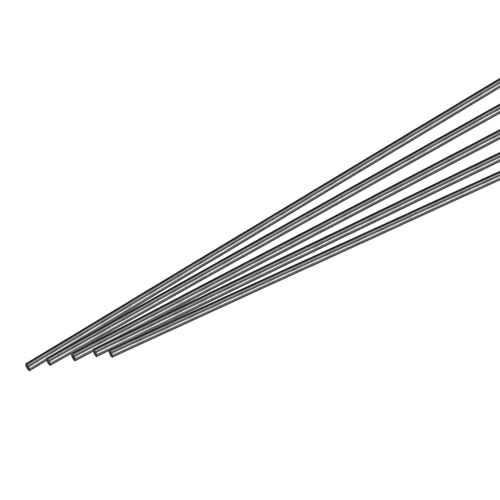
Diameter 2mm, length 300mm, sold in a pack of 5. This rod is described as suitable for RC planes, quadcopters, model building, railing, DIY frames, and other projects requiring strong, lightweight components. Best for small-scale structures where precise diameter and straightness matter. Better for compact builds than long loads. Limitation: longer spans may require additional support to prevent bending under load.
UHT Carbon Fiber Rod, 1.5 x 500mm

Micro-diameter solid rod at Ø1.5mm and 500mm length. Pultruded construction ensures straightness and stiffness, making it suitable for modeling, small frameworks, and UAV components. Best for precision builds where minimal cross-section is required. Caution: micro-diameter parts can be delicate during handling and installation; use compliant tools to avoid damage.
(4) 2mm x 1000mm Carbon Fiber RODS

KARBXON offers four 2mm diameter, 1000mm long solid carbon fiber rods. Designed for maximum strength with light weight, these are ideal for long, slim reinforcements in drones, RC models, or custom tooling. Best for projects needing continuous length without joints. Limitation: risk of sag under load if unsupported over long spans; consider end supports or triangulation for stability.
6pcs 0.5x5mm Flat Carbon Fiber Bars

Width 5mm, thickness 0.5mm, length 420mm. These thin flat bars are well-suited for lightweight bracing, edge reinforcements, and detail work in model making. Best for scenarios requiring slender profiles that still benefit from carbon fiber strength. Caution: very thin profiles can be prone to bending under higher loads; use in conjunction with stronger components if needed.
Buying Guide
Key purchase considerations help you choose the right pultruded carbon fiber rods for your project:
- Diameter and cross-section: Match to joint openings and load paths. Flat bars provide broad surface areas for gluing; round rods offer clean rotational strength.
- Length and straightness: Longer spans benefit from pultruded consistency to prevent flex and twists. Look for solid pultruded construction for rigidity.
- Strength-to-weight needs: Higher modulus and carbon content deliver stiffness with minimal weight, essential for RC and drone frames.
- Processing compatibility: Consider how you’ll cut, drill, or glue the rods. Some profiles may require specialized tools or adhesive types for secure joints.
- Environmental exposure: UV resistance and temperature tolerance are relevant for models exposed to sun or heat during use.
Frequently Asked Questions
- What is pultruded carbon fiber?
- What should I consider when selecting a rod for RC projects?
- Are flat carbon fiber bars better than round rods for frames?
- Can I cut carbon fiber rods with standard tools?
- Do these rods resist UV exposure?
- What is the best rod for lightweight UAV frames?
Pultruded carbon fiber is a continuous strand material pulled through a resin bath and formed into a constant cross-section rod, resulting in tight diameter control and high stiffness.
Consider diameter, length, weight, and stiffness requirements, along with joint compatibility and the ability to secure the rod against bending or twisting under flight loads.
Flat bars offer larger bonding surfaces for panels and joints, which can improve load transfer in flat-frame sections; round rods are often preferred for axial stiffness and easier rotation in assemblies.
Many carbon fiber profiles can be cut with standard hobby saws or cutters, but take proper safety precautions and use sharp blades to avoid fraying edges. Check product data for any tool recommendations.
Many carbon fiber products have UV resistance, but specific performance varies by resin system and finish. If your project is outdoors, select rods advertised with UV resistance.
For UAV frames, consider micro-diameter rods or longer, high-strength options with excellent stiffness-to-weight characteristics, like the 1.5–2.0 mm diameter range with sufficient length.
Add a Comment