When you need reliable CO2 monitoring equipment, choose devices designed for precise measurements, low power use, and easy integration with existing systems. This guide highlights five top options suitable for home, office, greenhouse, and professional settings. Best for DIY enthusiasts, technicians, and facility managers seeking dependable CO2 readings and solid data logging capabilities.
The following summary table compares key aspects to help you choose. Data reflects product features and stated capabilities.
| Product | Best For | Output & Connectivity | Power | Notes |
|---|---|---|---|---|
| HiLetgo CCS811 CO2 eCO2 TVOC Sensor | DIY projects and low-power monitoring | I2C Output | Ultra-low power | Compact sensor with TVOC and eCO2 readings |
| Forensics CO2 Analyzer | Precise industrial/traceable CO2 measurement | NDIR with built-in pump | USB rechargeable | USA NIST traceable calibration |
| YWBL-WH Infrared CO2 Sensor | High-CO2 environments and incubators | Serial/PWM | Low power | 400-2000 PPM range for indoor use |
| MusRock SGP30 CO2/TVOC Module | Indoor air quality projects and Arduino projects | I2C | Low power | Digital multi-pixel sensor for TVOC/eCO2 |
| Dioche CO2 Detector with LCD | Home, greenhouse, and classroom monitoring | LCD readout; multiple modes | Battery/ mains adaptable | Displays CO2, TVOC, and HCHO with humidity |
HiLetgo CCS811 CO2 eCO2 TVOC Sensor

The HiLetgo CCS811 module provides CO2 (eCO2) and TVOC readings via I2C. It is designed for low-power operation, making it suitable for battery-powered projects and compact air-quality monitors. Best for hobbyists and embedded projects needing compact, affordable CO2 sensing alongside VOC data.
Who this is best for: Makers, students, and light-duty monitoring setups where space and power constraints matter. Limitations: Not a full NDIR CO2 meter; rely on eCO2 estimation that can drift with environmental changes.
Forensics CO2 Analyzer
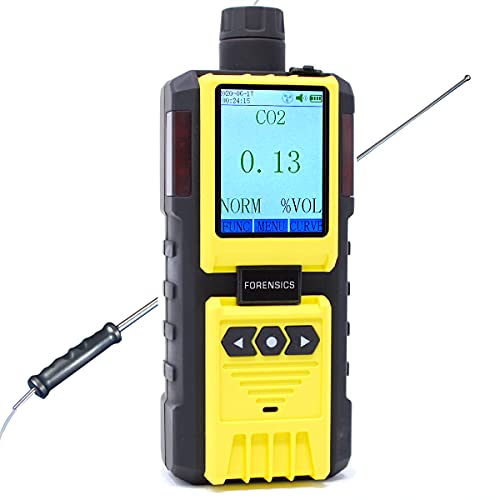
This CO2 analyzer uses an NDIR sensor with a built-in pump and offers a wide range (0-100%) with 0.01% resolution. It features a color display, graphing, and USB rechargeable power. The device is well-suited for industrial monitoring, leak detection, and environments requiring traceable calibration.
Who this is best for: Industrial settings, labs, and field technicians needing precise, traceable CO2 measurements with data visualization. Limitations: Likely bulkier and higher cost than compact DIY sensors; more suitable for dedicated measurement tasks.
YWBL-WH Infrared CO2 Sensor

The YWBL-WH infrared CO2 sensor covers a broad range (often 0-2000 PPM) with fast response suitable for incubators and compact CO2 monitoring in high-concentration settings. It provides serial or PWM outputs for easy integration with microcontrollers and data loggers.
Who this is best for: Systems needing solid IR-based CO2 readings in mid-to-high concentrations. Limitations: Infrared sensors can be sensitive to temperature and require stable calibration for long-term accuracy.
MusRock SGP30 CO2/TVOC Module

The SGP30 module provides digital TVOC and eCO2 readings via I2C. It is a versatile choice for indoor air quality monitoring and DIY projects, with low power consumption and compatibility with Arduino and other microcontrollers. Best for compact, energy-efficient IAQ sensing with straightforward integration.
Who this is best for: Hobbyists and professionals building indoor air quality dashboards. Limitations: eCO2 values are derived estimates; ambient conditions can influence accuracy.
Dioche CO2 Detector with LCD
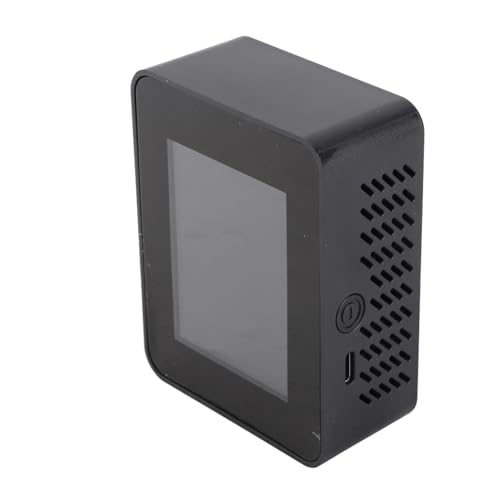
This Dioche detector offers a highly readable LCD interface with CO2, TVOC, and HCHO readings, plus humidity. It emphasizes an easy-to-read display and multiple measurement modes, suitable for home or greenhouse monitoring and quick assessments of air quality trends.
Who this is best for: Home users and educators needing a simple, all-in-one display. Limitations: May not provide the same advanced analytics as professional-grade units.
Buying Guide
What should you consider when choosing CO2 monitoring equipment?
- Measurement technology: NDIR sensors offer high accuracy over broad ranges but can be more expensive and less compact; electrochemical and infrared modules provide varying trade-offs in range, stability, and power use.
- Output and integration: Decide between I2C, SPI, PWM, or UART interfaces based on your microcontroller or data-logging needs.
- Power requirements: If battery-powered or portable, prioritize ultra-low power designs and sleep modes.
- Range and sensitivity: Ensure the device covers the environment you monitor (home, office, greenhouse) and offers acceptable resolution for your application.
- Calibration and traceability: For industrial or safety-critical use, look for devices with calibration documentation or traceability to standards (where applicable).
- Display and data logging: Some models provide built-in displays and log data locally; others are intended for external logging and dashboards.
- Form factor and installation: Consider size, mounting options, and whether the sensor needs to be placed in a specific location for representative readings.
How to compare sensors effectively?
- Compare range and resolution side by side to ensure the sensor meets your monitoring needs.
- Evaluate power profiles if you plan long-term or mobile deployments.
- Check output compatibility with your existing control system or data platform.
- Consider environmental factors such as humidity, temperature, and potential contaminants that affect readings.
Practical scenarios
- Home IAQ dashboards: Favor compact sensors with clear I2C interfaces and low power draw, like the CCS811 or SGP30 modules.
- Greenhouse monitoring: Look for sensors with stable CO2 ranges and possibly IR-based measurements for higher concentrations, such as the infrared sensor options.
- Industrial leak detection: Prefer NDIR-based analyzers with calibration traceability and robust enclosures.
Maintenance and lifecycle
- Periodic calibration: Some devices require recalibration or cross-checking against known references to maintain accuracy.
- Sensor drift: Be aware that CO2 sensors may drift over time; plan for replacement or recalibration schedules.
- Data integrity: Ensure your chosen device supports reliable data logging or easy export for audits and reviews.
FAQ
- What is the difference between eCO2 and CO2 readings?
eCO2 is an estimated CO2 level derived from VOC sensors and other parameters; CO2 (measured) is the direct CO2 concentration. - Which CO2 sensor is best for a greenhouse?
IR-based sensors with a suitable range (e.g., 400-2000+ PPM) and robust environmental tolerance are typically preferred for greenhouse monitoring. - Do I need professional calibration for home use?
For casual monitoring, factory calibration is usually sufficient; for critical environments, consider devices with traceable calibration options. - Can these sensors be powered by batteries?
Many compact modules offer low-power sleep modes suitable for battery operation, but check current draw and duty cycle for your use case. - Is COD (hCHO/TVOC) data useful with CO2 readings?
Yes; TVOC and other gases help provide a broader view of indoor air quality, though CO2 remains a primary indicator of occupancy-driven ventilation needs. - What is the typical response time for CO2 sensors?
Response times vary by technology; infrared sensors tend to respond quickly, while some electrochemical sensors may show slower stabilization after changes.
Add a Comment