When shopping for bolt-on conveyor belt cleats and fasteners, choose parts that fit your belt thickness, offer durable joinery, and simplify installation. This guide highlights five top options, each suited to specific belt sizes and operating conditions. Ideal buyers range from small shop floor technicians to industrial maintenance teams seeking reliable, low-maintenance fasteners that minimize belt downtime.
| Product | Best For | Key Benefit | Limitations |
|---|---|---|---|
| Flexco 190E Conveyor Belt Fasteners | Belts 5/16″ to 9/16″ thick | Includes complete hardware and piloted bolts | May require proper torque and alignment |
| Victeut 48” Fasteners With Hinge Pin | Belt thickness 5-6mm | Long length with hinge pin for easy assembly | Long length may be bulky for tight spaces |
| KOTENTOP 12” Spike Fasteners (3/32″-9/64”) | General light-duty belts | Uniform tension and strong splice | Not ideal for very high-tension belts |
| KOTENTOP 12” Spike Fasteners (9/64″-1/5”) | Medium-duty belts | Low-profile joints reduce obstruction | Food-grade claim requires verification for specific use |
| Xnyahitog 12” Spike Fasteners | Small rollers and compact setups | 316 stainless for durability | Limited data on maximum belt thickness |
Flexco 190E Belt Fasteners — 25 Count Pack
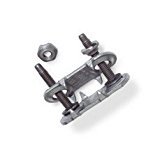
The Flexco 190E set includes a complete box of fasteners, clips, nuts, and piloted bolts, designed for belts 5/16″ to 9/16″ thick. This option targets facilities that replace fasteners in mid-range belt widths and value a ready-to-use set with all required hardware. Best for maintenance teams needing a standard, reliable splice solution that can be installed with common tools. Caution: ensure proper tightening and alignment to avoid premature wear or mis-splices.
Victeut 48” Stainless Fasteners With Hinge Pin
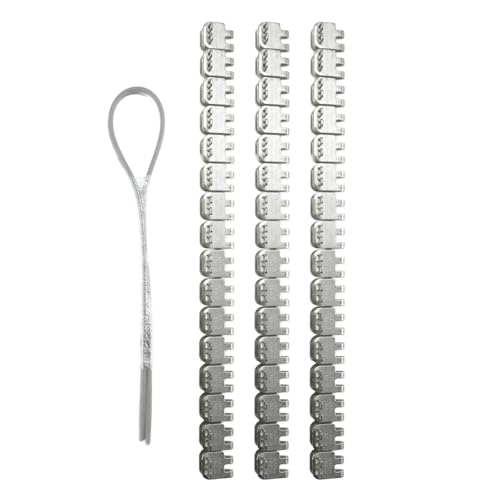
Victeut’s 48″ long fastener kit is engineered for belts 5-6 mm thick, split into three 16″ sections with a 27.5″ hinge pin for straightforward assembly. Best for large, straight-run conveyors where a longer splice section reduces joints and downtime. Choose this if your system benefits from fewer assembly points. Limitation: the longer length can be cumbersome in tight spaces or compact frames.
KOTENTOP 12” Spike Fastener — 3/32″-9/64”

This 4-piece box employs a one-piece strip design with a toothed tie to lock the belt, delivering uniform tension and a strong splice for light-duty conveyors. Best for belts where consistent tension across the width matters, and where loose pieces could disrupt conveyed material. Caution: verify compatibility with your belt thickness to avoid excessive gaps or binding.
KOTENTOP 12” Spike Fastener — 9/64″-1/5”

This version emphasizes uniform tension with a low-profile joint, reducing obstruction on the belt’s path. It includes food-grade stainless options and emphasizes stability for moderate-duty conveyors. Best for environments needing cleaner materials handling. Limitation: the food-grade claim should be checked against your specific material and regulatory needs.
Xnyahitog 12in Spike Fastener — 4 Pieces

Made from premium 316 stainless steel, Xnyahitog fasteners offer robust durability and corrosion resistance for challenging industrial settings. Best for compact setups where space matters and reliability is critical. Benefit includes a staggered wolf-tooth design for strong holding power and smooth joints. Limitation: the package size may be smaller than heavier-duty options, so assess long-term replacement plans.
Buying Guide
What should you look for when selecting bolt-on conveyor belt cleats and fasteners?
- Belt thickness compatibility: Confirm your belt width and thickness to match the fastener’s designed range. Incorrect fit reduces splice integrity and belt life.
- Material and environment: Stainless steel or food-grade materials are preferable in wet or food-handling environments. Consider corrosion resistance for harsh plants.
- Installation considerations: Some kits include hinge pins or piloted bolts for easier alignment. Ensure your team has compatible tools and space for assembly.
- Length and joint design: Longer fasteners reduce number of joints but can be harder to maneuver in tight spaces. Low-profile joints minimize interference with rollers.
- Uniform tension: One-piece strip designs help maintain constant tension across the belt width, reducing the risk of loose parts entering the conveyed product.
- Contamination and safety: For food or clean environments, confirm that materials meet the relevant standards and do not shed particles into products.
Practical Questions for Buyers
- Which fasteners are best for belts 5/16″ to 9/16″ thick? The Flexco 190E set is specifically designed for that range.
- Do I need a long splice or multiple short sections? Long sections, like the 48″ Victeut set, reduce joints but may require more space.
- Are stainless or food-grade options necessary? For food handling or wash-down environments, select stainless or certified food-grade fasteners.
- Is uniform tension important for my process? Yes; one-piece fasteners and uniform tension designs help prevent loose parts and ensure smooth operation.
- What about installation tools? Many kits include piloted bolts or hinge pins; ensure your maintenance team has basic hand tools and alignment capabilities.
FAQ
- What is the main purpose of bolt-on belt fasteners? They join belt segments securely and allow for quick replacements without full belt removal.
- Can these fasteners handle high-tension belts? Some are designed for light- to medium-duty belts; verify the belt tension requirements before selecting.
- Are there material safety considerations? Stainless steel and food-grade options minimize contamination risk and corrosion in demanding environments.
- Do these products include all required hardware? Several kits come with clips, bolts, and hinge pins; check the product description for completeness.
- How do I choose between a long splice and a shorter one? Long splices reduce the number of joints and potential weak points but require more space for installation.
- Is warranty information necessary for this purchase? For ongoing operations, confirm vendor support and replacement part availability as part of your procurement process.
Add a Comment