Answering the most common queries from facility managers, maintenance technicians, and homeowners: these boiler tube cleaning tools and descalers help prevent heat transfer loss, improve efficiency, and extend equipment life. The list below highlights five versatile options, each suited to different boiler designs and cleaning challenges. Best for tight passages, best for descaling, best for deep access, best for versatile tube work, and best for long-tube cleaning projects.
Summary of selected products
| Product | Best For | Key Benefit | Limitations |
|---|---|---|---|
| Boiler Soot Cleaning Saber Service Saw Tool | Narrow passages | Compact, wall-hanging hook for easy storage | Requires manual guiding in tight routes |
| Goodway ScaleBreak Descaling Solution | Descaling and corrosion protection | Powerful formula with low foaming and inhibitors | Descaler handling required |
| PokShow Wire Tube Brushes Set | Deep cleaning in hard-to-reach spaces | Dual-material brushes for delicate or tough residue | Multiple pieces to manage |
| Trash Chute Boiler Tube Brush Head (Double Spiral) | Standard boiler tubes | Double spiral for efficient cleaning | Diameter choices vary by model |
| Funyfa Pipe Cleaning Brush Set | Large-scale rust and polish | Long reach with durable stainless steel bristles | Bulk set may be more than needed for small jobs |
Boiler Soot Cleaning Saber Service Saw Tool

Brand: Technology Parts Store. Features: Zinc-coated steel Saber tool, 1″ width, 32″ length, vinyl-coated handle, wall-hanging hole. Designed for cleaning soot within narrow boiler passages. Best for technicians who need a slim, rigid guide to reach restricted areas in fire-tube or small-diameter sections. The tool’s length helps maintain leverage in longer tubes, while the coated steel resists corrosion. Caution: use proper PPE and ensure the boiler is cool and depressurized before handling tools in tight channels. Also, the tool is best when paired with corresponding brushes for complete soot removal.
Who it’s best for: field technicians working in compact boiler rooms or with older boilers featuring narrow flue paths. Why selected: its slim profile and simple storage make it a practical first-step tool for routine maintenance and light soot clearing. Limitations: not a complete descaling solution; requires compatible cleaning attachments for heavy buildup.
Goodway ScaleBreak Descaling Solution

Brand: Goodway. Features: Low-foaming descaler with penetrating agents, robust corrosion inhibitors, and versatility for fire-tube and water-tube boilers, heat exchangers, chillers, and other water-cooled systems. Designed to dissolve scale efficiently—up to 2.0 pounds per gallon—reducing downtime. Best for facilities seeking a single cleaner for multiple equipment types and mineral deposits. Caution: follow handling and disposal guidelines, and ensure compatibility with your system materials before use. Avoid using on non-designated materials without confirmation.
Who it’s best for: maintenance teams performing regular descaling across boilers, condensers, and plate heat exchangers. Why selected: its comprehensive formula targets mineral buildup while protecting metal surfaces. Limitation: not a stand-alone tool—requires compatible cleaning methods and adapters for complete system cleaning.
PokShow 16Pcs Stainless Steel & Brass Wire Brushes Set

Brand: PokShow. Features: 12″ long 16-piece set with stainless steel and brass brushes, 1/4″ to 1″ sizes, includes flexible extension handles, designed for deep cleaning in engine bays, HVAC ducts, narrow-neck bottles, and tubes. Best for reaching hidden grime and stubborn residues in tight spaces. Caution: brass brushes can scratch sensitive surfaces; use where appropriate. For best results, select the right size and combine with the long reach handles to minimize hand fatigue.
Who it’s best for: technicians needing a versatile kit for diverse cleaning tasks in machinery and piping. Why selected: the dual-material brushes provide balance between aggressive cleaning and surface care. Limitation: management of multiple brush sizes and extensions can be time-consuming for very small jobs.
Trash Chute Boiler Tube Brush Head Double Spiral
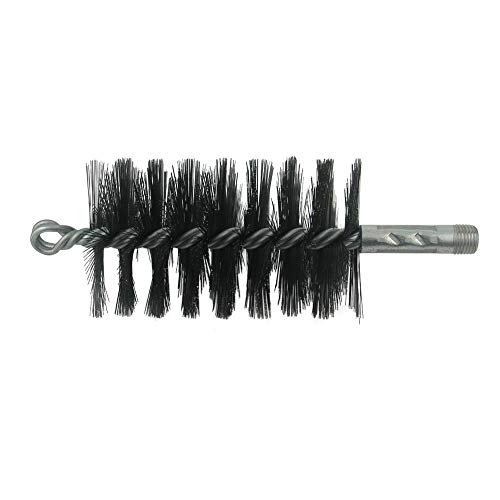
Brand: Oswald Supply. Features: Double spiral wire design for efficient soot and scale removal in boiler tubes, compatible with various tube sizes (2.25″ diameter for 2.5″ tubes). Benefits include improved heat transfer and energy savings due to cleaner tubes. Best for standard boiler tube maintenance and restoration of flow. Caution: verify connector compatibility with your cleaning wand or drill assembly before use. Limitations: diameter options may require adapters for some boiler models.
Who it’s best for: maintenance teams handling routine boiler tube cleaning in commercial settings. Why selected: a proven approach to robustly remove buildup in typical boiler configurations. Limitation: limited diameter availability compared to broader brush kits.
Funyfa Pipe Cleaning Brush Set

Brand: Funyfa. Features: 50-inch set with stainless steel bristles and galvanized extension rods, M6 threaded connections, five brush sizes (from 3/5″ to 2″), designed for rust removal, polishing, and wide-ranging tubing cleaning. Best for large-scale cleaning jobs and ductwork where long reach is essential. Caution: ensure rods are securely connected to prevent detachment during use. Limitations: the long set may be overkill for small tasks and requires careful storage due to length.
Who it’s best for: industrial cleaners and HVAC technicians performing extensive pipe and duct cleaning. Why selected: long reach and varied sizes enable comprehensive cleaning coverage. Limitation: handling the full kit requires workspace and organization to avoid tangling extensions.
Buying Guide: Choosing the Right Boiler Tube Cleaning Equipment
What design considerations matter? Match the tool to your boiler type (fire-tube, water-tube, or combined systems). Narrow passages benefit from slim, rigid tools, while heavy scale benefits from descalers and longer brushes.
What cleaning method fits your maintenance plan? For routine soot removal, handheld tools with compatible extensions work well. For scale-heavy systems, a descaling solution paired with brushes offers better efficiency.
Which materials are safest for your equipment? Stainless steel bristles deliver durability, while brass brushes reduce the risk of scratching sensitive metal parts. Consider corrosion inhibitors in cleaners to protect metal surfaces during and after descaling.
How important is reach and flexibility? Long brushes extend cleaning depth into deep tubes, chambers, or narrow-neck passages. Flexibility helps with curved tubing and complex layouts.
What are practical safety and storage notes? Use PPE, follow manufacturer directions, and store tools with wall-hanging holes or secure hooks to prevent misplacement in busy maintenance areas.
FAQ
- What is the best tool for cleaning narrow boiler passages?
– A narrow, long stainless steel tool with a vinyl-coated handle, such as the 32″ Saber tool, is ideal for confined routes. - Can descaling solutions be used on all boiler materials?
– Descalers work on many metal surfaces but check compatibility with your specific boiler materials before use. - Are there long-reach brushes suitable for HVAC ducts?
– Yes, sets with 12″ to 16″ brushes and extension rods are designed for deep access in ducts and tubes. - How do I know which brush size to pick for tubes?
– Choose sizes that correspond to your tube diameters, starting with the smallest useful size to avoid damage and then stepping up if needed. - Is a single product enough for boiler cleaning?
– Often a combination works best: a descaler for mineral deposits and brushes for physical removal of soot and scale. - What maintenance practice helps extend tool life?
– Rinse after use, dry thoroughly, and store in a dry, organized location to minimize corrosion and bristle wear.
Add a Comment