Direct answer: for demanding belt grinding tasks, a 1500W motor with a 2.2KW VFD offers robust power, smooth speed control, and versatile belt compatibility. The top picks below are suited for professional metalworkers, knife makers, and serious hobbyists who need reliable performance, variable speed, and long belt life. Each option is chosen for a balance of power, flexibility, and practical features such as horizontal/vertical operation, included grinding belts, and easy compatibility with standard 72″ x 2″ belts.
Below is a quick summary of the five selected belt grinders, focusing on who they’re best for and why:
| Product | |||
|---|---|---|---|
| Goldsand Belt Grinder Sander | 1500W motor, 2.2KW VFD | 72″ x 2″, 3 belts | Heavy-duty metal and wood work; flexible speed |
| Jinlida JLD 72-82 | 1500W motor, VFD | 2 x 72″ belts, 3 grinding heads | Multi-direction grinding and blade shaping |
| VEVOR 72 x 2 Belt Sander | 1500W, 2900 rpm, VFD | 3 belts (72″ x 2″) | Stable performance and belt versatility |
| Goldsand 30 Inch Belt Sander | 550W motor, VFD | 30″ belt, 3 belts | Compact projects, knife sharpening, versatility in grit |
| Goldsand 72×2 Belt Grinder (2HP) | 1500W motor, 2.2KW VFD | 72″ x 2″, 3 belts | Professional-grade metalworking and polishing |
Goldsand 1500W Belt Grinder Sander With VFD
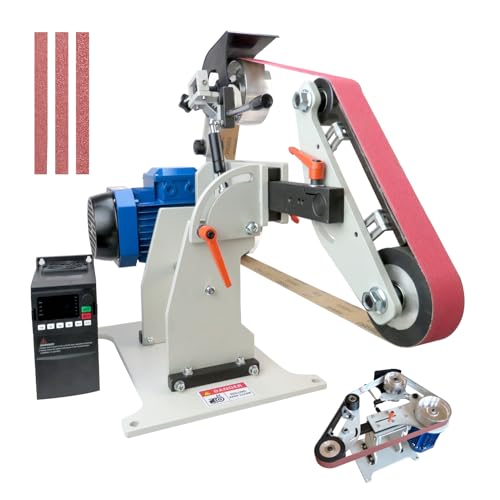
Best for heavy-duty metal and wood grinding. Features a 1500W copper motor and a 2.2KW VFD for stepless speed control from 0–2800 rpm, enabling fine adjustments for soft woods or hard metals. Includes three belts in different grits (100/180/240) for rough to finish work and a 72″ x 2″ belt format, which is a common standard for shop-grinder setups. Caution: ensure electrical supply supports 220V operation or use appropriate transformer to prevent motor damage.
Jinlida JLD 72-82 Belt Grinder Sander
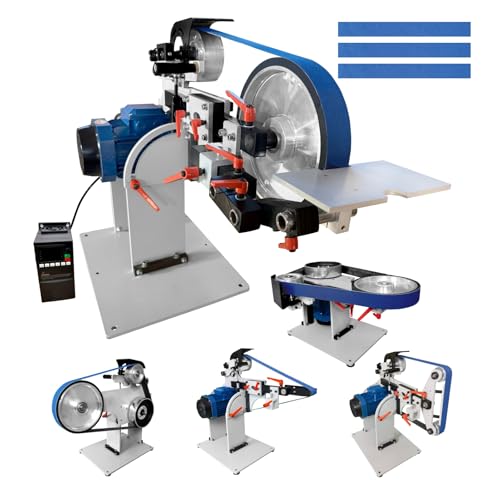
Best for multifunctional finishing with three grinding heads. The JLD model runs up to 2900 rpm with a 1500W motor and a VFD to switch speeds, offering circular, flat, and arc grinding options. It’s well-suited for metal finishing, blade sharpening, deburring, and rust removal. Limitation: the description emphasizes versatility over long-term durability specifics, so users should verify belt compatibility and mounting options for heavy-duty workflows.
VEVOR 72 x 2 Belt Grinder Sander

Best for stable performance with a 1500W copper motor and a 2900 rpm rating. It offers a 32 m/min belt speed and a robust VFD for stepless speed changes, ready for quick transitions between coarse and fine sanding. Included belts (three 72″ x 2″ belts) ensure immediate usability. Caution: ensure proper cooling during extended high-speed use to avoid overheating the motor.
Goldsand 30-Inch Belt Sander Professional

Best for compact footprint with versatile grit options. This model uses a 550W motor at 5500 RPM and features a VFD for stepless speed control, plus a belt size of 30 inches with three grits (100/180/240). It’s suitable for knife sharpening and smaller shop projects where space matters. Limitation: the lighter motor may be less suited for heavy, continuous metal grinding over long sessions.
Goldsand 72×2 Belt Grinder With 2 HP Power

Best for professional-grade metalworking and polishing. Equipped with a 1500W copper motor and a 2.2KW VFD, this unit supports forward and reverse rotation, enabling flexible workflow on complex shapes. Includes three belt grits (100/180/240) and handles 72″ x 2″ belts, making it a strong all-around option for shops needing reliable power and precise control. Caution: verify electrical setup for optimal operation and avoid running on under-voltaged supply.
Buying Guide: Belt Grinder Motor And Vfd Essentials
- Power and duty cycle: A 1500W motor with a VFD provides strong grinding ability and smooth speed control. For heavy metal and blade work, this combination balances power with precision.
- Belts and compatibility: Most models use 72″ x 2″ belts, a standard size. Ensure belts are readily available in your region and match the grit range you need (100–240 is common).
- Speed control: Stepless VFD control allows adapting to material hardness and finishing needs. Look for a wide speed range and stable tracking.
- Vertical vs. horizontal operation: Some units support both orientations, which aids in finishing curved profiles, sharpening, or deburring. Consider your typical projects when choosing orientation support.
- Safety and setup: Ensure proper electrical configuration (220V typically) and adequate cooling for extended use. Verify that the machine includes essential safety features and stable mounting options for your workspace.
Frequently Asked Questions
- What belt size do most professional belt grinders use? Most models shown use 72″ x 2″ belts, which are common and widely available for metal and wood grinding.
- Do I need a transformer for 220V operation? If your power supply is 110V, a transformer or power supply upgrade is recommended to avoid motor damage and ensure stable performance.
- Is a higher wattage necessary for knife sharpening? A higher wattage helps with faster material removal, but precise speed control via the VFD is equally important for consistent sharpening results.
- Can these grinders handle metal and wood equally well? Yes, with proper belt grit selection (coarse for metal, fine for wood) and appropriate feed rates, these machines can work on both materials.
- What maintenance is needed? Regular belt replacement, belt tracking checks, and motor cooling considerations are key for long-term reliability.
- Which model is best for small shops? The 30-inch compact option is ideal for limited space, offering versatile grit options without occupying a large footprint.
Add a Comment